Following MINURSO's departure, Rabat enters a new phase: what scenarios exist for the areas located east of the wall?
A 35-year chapter has just closed in Moroccan Sahara.
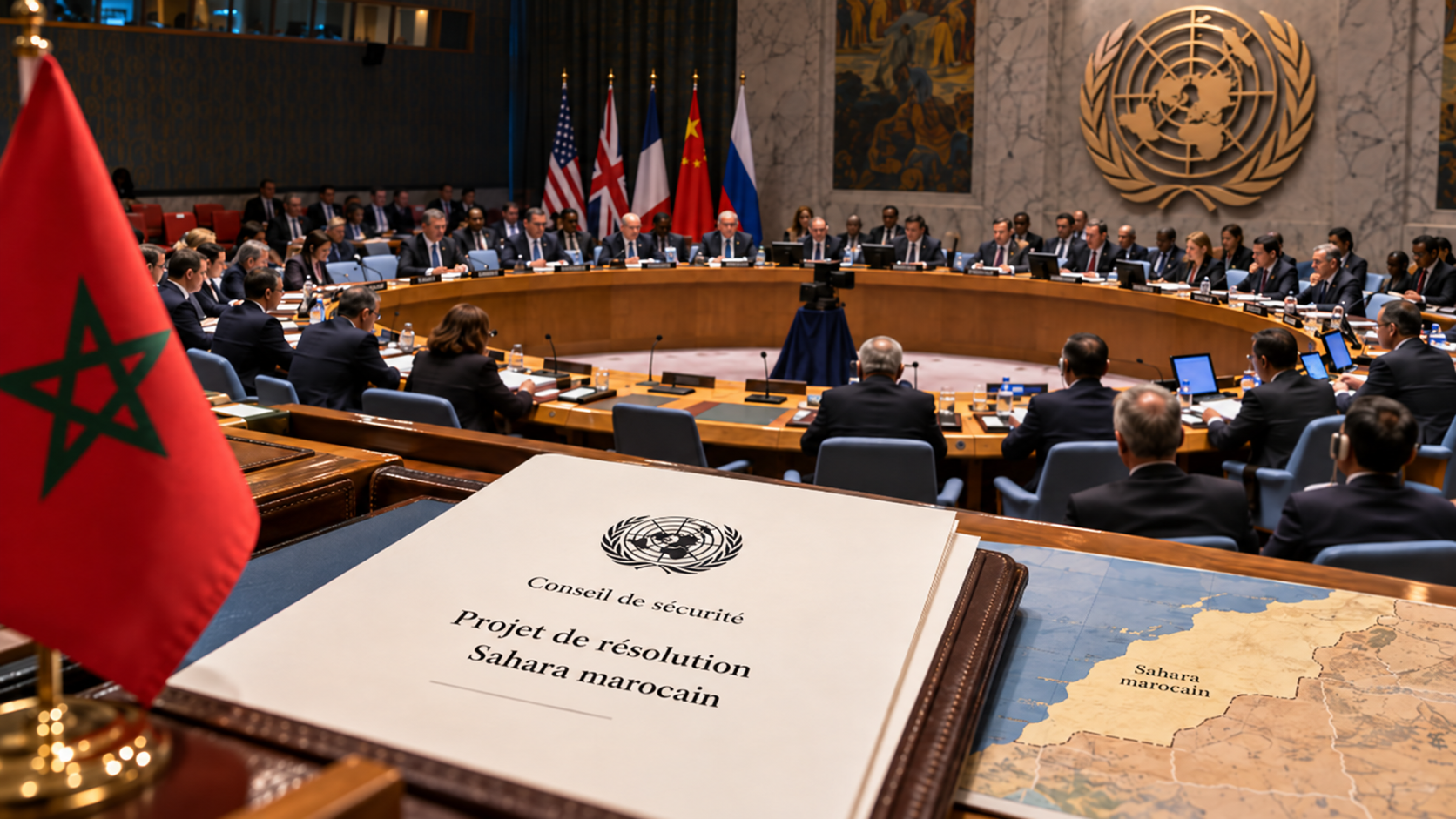
At midnight on October 31, 2026, MINURSO officially ceased operations after the Security Council failed to renew its mandate. Since November 1, the United Nations has been in the process of liquidating the mission, repatriating its personnel, and closing its facilities.
For Rabat, this disappearance goes far beyond the mere departure of peacekeepers.
The royal cabinet presented the non-renewal of MINURSO as "a significant step towards the definitive closure of the Moroccan Sahara file at the United Nations,", noting that a 35-year chapter has just been turned.
On November 4, King Mohammed VI presided over a working session specifically dedicated to the post-MINURSO context, attended notably by the Minister of the Interior and General Mohammed Berrid, Inspector General of the Royal Armed Forces and Commander of the Southern Zone. The royal communiqué reaffirmed three priorities: the territorial integrity of the Kingdom, national security, and the peace of the citizens in the southern provinces.
The question is thus no longer simply about why MINURSO is disappearing.
It is now about what Morocco will do in this new situation.
And at the center of this reflection are the desert territories located east of the defense wall.
Morocco already controls most of the Sahara.
The territorial reality is largely favorable to the Kingdom.
Morocco administers about 80% of the Sahara, including Laâyoune, Dakhla, Boujdour, Smara, almost the entire Atlantic coastline, the main population centers, as well as essential economic and transportation infrastructure.
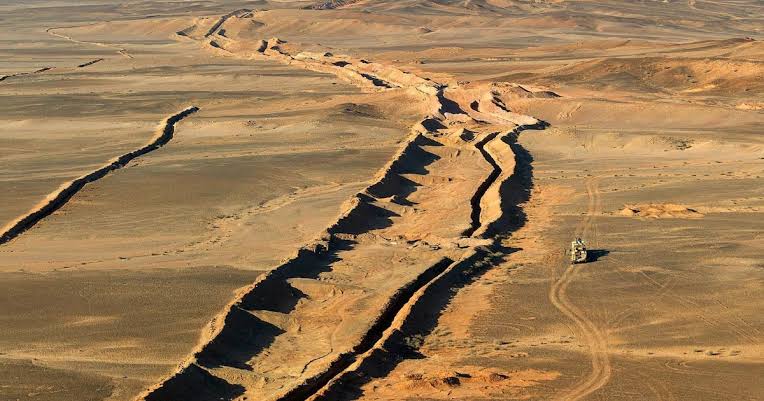
The remaining 20% is mainly located to the east and south of the Moroccan defense wall, which is about 2,700 kilometers long. This 80/20 proportion is commonly used in studies focusing on the territorial distribution on either side of the berm.
However, simply comparing "80% to 20%" may give a misleading picture of reality.
The areas administered by Morocco contain the overwhelming majority of cities, residents, infrastructure, investments, economic activities, ports, and communication routes.
The eastern part mainly consists of vast, sparsely populated desert spaces.
Its importance is thus primarily strategic, military, and symbolic..
MINURSO's departure changes a fundamental parameter.
Until October 31, MINURSO still had nine operational sites: four to the west of the wall and five to the east..
These bases allowed the UN to monitor military activities, verify certain incidents, and maintain a physical presence on each side of the Moroccan defensive setup.
They will now disappear.
This does not automatically shift the wall nor legally cause any territorial transfer.
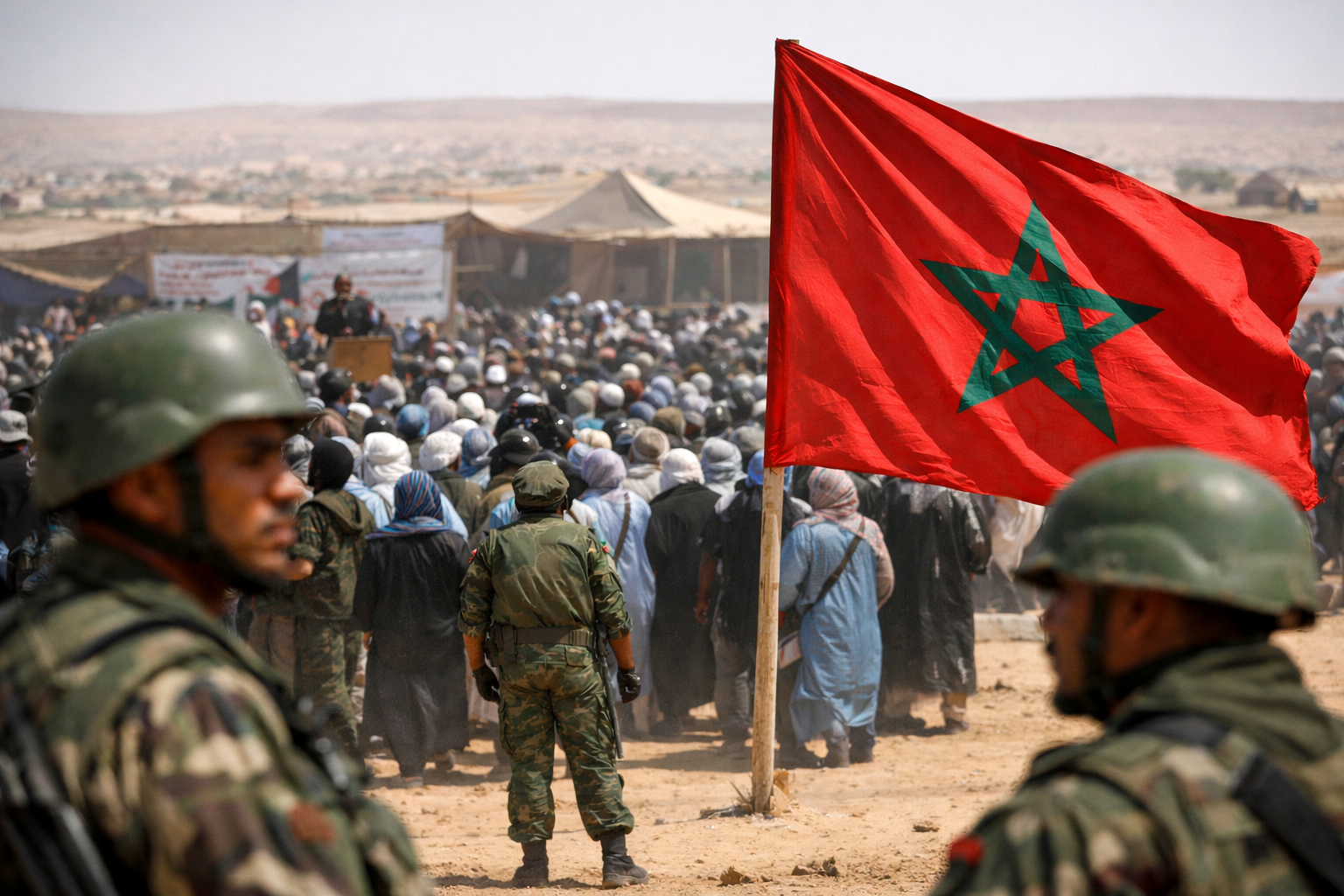
However, on the ground, a profound reality is changing: there will soon be no permanent UN military presence in the areas located east of the Moroccan setup.
For the first time since 1991, Morocco will thus need to think about its Saharan strategy without MINURSO.
First scenario: Rabat makes no military changes.
This is probably the easiest short-term option.
Morocco maintains its current setup, does not cross the wall, and keeps the ceasefire.
This is the officially adopted line for the moment.
The communiqué from the royal cabinet on November 4 emphasizes that Morocco's commitment to the ceasefire is now a voluntary commitment, which does not change with the disappearance of MINURSO.
This phrasing is important.
Rabat makes it clear that the mission's departure does not imply that the Kingdom is seeking military confrontation.
Morocco may consider that it now has other means to consolidate its position: diplomacy, economic development, international investments, infrastructure, and recognition of its sovereignty by an increasing number of partners.
In this logic, time may be seen by Rabat as more of an ally than an adversary..
Second scenario: a gradual integration of the areas located east of the wall.
This is obviously the scenario of most interest when discussing the "20%."
Could Morocco eventually extend its effective control eastward?
The disappearance of MINURSO creates a situation that did not previously exist: UN military observers will no longer be present to monitor this part of the territory on a daily basis.
This theoretically gives the Kingdom greater operational freedom.
However, an extension of control would not necessarily require a massive and immediate operation.
It could be progressive and circumstantial..
Rabat could for example intervene sporadically when a strategic interest, a communication route, or national security demands it, and then consolidate the positions gained.
There is already a significant precedent.
Guerguerat: the precedent to consider
In November 2020, the blockade of the Guerguerat road led the Royal Armed Forces to intervene to restore traffic between Morocco and Mauritania.
Rabat then changed the operational situation on the ground while presenting its action as an intervention aimed at securing a strategic international nexus.
Since then, the Guerguerat passage has remained open and is now a vital artery between Morocco and West Africa.
This experience shows that a territorial evolution can become sustainable when the Kingdom considers that it directly serves its strategic interests.
Could a comparable situation eventually arise elsewhere east of the wall?
This is now a hypothesis that can no longer be entirely dismissed.
Third scenario: Morocco gradually recovers the entire territory.
This is the maximum hypothesis.
In time, Rabat might consider that the defense wall has fulfilled its historical function and that there is no longer justification for maintaining a military separation within a territory the Kingdom fully regards as its own sovereignty.
Such a decision would, however, represent a considerable turning point.
Morocco would have to not only control a vast desert space but also secure hundreds of additional kilometers near the Algerian and Mauritanian borders.
The Royal Armed Forces today have capabilities very different from those of the 1980s: surveillance and combat drones, satellite intelligence, modernized aviation, precision artillery, and much more effective detection means.
From a strictly operational standpoint, the military situation has thus evolved profoundly.
However, no official Moroccan decision to advance towards all eastern areas has been announced..
On the contrary, Rabat continues to affirm its commitment to the ceasefire.
The effective recovery of the 20% must therefore be analyzed as a long-term strategic scenario,, and not as an announced or imminent operation.
Fourth scenario: gradually render the wall politically obsolete.
This is probably the most subtle option.
Morocco does not necessarily need to immediately relocate a single military unit to strengthen its effective sovereignty.
For over a decade, Rabat has been investing heavily in its southern provinces.
Laâyoune and Dakhla have become key urban and economic centers.
Expressways, ports, airports, renewable energy, desalination, fishing, tourism, and future industrial projects are progressively transforming the region.
The New Development Model for the Southern Provinces, launched in 2015, aims specifically to accelerate this economic integration.
The Moroccan official portal emphasizes that the southern provinces are now envisioned as economic and investment hubs open to Africa,, supported by significant port, energy, and social infrastructure.
In this strategy, the spaces east of the wall are likely to become increasingly peripheral concerning the economic centers of Moroccan Sahara.
The wall could then continue to exist physically while gradually losing its political importance.
Fifth scenario: transform the 20% into the final stage of a resolution around autonomy.
Recent diplomatic developments offer another possibility.
In 2025, Security Council Resolution 2797 had already placed the Moroccan autonomy initiative at the center of negotiations and recognized that genuine autonomy could represent a viable outcome.
The American project presented to the Security Council on October 30, 2026, went even further.
It would have made autonomy under Moroccan sovereignty the sole basis for negotiation,, while transforming the nature of the UN mission.
This project received 11 votes in favor out of 15,, but was not adopted due to the Russian veto.
For Rabat, this result remains politically significant: a broad majority of the Council was willing to support a major evolution of the framework of the issue.
Morocco now claims that more than two-thirds of UN member states support autonomy under Moroccan sovereignty as a settlement framework.
In this perspective, the areas located to the east of the wall could eventually be integrated into a final settlement without any military operation being necessary.
The wall would then disappear because the dispute itself would have lost its reason for being.
The diplomatic option could be much more cost-effective for Rabat.
There is a significant reason Morocco might prefer to wait.
On the diplomatic front, its position has been considerably strengthened.
The United States explicitly recognizes Moroccan sovereignty over the Sahara. In August 2026, President Donald Trump reaffirmed this recognition and indicated that he considers the autonomy plan as the sole basis for a lasting solution.
Other states are now publicly supporting autonomy under Moroccan sovereignty.
Several countries have also opened consulates in Laâyoune or Dakhla.
Under these conditions, Rabat may consider that a brutal military modification of the ground would yield relatively little compared to the diplomatic risks it could provoke.
A waiting strategy could, conversely, allow the Kingdom to continue accumulating recognitions and international investments.
Do the 20% still represent a real economic stake?
Relatively little.
This is one of the essential elements for understanding the Moroccan strategy.
The majority of the population, coastline, ports, exploited resources, and infrastructure are already in the part administered by the Kingdom.
The eastern areas primarily hold geographical and strategic value.
For Morocco, their recovery would still carry considerable symbolic significance: it would eliminate the last territorial distinction between the various parts of Moroccan Sahara.
The wall would no longer separate two military zones.
The areas administered by the Kingdom would directly border Algeria and Mauritania across the entire territory.
The issue of the "20%" thus goes far beyond their economic value.
Could the wall itself disappear?
Not immediately.
The Moroccan defense setup remains a major military infrastructure.
It protects the main cities and allows the Royal Armed Forces to effectively control movements coming from the East.
Even in the case of definitive political normalization, its physical dismantling would likely take years.
There is also another difficulty: mines.
Decades of confrontation have left significant mined areas around the berm, making any opening of the territory particularly complex. Historical studies of the arrangement mention vast fields of anti-tank and anti-personnel mines.
The first change would thus likely be political before being physical.
The real shift could occur at the UN.
For Rabat, one of the major stakes in the post-MINURSO context now concerns international institutions.
The royal communiqué of October 30 suggests that the mission's disappearance should lead to the end of the periodic reporting to the Security Council on this issue.
This is a major ambition.
For several decades, each mandate renewal automatically brought the issue back to the Security Council's attention.
The mission's disappearance now removes this annual appointment.
Morocco can therefore seek to transform a dossier traditionally treated as an international issue into a process much more broadly oriented around its autonomy proposal and its bilateral relations with major powers.
However, there remain institutional steps: the issue continues to exist within other UN bodies, which means that MINURSO's disappearance alone does not suffice to close the entire international handling of the subject.
The royal strategy seems to favor control and patience.
The first decisions made since October 31 provide a clue about the Moroccan method.
King Mohammed VI has not announced any military modification to the setup.
He has called for a strict and vigilant implementation of priorities regarding territorial integrity and national security, while ordering the Ministry of the Interior to orderly accompany MINURSO's withdrawal.
At the same time, the Kingdom reaffirmed its voluntary respect for the ceasefire.
The message can be interpreted as follows: Morocco believes it has taken a major step, but has no obligation to rush the next one.
This approach aligns with the diplomatic strategy pursued in recent years: gradually accumulating gains and avoiding any hasty initiative that could jeopardize a dynamic viewed as favorable in Rabat.
Why an immediate recovery of the 20% might not be necessary.
A military intervention could potentially allow Morocco to quickly achieve complete territorial continuity.
But it would instantly transform a diplomatic advantage into a security crisis.
The Moroccan calculation might therefore be much simpler:
Why forcibly take today what could be obtained tomorrow at a significantly lower political cost?
If international support for autonomy continues to grow and if international investments in the southern provinces multiply, the gap between the two sides of the wall will continue to widen.
In the long term, the issue of the eastern territories may become a consequence to be resolved rather than the heart of the dispute.
Another option: advance only if a red line is crossed.
Morocco could also maintain a conditional doctrine.
No military advancement as long as the situation remains stable.
But intervention if national security, commercial routes, or the Kingdom's borders are directly threatened.
Guerguerat again provides the model.
Rabat waited several weeks before intervening in November 2020, then presented its operation as limited to securing traffic.
A similar strategy could be applied to any future crisis east of the wall: specific action, clear objective, consolidation of the area, then return to stability..
This scenario would allow the Kingdom to avoid a general offensive while retaining the ability to gradually alter the territorial reality as its interests demand.
2026 does not resemble 1991.
This is probably the most significant observation.
When MINURSO was established in 1991, the context was radically different.
The defense wall had just been completed a few years earlier.
Economic development in the Sahara remained limited.
Morocco had far fewer explicit international supporters.
Drones, satellite surveillance, and precision munitions did not exist in their current form.
Thirty-five years later, the political, economic, military, and diplomatic balance has profoundly shifted.
And MINURSO disappears without having achieved the objective outlined in its very title.
For Rabat, this disappearance precisely confirms that the framework designed in 1991 now belongs in the past.This was the assessment explicitly expressed by the royal cabinet on October 30.
A battle won does not mean that all steps are completed.
The end of MINURSO undoubtedly constitutes a major strategic change for Morocco.
But it does not mean that all issues will vanish overnight.
The Kingdom must now transform this achievement into a new diplomatic reality.
It must continue the economic development of the southern provinces.
It must keep broadening international support for autonomy.
And it will have to, sooner or later, address the question of the territories located east of the wall.
This last issue can be resolved militarily, politically, gradually, or as part of a final agreement.
It is precisely this newfound freedom that may represent the main change in the post-MINURSO landscape.
Will the "20%" be recovered?
In the short term, no official elements indicate an advance by the Royal Armed Forces.
Morocco has even explicitly reaffirmed its respect for the ceasefire.
But in the longer term, the question of eastern zones is inevitably central.
The Kingdom asserts its sovereignty over the entirety of Moroccan Sahara, and not just over the territories located west of the wall.
The current setup cannot therefore be seen, in the Moroccan logic, as a definitive border.
It is a military setup inherited from a war and an equilibrium several decades old.
The question is thus perhaps no longer:
"Will Morocco ever recover the 20%?"
But rather:
"By what mechanism will territorial reality ultimately align with the sovereignty claimed by Rabat over all of Moroccan Sahara?"
Military, diplomatic, or negotiated, the answer is not yet known.
But since the departure of MINURSO, this question now arises in an entirely new environment.
The post-MINURSO era has only just begun.
October 31, 2026, therefore signifies much more than the departure date for an international mission.
It marks the disappearance of a mechanism that had frozen the issue for 35 years..
Morocco already administers the major cities, the entire Atlantic coastline, almost the entire population, and most of the Sahara's economy.
It now benefits from a diplomatic environment incomparably more favorable than at the beginning of the 1990s.
And it has just seen the disappearance of a mission that the royal cabinet sees as inherited from a "anachronistic and outdated context.".
For now, Rabat has chosen control over haste.
This does not mean that nothing will change.
It means the Kingdom now has several options: maintain the status quo while waiting for diplomacy to finish the job, gradually integrate the eastern areas into a political solution, intervene sporadically when its strategic interests demand it, or, in the longer term, achieve complete territorial control.
For the first time since 1991, all these hypotheses must now be considered without MINURSO on the ground..
And it may be here that the final phase of the Moroccan Sahara issue truly begins.