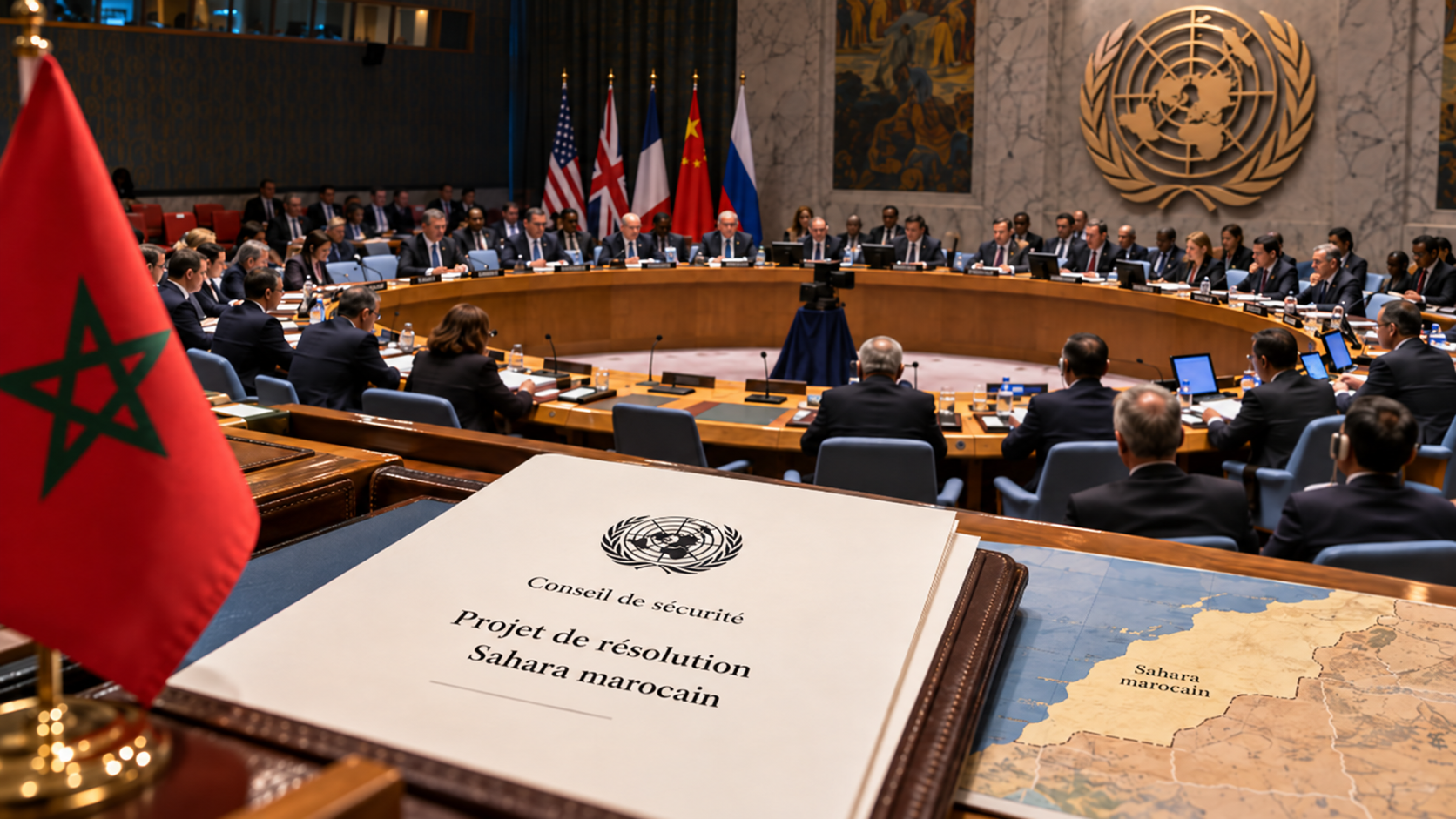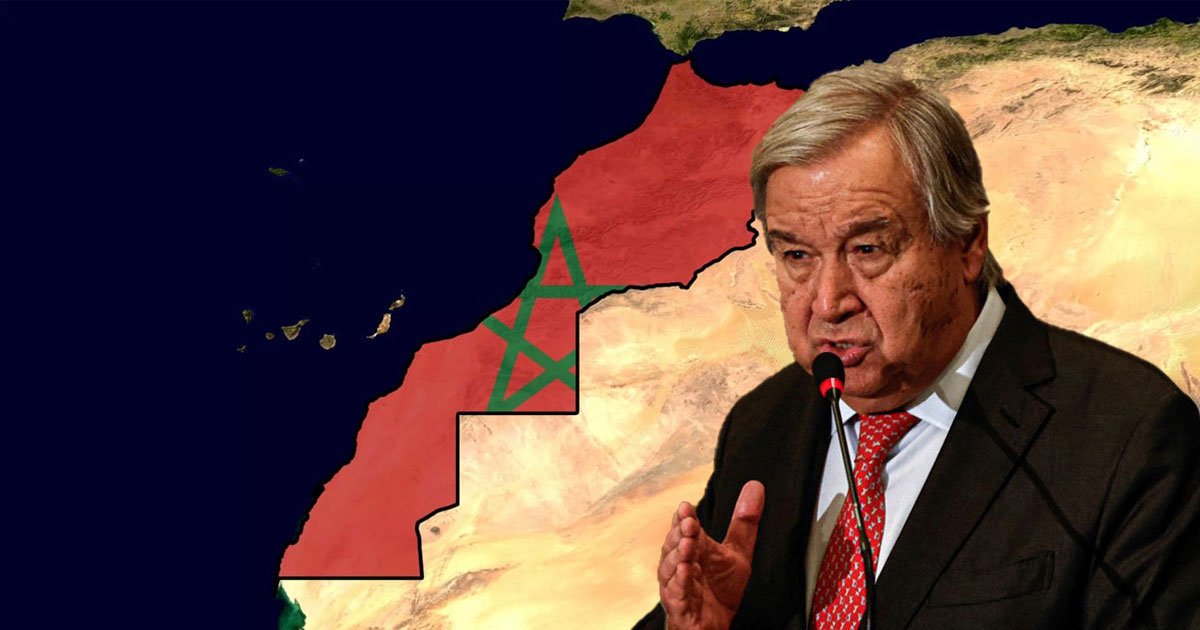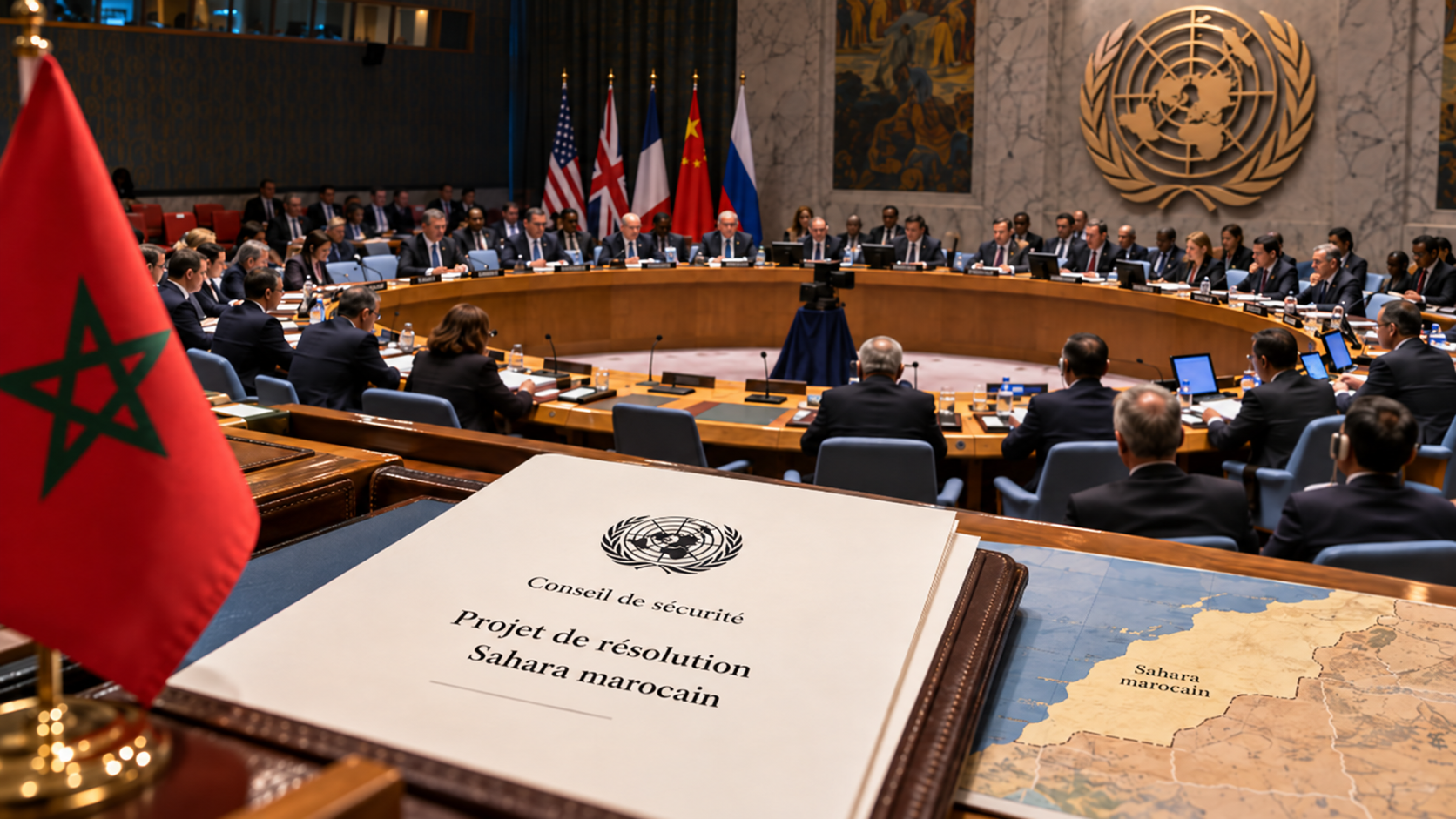
Just hours before a much-anticipated vote in the UN Security Council, a new American draft resolution on the Moroccan Sahara is drawing significant attention. The document, which has seen several versions in recent days and which Chronexium has analyzed for its main provisions, could mark a significant evolution in the international handling of the regional dispute.
Far from being limited to the annual extension of MINURSO's mandate, the text proposes to modify the negotiation framework, to reassess the identity of the UN mission, and to broaden consultations to Sahrawi components previously excluded from the formal process.
Compared to Resolution 2797 adopted on October 31, 2025, the 2026 draft includes several advancements that would reinforce the diplomatic position defended by Rabat for nearly two decades.
If these provisions are adopted, the Security Council could take a new step in the political process by making autonomy under Moroccan sovereignty the central frame of reference for the settlement.
From 2025 to 2026: A Determining Evolution in Wording
To gauge the significance of the document, we must look back to Resolution 2797 of 2025.
This text already represented an important diplomatic evolution by explicitly placing the Moroccan autonomy proposal at the foundation of negotiations and recognizing that genuine autonomy could represent a particularly viable outcome.
The 2026 draft would take an additional step forward.
Its fifth operative paragraph provides that discussions continue using the updated and expanded Moroccan autonomy proposal as thesole basis for negotiation..
The difference is noteworthy.
In 2025, the Moroccan plan was viewed as a basis for achieving a mutually acceptable political solution. In 2026, the proposed wording aims to make this initiative the exclusive reference for talks.
For Rabat, this evolution could have concrete ramifications: the process would no longer revolve around an open confrontation between multiple final status projects, but around the terms of a negotiated solution based on Moroccan autonomy.
The text, however, maintains references to self-determination and a mutually acceptable political solution, confirming that the final settlement remains to be negotiated.
Autonomy under Moroccan Sovereignty Gains Precision
Another significant change is how autonomy is presented.
The draft explicitly refers to genuine autonomy under Moroccan sovereignty, portrayed as the most viable solution to the dispute.
This wording appears notably in the preamble of the communicated document.
The nuance is important. Resolution 2797 of 2025 used cautious wording, indicating that autonomy could represent one of the more feasible outcomes. The new draft proposes a more affirmative assessment.
This evolution reflects the strengthening of international support for the initiative presented by Morocco in 2007.
However, it should not be confused with a collective and definitive legal recognition of Moroccan sovereignty by the United Nations.
The significance of the change primarily lies in the direction given to negotiations.
For Moroccan diplomacy, the challenge now consists of transforming the growing political support for autonomy into a concrete settlement framework, accompanied by institutional guarantees and representation mechanisms.
MINURSO May Lose Its Reference to the Referendum
One of the most symbolic proposals of the project concerns the UN mission deployed in the Sahara since 1991.
MINURSO, created to monitor the ceasefire and organize a referendum, could become the United Nations Mission in Western Sahara, or MINUSO.
The change seems limited to a letter in the acronym. However, it carries considerable diplomatic significance.
For thirty-five years, the mission has retained a reference to a referendum in its name, which has never been organized, particularly due to persistent disagreements over its modalities.
The project also anticipates a reflection on the evolution of its mandate and resources.
According to the communicated version, the UN Secretary-General would be called upon to present detailed proposals regarding staffing, reorganization of teams, and restructuring possibilities for the mission.
The text notably mentions a reduction in personnel in uniform and the closure or merger of certain sites.
Contrary to earlier American drafts that considered automatic reductions and a binding timeline, revised versions favor a transformation framed by the Secretary-General's recommendations.
Such an evolution would mean that the UN apparatus would gradually be adapted to a political negotiation process.
However, the removal of the term "referendum" from the mission's name would not alone legally resolve the issue of self-determination.
A Major New Development: Consult Sahrawis Beyond the Polisario
This is probably one of the most significant provisions of the project.
Its sixth operative paragraph calls for the Secretary-General's personal envoy, Staffan de Mistura, to consult a broad range of Sahrawi components and interlocutors.
These consultations would include residents of the territory, people in the Tindouf camps, the diaspora, and actors who are not currently participating in the official negotiations.
This provision could alter the political dynamics of the issue.
For decades, the Polisario Front has held a central role in international negotiations as the interlocutor in the UN process.
The envisaged opening would not automatically strip it of that status. However, it would allow other Sahrawi voices to be directly heard by the UN.
Local elected officials, associative representatives, independent figures, or pro-autonomy movements could thus contribute to examining the various dimensions of the settlement.
For Morocco, which regularly emphasizes the democratic representation of residents in the southern provinces within its national and territorial institutions, this opening could provide an additional diplomatic argument.
It would also raise a fundamental question: Can the diversity of Sahrawi political positions be taken into account in a process long structured around a limited number of interlocutors?
The answer will depend on the concrete modalities of the consultations and their independence.
Tindouf: The Issue of Registration Comes to the Fore
The project also addresses an old but still sensitive issue: the registration of refugee populations in the Tindouf camps on Algerian territory.
Its ninth operative paragraph calls for the UN High Commissioner for Refugees to complete their registration within six months, in accordance with international law and UNHCR practices.
The document urges the parties involved to facilitate access to the camps and the freedom of movement necessary for this operation.
The issue of registration has been regularly raised by Morocco, which demands greater transparency regarding the number and situation of people living in these camps.
Individual registration could enhance the reliability of humanitarian data, facilitate the identification of needs, and contribute to finding sustainable solutions for the affected populations.
It should be noted, however, that the registration of refugees is a humanitarian issue distinct from the determination of the political status of the territory.
Inserting a specific deadline into the provisions of a potential resolution would, however, give new operational weight to a long-debated issue.
Washington and Donald Trump Strengthen Their Diplomatic Role
The American project also reflects the role taken by Washington in reviving the process.
Its preamble mentions three cycles of direct discussions organized in Washington and Madrid, involving Morocco, the Polisario Front, Algeria, and Mauritania.
It also refers to the role of American President Donald Trump in seeking a settlement.
This involvement aligns with ongoing American support for Moroccan sovereignty over the Sahara, announced in December 2020.
The United States evidently seeks to expedite the diplomatic process and achieve concrete progress.
However, negotiations surrounding the text also revealed that some Security Council members were keen on preserving the UN's central role.
The revised wording thus keeps Secretary-General António Guterres and his personal envoy at the heart of the structure, while acknowledging American contributions.
For Rabat, this combination would allow for the strategic support from Washington to be aligned with the institutional legitimacy of the UN process.
A Text More Favorable to Morocco, But Still Subject to Vote
Analysis of the proposed provisions reveals an evolution on several fronts.
Moroccan autonomy could become the sole basis for negotiations. Moroccan sovereignty would be more explicitly mentioned in the assessment of the political solution. The UN mission could change its designation and operation. Finally, the process would incorporate more Sahrawi voices and give new impetus to the Tindouf issue.
But the project also retains essential elements of the UN legal framework: the principle of self-determination, the necessity of a durable and mutually acceptable solution, as well as the continuation of diplomatic efforts under the UN's auspices.
For Morocco, the new formulations would reinforce its position in negotiations.
For the Polisario Front, which advocates independence, the refocusing of the process around solely the Moroccan initiative represents a deeply contested change.
The Security Council must therefore determine whether this new structure can help bring the parties closer to a settlement.
Conclusion: 2025 Set the Course, 2026 May Refine the Modalities
Resolution 2797 of 2025 had placed the Moroccan autonomy initiative at the center of the political process.
The 2026 project proposes to go further by specifying the negotiation basis, envisioning the transformation of the UN presence, and expanding consultations to the directly affected populations.
These changes would represent, for Moroccan diplomacy, a significant consolidation of the gains from the previous year.
The crucial question will now be that of their concrete translation.
For beyond diplomatic formulations, the future of the Sahara will depend on the negotiators' ability to transform a political framework into a sustainable agreement, equipped with institutional guarantees and accepted within the UN process.
As of October 30, 2026, the project represents a potentially major evolution. However, its adoption and final provisions remain contingent on the Security Council vote.
Comparative Table: What Really Changes
|
Subject |
Resolution 2797 (2025) |
Project 2026 |
|---|---|---|
|
Autonomy Plan |
A basis for negotiations |
The only basis for negotiations |
|
Moroccan Sovereignty |
Reference to the Moroccan plan and genuine autonomy |
Autonomy under Moroccan sovereignty explicitly presented as the most viable solution |
|
MINURSO |
Maintains name and mandate |
Change of name and proposed restructuring |
|
Sahrawi Representation |
No equivalent provision |
Consultations expanded beyond parties |
|
Tindouf Camps |
No recording deadline in operative provisions |
Request for registration within six months |
|
Mission Mandate |
Until October 31, 2026 |
Proposed extension until October 31, 2027 |
|
American Role |
Support for the process |
Facilitation role explicitly recognized |
Comparison based on official Resolution 2797 and drafts from October 2026.