A Night of Confrontation between Washington and Moscow
What was supposed to be an annual vote on renewing a UN mission mandate turned into a diplomatic showdown between two major world powers.
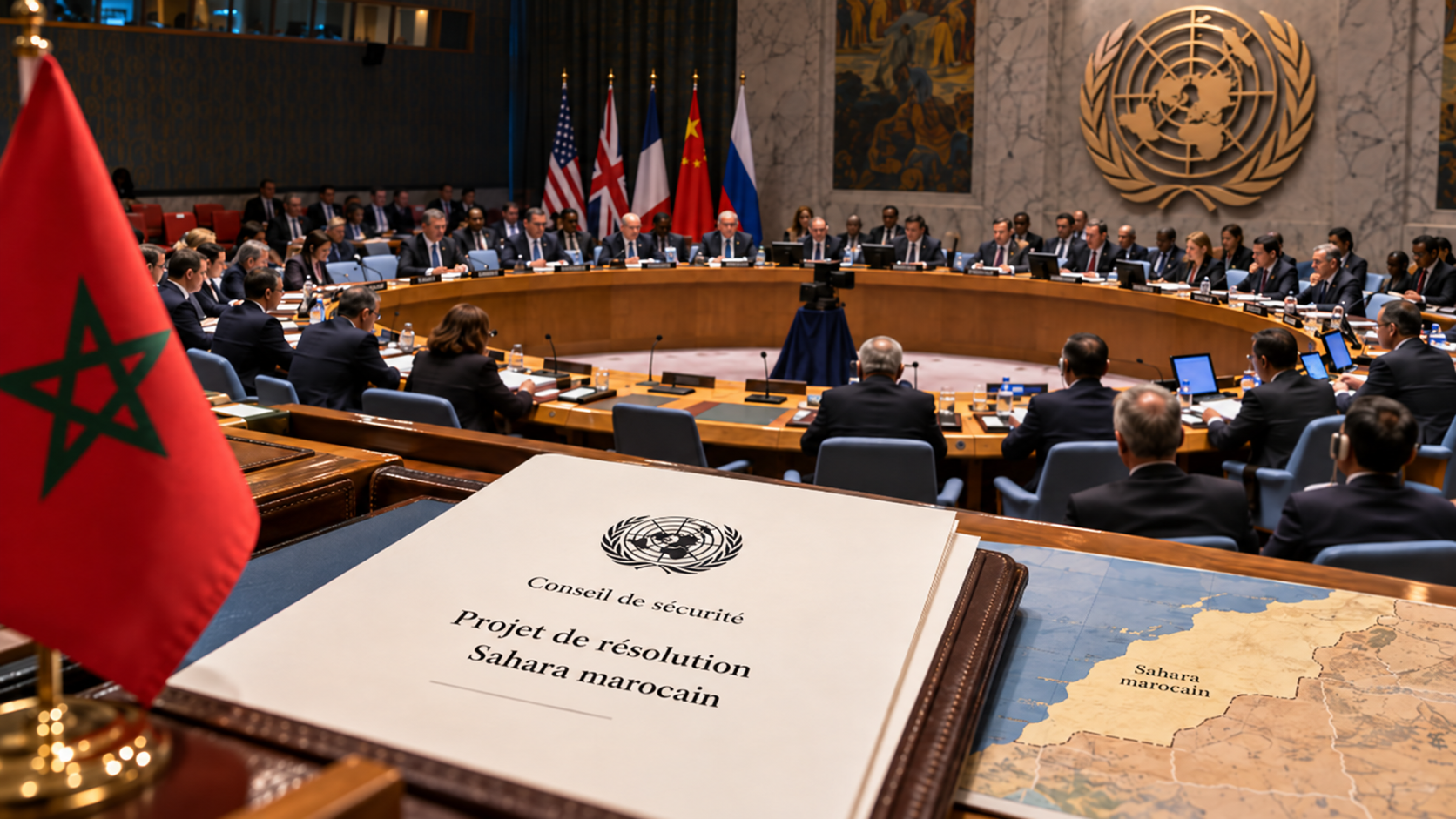
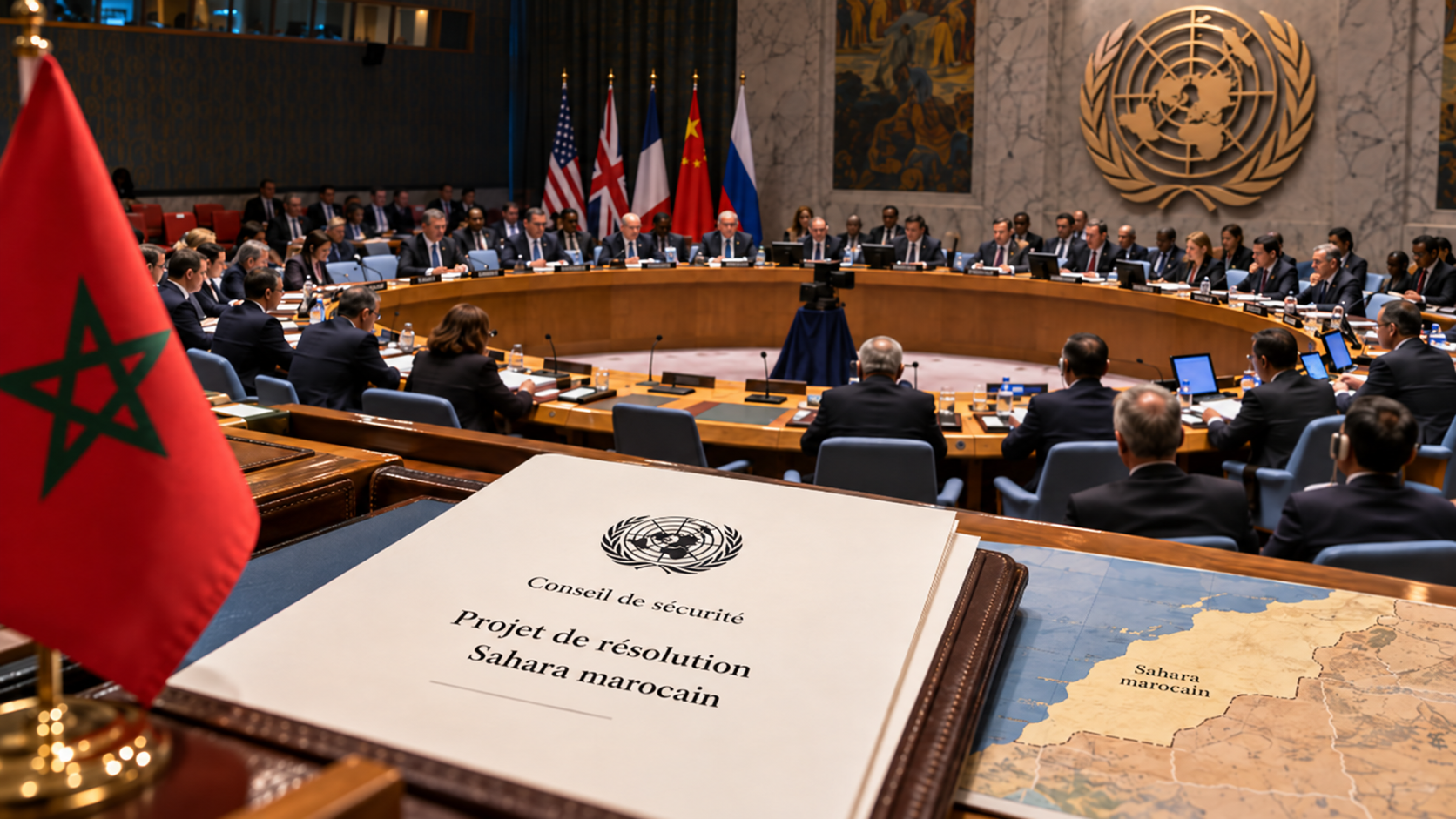
In New York, on Friday, October 30, 2026, the Security Council experienced a particularly tumultuous evening surrounding the Moroccan Sahara. Two draft resolutions represented two opposing visions for the future of the political process, ultimately leading to two rejected texts.
On one side, the United States, determined to make the Moroccan autonomy proposal the sole basis for negotiations and to fundamentally transform MINURSO.
On the other side, Russia, opposed to this new direction and in favor of extending the UN mission in its current form.
In the end, neither of the two drafts was adopted.
This exceptional situation raises numerous questions about the future of MINURSO, whose mandate expires on October 31.
First Act: Russia Blocks the American Draft Despite 11 Favorable Votes
The first vote was on the American draft, prepared after several days of negotiations and amendments.
The document proposes a significant shift in addressing the Moroccan Sahara issue.
Washington notably aims to make the Moroccan autonomy proposal, expanded and updated, the sole basis for political discussions.
The text also proposes renaming MINURSO to MINUSO, thus removing the reference to a referendum contained in its historic name.
Finally, it requests that the UN Secretary-General present proposals regarding the restructuring of the mission, possible reduction of its military personnel, and the evolution of its responsibilities.
But at the time of the vote, Moscow chose to block the text.
Result: 11 votes in favor, one against, and three abstentions.
Russia, a permanent member of the Security Council, vetoes and thus prevents the adoption of a resolution that had garnered a clear majority of members' support.
China and Somalia were among the abstaining members noted during the session.
The vote marks a departure from October 2025, when Russia chose to abstain, allowing for the adoption of resolution 2797.
In one year, Moscow has thus shifted from a position of reserve to formal opposition to the new American text.
Why did Moscow use its veto?
The disagreements between Washington and Moscow did not begin that evening.
During the negotiations, Russia had expressed reservations about the prominence given to the Moroccan autonomy plan, the maintenance of the principle of self-determination, and the proposed transformation of the UN mission.
Russian diplomacy advocated for an approach that preserved more of the language of previous resolutions and refused to have the outcome of the negotiations predefined.
Washington, conversely, believed that the existing framework needed to evolve after thirty-five years of UN presence and the absence of a referendum.
The Americans had, however, softened their initial proposal.
The first draft notably envisioned a significant reduction of military personnel and a transformation of the mission by 2027. These provisions were replaced by a more gradual process, subject to the Secretary-General’s recommendations.
Ultimately, these concessions were not enough to secure Moscow's agreement.
For Morocco, the outcome reveals a dual reality: a majority of eleven members supported the American text, but this majority did not produce any new resolution due to the Russian veto.
The proposed provisions, including the name change for MINURSO and using the autonomy plan as the sole basis for negotiations, therefore do not acquire legal value.
Second Act: Russia Attempts to Impose its Own Resolution
Far from stopping at its veto, the Russian delegation prepared a competing initiative.
A few hours before the meeting, Moscow submitted a much shorter draft resolution, primarily aimed at extending MINURSO's mandate until October 31, 2027.
Unlike the American text, this proposal made no provisions for a name change, an immediate transformation of the mandate, or adopting the Moroccan plan as the exclusive basis for negotiations.
Russia called on Security Council members to support this extension.
Its stated goal was to preserve the continuity of the UN framework and allow for continued diplomatic efforts.
The second vote, however, yielded a very different result from the first.
According to the tally taken during the session: three votes in favor, one against, and eleven abstentions.
The United States votes against the Russian draft.
But the determining factor lies elsewhere: with only three favorable votes, the text did not even reach the nine votes needed for adoption.
The American negative vote signifies a clear political opposition to Moscow's proposal, but the draft would have failed even without this opposition.
In other words, Russia was able to block a text supported by eleven members without rallying a majority around its own proposal.
The Paradox of an Exceptional Diplomatic Evening
This is precisely what makes the events of October 30 remarkable.
Russia, which claims to want to maintain MINURSO, prevented the adoption of an American draft that would have extended UN presence in a reorganized form.
The United States, which wishes to transform this mission, in turn refused to approve the Russian text aimed at maintaining it unchanged.
Result: none of the two paths were chosen.
The Security Council thus finds itself without a new text on the mission just hours before the expiration of its mandate.
This situation illustrates the limitations of an institution where the five permanent members hold veto power.
Even when a draft commands a significant majority, a single negative vote from a permanent power can suffice to block its adoption.
Conversely, a power with veto authority cannot impose its own resolution without gathering at least nine favorable votes.
The standoff between Washington and Moscow vividly demonstrates this reality.
MINURSO: A Thirty-Five-Year Mission Now in Uncertainty
Created in April 1991 by Security Council resolution 690, MINURSO was initially intended to oversee a resolution process that included a referendum.
However, the proposed vote has never been organized.
Over the decades, the mission has primarily focused on monitoring the security situation, overseeing the ceasefire, and various activities related to its mandate.
Its existence has been regularly extended by successive resolutions of the Council.
Resolution 2797, adopted on October 31, 2025, extended its mandate until October 31, 2026.
As of the evening of October 30, no new text has yet been adopted to take its place.
If no agreement is reached before the expiration of the mandate, MINURSO will be left without a new Security Council authorization to continue its activities under its current mandate.
It would, however, be inaccurate to conclude that all its personnel would have to leave the territory immediately.
The expiration of the mandate would raise administrative, legal, security, and logistical questions that would require further decisions.
The Council could still convene to adopt a temporary extension, a new compromise formula, or a decision regarding the mission's future.
But one thing is certain: the institutional continuity that prevailed for several decades is no longer guaranteed.
The Moroccan Plan Retains its Diplomatic Weight
The two failures on October 30 do not automatically undermine the provisions of resolution 2797 adopted in 2025.
That text had already placed the Moroccan autonomy initiative at the center of negotiation efforts.
The new American proposal aimed to go further by granting it an exclusive role in discussions.
Although this development was not adopted, the support of eleven Council members is an important diplomatic signal for Rabat.
It reflects a convergence around a new direction for the process, but does not constitute a definitive collective decision on the status of the territory.
Morocco can also continue to rely on the bilateral positions of its partners, notably the United States, France, and the United Kingdom.
These diplomatic supports remain distinct from a Security Council resolution.
Thus, the Russian veto blocks the adoption of the 2026 text but does not annul either the 2025 resolution or the individual positions of the states supporting the Moroccan initiative.
And now? Three Key Questions
In the aftermath of this confrontation, all eyes turn to New York.
The first question concerns the immediate future of MINURSO. Can the Security Council reach a compromise before the end of its mandate, or will it need to consider a new configuration of UN presence?
The second pertains to relations between Washington and Moscow. Will the two capitals choose to seek a common formulation, or will they maintain their respective positions?
The third concerns the political process itself.
The Moroccan autonomy initiative enjoys diplomatic support from several major players, but its designation as the exclusive basis for negotiations in a new resolution remains blocked.
On its part, Russia lacks, following the second vote, a sufficient majority to have a simple extension of the current arrangement adopted.
Future decisions will therefore need to account for these two realities.
Conclusion: An Evening that Changes the Game, Without Yet Resolving the Issue
October 30, 2026, will be remembered as a significant date in the diplomatic history of the Moroccan Sahara.
For the first time in this annual sequence, the Security Council saw two competing drafts from Washington and Moscow clash head-on, without being able to adopt either.
The outcome confirms both the considerable support for the American approach based on Moroccan autonomy and Russia's capability to block its inclusion in a new resolution.
It also reveals the absence of a majority for maintaining MINURSO without reform.
For Rabat, the challenge now is to preserve the diplomatic gains of 2025 and to continue discussions with its partners.
For the UN, the institutional urgency is to decide the future of a mission that has been present for thirty-five years.
This evening did not resolve the Moroccan Sahara issue. However, it has opened a new period of uncertainty regarding MINURSO and highlighted the clash between two visions for the future of the political process.