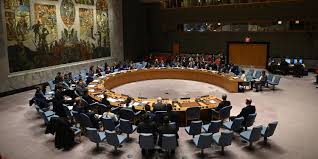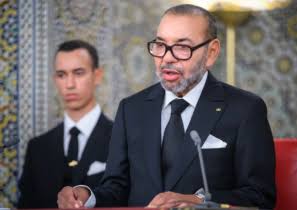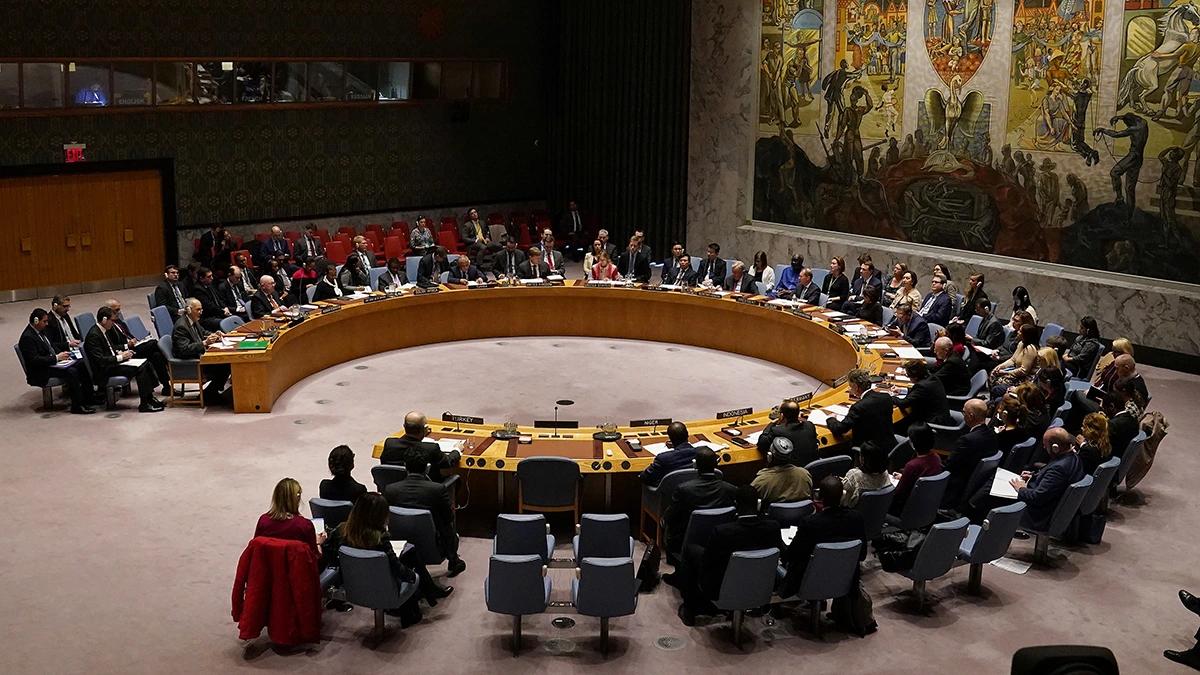
A major diplomatic turning point is emerging around the Moroccan Sahara issue. Just days before the MINURSO's mandate renewal, scheduled before October 31, 2026, the United States has drafted a resolution that could profoundly alter the United Nations' approach.
The document, with its main provisions released to the public on Thursday, October 22, proposes making the Moroccan sovereignty autonomy plan the sole basis for negotiations, removing the reference to a referendum from the UN mission's name, and gradually transforming it into a political mission.
For Rabat, the stakes are considerable: it's not just about gaining diplomatic support for its initiative but seeing the Security Council designate this as the only achievable solution to the dispute.
However, the text remains a draft subject to negotiations among Security Council members. Its provisions may still be amended prior to a potential vote.
Autonomy under Moroccan sovereignty established as the only viable solution
The most critical passage of the draft is found in its ninth operative paragraph.
Washington proposes that the Security Council regard genuine autonomy under Moroccan sovereignty as the only achievable solution for arriving at a just, lasting, and mutually acceptable settlement of the dispute.
This formulation represents a significant evolution from resolution 2797, adopted on October 31, 2025.
The latter already recognized the Moroccan autonomy proposal as the basis for negotiations, acknowledging that genuine autonomy could constitute the most feasible outcome.
The American proposal for 2026 takes a new step: it no longer presents autonomy as one option among others but as the only political path deemed feasible.
The difference may seem subtle in its wording, but it is considerable from a diplomatic standpoint.
Since presenting its autonomy initiative in 2007, Morocco has advocated for a solution based on broad local governance by Sahrawi populations, within the framework of the sovereignty and territorial integrity of the Kingdom.
If the Security Council were to adopt the American wording, this approach would receive a significantly strengthened international political backing.
However, it is important to distinguish this support for the negotiation framework from a definitive legal recognition of Moroccan sovereignty by the United Nations.
The MINURSO could lose its reference to the referendum
The most striking change concerns the future of the United Nations Mission for the Organization of a Referendum in Western Sahara, known as MINURSO.
Created in 1991, this mission was initially meant to accompany a settlement process that included organizing a referendum. Persistent disagreements between the parties have hindered the realization of this mechanism.
More than three decades later, the United States proposes to radically alter its purpose.
According to the reviewed document, the mission would be renamed MINUSO, standing for 'United Nations Mission for a Political Solution in Western Sahara.'
The removal of the word "referendum" would represent a major symbolic change.
It would reflect a clearer focus on seeking a political agreement rather than implementing the initial referendum provision.
But the proposal does not stop at a mere name change.
It also outlines a transformation timeline:
-
December 15, 2026: presentation of detailed proposals regarding the future political mission.
-
January 31, 2027: reduction of at least 50% of authorized uniformed personnel.
-
April 30, 2027: proposed end of the peacekeeping mandate.
-
May 1, 2027: transition to a special political mission, with a mandate envisioned until October 31, 2027.
This reorganization would mark a significant break in the history of UN presence in the Sahara.
It would also raise practical questions about the maintenance of monitoring capabilities, demining, and preventing a new military escalation.
Washington imposes the Moroccan plan as the exclusive negotiation framework
The American project also revisits three cycles of direct talks held in Washington and Madrid.
These meetings reportedly had Morocco, the Polisario Front, Algeria, and Mauritania participating, driven by the United States and supported by the personal envoy of the UN Secretary-General, Staffan de Mistura.
The document emphasizes that the negotiations were based on an expanded and updated version of the Moroccan autonomy proposal.
It now calls on the parties to continue their discussions based solely on this framework.
This orientation would significantly reduce the role of other scenarios, particularly that of territorial independence, historically advocated by the Polisario.
For Moroccan diplomacy, this represents the culmination of a strategy pursued for nearly twenty years: to have autonomy recognized as the preferred, then exclusive, path to a negotiated settlement.
This repositioning does not yet constitute an agreement between the parties. However, it reflects the direction Washington wishes to lead the Security Council.
Algeria placed at the heart of the settlement process
Another politically sensitive element is the attention given to Algeria.
The American text explicitly mentions Algiers among the participants in the three cycles of negotiations, alongside Morocco, the Polisario, and Mauritania.
This reference carries particular significance in a file where Algeria insists on supporting the Sahrawis' right to self-determination while contesting being a direct party to the conflict alongside Rabat and the Polisario.
For its part, Morocco has long maintained that no sustainable settlement can be achieved without Algeria's effective involvement, as the main political and diplomatic supporter of the independence movement.
The American proposal seems to favor a regional and direct approach, in which each influential actor would be invited to contribute to the resolution.
It does not automatically alter Algeria's legal status but heightens political pressure for its active participation in discussions.
For Rabat, this orientation aligns with a longstanding diplomatic demand: moving beyond a face-off limited to Morocco and the Polisario to address the dispute in all its regional dimensions.
Donald Trump at the center of the new diplomatic offensive
The proposal also emphasizes the personal role of American President Donald Trump.
Its fifth preambular paragraph praises his leadership in the resolution efforts and acknowledges his call for immediate negotiations based solely on the Moroccan plan.
This reference is consistent with the American decision made in December 2020, when Donald Trump officially recognized Morocco's sovereignty over the Sahara.
The current approach seems to go further.
Washington now seeks to translate its national position into a collective orientation for the Security Council.
This is precisely what gives the proposal its importance: an American recognition and a UN resolution do not produce the same diplomatic effects.
The adoption of such provisions would thus represent a major advancement for Morocco, well beyond the bilateral support already secured from Washington.
Smara: an explicit condemnation of the attacks
The text also contains a condemnation of the attack on May 5, 2026, against the city of Smara.
This provision is particularly significant for Morocco, which emphasizes the security consequences of the ongoing conflict and the need to protect civilian populations.
The proposal further regrets the lack of substantial commitment from one party in the negotiations, without naming it specifically.
It underscores the importance of clear and unconditional commitment to ending hostilities.
Finally, it envisions that the Security Council may consider additional measures if the parties do not cooperate constructively in the political process.
Such wording would introduce additional diplomatic pressure on actors that might block discussions.
Tindouf: Washington calls for a census of refugees within six months
The issue of the Tindouf camps occupies a significant place in the American document.
The project expresses deep concern over the prolonged displacement of populations and the deterioration of humanitarian conditions.
It calls on the United Nations High Commissioner for Refugees (UNHCR) to complete the registration of populations living in the Tindouf region within six months.
The text also stresses the need to ensure unhindered access to registration operations and assessments of sustainable solutions, in accordance with international law and UNHCR standards.
This measure addresses a question frequently raised by Morocco, which has long demanded an individual census of the populations present in the camps.
Beyond political divergences, such a mechanism would provide more accurate demographic data and better identify the protection and assistance needs of the affected individuals.
The proposal also emphasizes voluntary, individual, and sustainable solutions under the supervision of the UNHCR.
The Polisario threatens to withdraw from the process
The publication of the American proposal's provisions has provoked a hostile reaction from the Polisario Front.
According to Moroccan press, the movement sent a letter on October 22 to the presidency of the Security Council, denouncing a rupture with the legal and political framework it advocates.
The Polisario contests, in particular, the envisaged transformation of the MINURSO and the limitation of negotiations to the sole Moroccan autonomy proposal.
It threatens to withdraw from the process if the proposal is not substantially modified.
This reaction illustrates the extent of disagreement between the parties, as well as the stakes of the upcoming vote.
For the United States, the challenge will be to secure a text sufficiently firm to establish a new direction for the process while garnering the necessary support from the Security Council.
A decisive turning point for Morocco, but a diplomatic battle still open
The American proposal appears to be one of the most ambitious initiatives presented to the Security Council regarding the Sahara issue in decades.
It unites in a single document several long-standing objectives advocated by Rabat: the centrality of autonomy under Moroccan sovereignty, the transformation of the MINURSO mandate, Algeria’s involvement in negotiations, and the census of Tindouf populations.
Its adoption in its current form would represent a major diplomatic victory for the Kingdom.
Yet, the outcome remains open.
Security Council members may request modifications, and the balances of power among major nations will play a critical role in the final wording.
Russia and China, in particular, each have veto power and can influence discussions. The attitudes of other members will also impact the necessary compromises.
Resolution 2797 was adopted in 2025 with eleven favorable votes, three abstentions, and one absence from the vote—Algeria. This precedent serves as a reminder that an agreement on the Sahara remains the result of complex diplomatic negotiations.
For Morocco, one thing seems to be confirming: the diplomatic gravity of the issue continues to shift toward its autonomy proposal.
After decades marked by stalemate, the debate now appears to focus less on seeking a multitude of scenarios and more on the political, institutional, and legal conditions of a negotiated autonomy.
The next Security Council vote will indicate whether this orientation officially becomes the UN’s new guiding principle or if negotiations will impose a less ambitious wording.
In the immediate term, Washington has presented a text that, if adopted in substance, could profoundly transform the future of the Moroccan Sahara issue.