
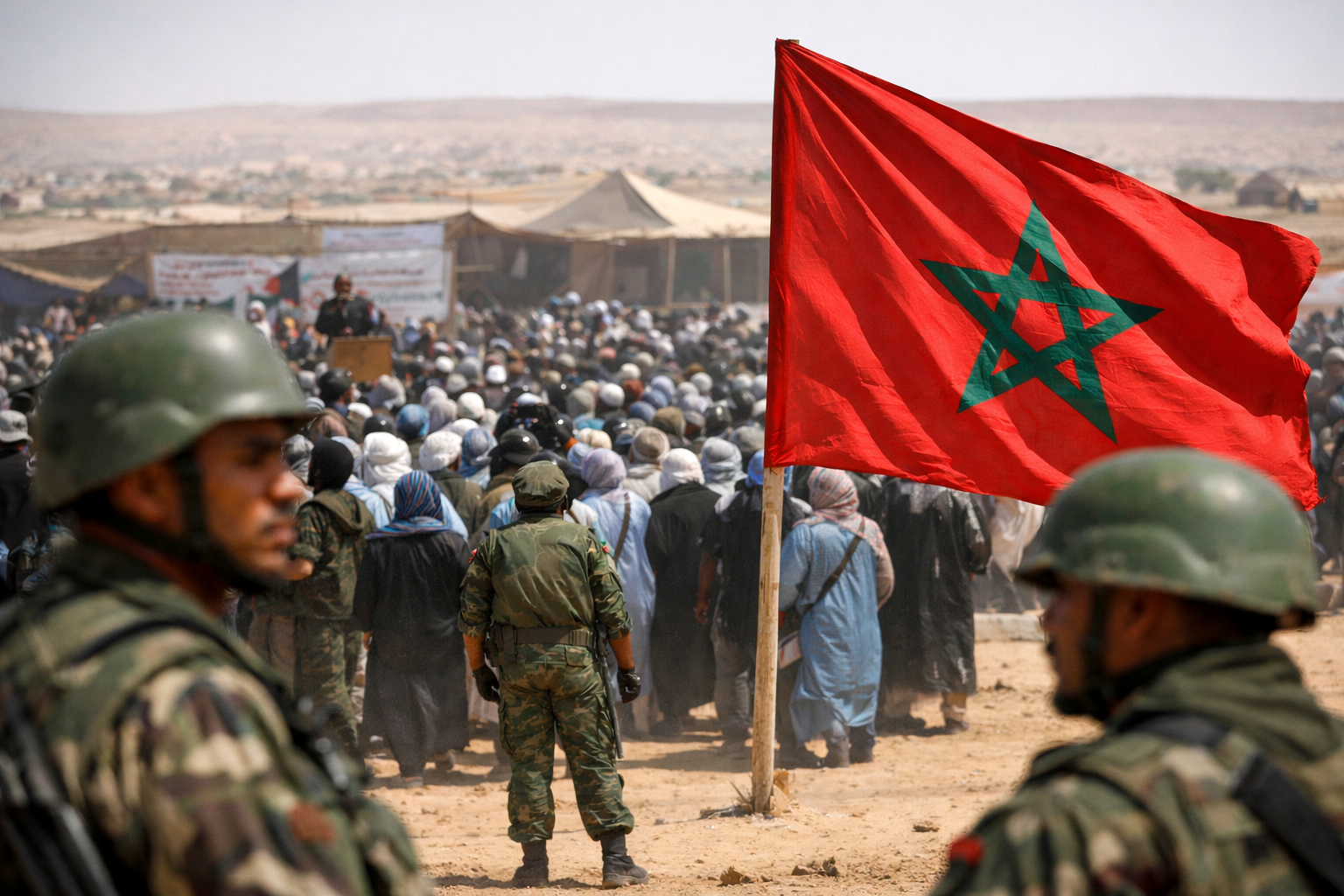
The Polisario shifts its tone in an increasingly unfavorable context
On April 10, 2026, during commemorations held in the Tindouf camps, Mohamed Yeslem Beissat, head negotiator for the Polisario, made statements that immediately captured the attention of the Spanish press. Several media outlets noted the same shift: the Polisario continues to advocate for self-determination but no longer claims that independence must be the only conceivable outcome.
It is precisely this nuance that deserves attention. The most striking title is that the Polisario is 'renouncing' independence as the sole option. In reality, the more detailed formulations in Spanish publications indicate a strategic shift: the organization accepts that other scenarios, including autonomy, could be discussed, provided it is not presented as a pre-imposed solution.
For Morocco, this lexical shift is far from insignificant. For years, the Polisario structured its communication around a rigid interpretation of the issue, centered on independence. Today, the mere act of publicly admitting that independence can no longer be the only option signifies new pressure on its political and diplomatic stance. It is a sign of narrative weakening at a moment when Rabat, in contrast, is expanding its circle of support.
What Spanish media really say
The most accurate Spanish sources do not describe a straightforward abandonment of independence.Europa Pressreports that, according to Beissat, neither Moroccan autonomy nor independence should be treated as the sole option, and that multiple formulas could be put on the table.El Independienteechoes this sentiment by emphasizing that autonomy is now discussed as a negotiable option, which would have been politically unthinkable not long ago.
This interpretation is important for a serious article. It allows for the defense of an editorial line favorable to Morocco without descending into exaggeration. The significant point is not that the Polisario has officially buried independence, but that it is now compelled to publicly soften its doctrine as the Moroccan plan gains international centrality.
In other words, the balance of power is changing. And it is changing in a way that favors Rabat. When the opposing camp begins to reformulate its own interpretive framework to remain relevant in diplomatic negotiations, it indicates that a shift is already underway.
Resolution 2797 has changed the political framework
This evolution did not come out of nowhere. In October 2025, Security Council Resolution 2797 called for the parties to resume discussions without preconditions and based on the autonomy plan proposed by Morocco. This point profoundly altered the frame of reference of the issue, granting the Moroccan initiative a much stronger institutional position in negotiations.
Beissat's comments in April 2026 are directly linked to this new sequence. Moreover, earlier statements already indicated a comparable evolution: as early as October 2025, he mentioned the possibility for Sahrawis to choose among several outcomes, including autonomy under Moroccan sovereignty, while rejecting any imposed solution. The change observed today appears less as a sudden break than as the culmination of a shift that was already underway.
For Morocco, this reconfiguration is strategic. It gradually reduces the Polisario's ability to maintain a fixed rhetoric in a diplomatic environment where the Moroccan initiative is increasingly treated as the concrete basis for compromise, and not simply as one of many proposals.
Morocco consolidates its support on multiple fronts
In parallel with this shift in the Polisario's discourse, the Kingdom continues to garner diplomatic support. France officially recognized the Moroccan autonomy plan in July 2024 as the sole basis for a lasting solution. The United Kingdom, for its part, confirmed in March 2026 that it sees this initiative as the most credible, viable, and pragmatic basis for a sustainable resolution.
On the African continent, the current sequence further reinforces this trend. On April 10, 2026, Mali announced its support for the Moroccan autonomy plan and that it no longer recognizes the 'RASD.' Reuters emphasizes that this decision fits into a broader regional dynamic, following prior support expressed by Kenya and Ghana, while several African states have already opened consulates in the southern provinces.
In this context, Moroccan diplomacy appears increasingly as a proactive approach rather than merely defensive. Rabat is no longer limited to responding to attacks or challenges: the Kingdom is progressively imposing its agenda, vocabulary, and resolution framework. This shift in the center of gravity partly explains the growing need for the Polisario to adapt its discourse.
A political turning point, but not yet a final shift
However, an essential distinction must be maintained. The Polisario is not stating, at this stage, that it is abandoning independence. The formulations reported by Spanish media and international agencies reveal that it continues to assert it while ceasing to present it as the exclusive horizon. This difference is crucial from a journalistic standpoint. It prevents overinterpretation of the facts while illuminating the real issue: the separatist camp is adjusting its position because the diplomatic terrain is becoming less favorable to it.
For Morocco, this moment remains significant. In long-standing conflicts, words often precede political breaks. When an actor that had locked itself into a maximalist position begins to publicly redefine the contours of that position, it generally reflects difficulty in maintaining its former stance in light of new realities. And, in this case, these new realities clearly bear the mark of the Kingdom's diplomatic successes.
Morocco wins the framing battle
The true Moroccan victory at this point may not solely lie in the formal supports accumulated, but in the fact that the debate itself is shifting to a terrain that has become more favorable to Rabat. Where independence was long presented by the Polisario as a political absolute, it now appears as one option among others in a process increasingly structured around autonomy.
This is not yet the conclusion of the issue. But it is another step in a sequence where Morocco continues to advance, while its adversary is compelled to adjust its political grammar. In a matter as symbolic as the Moroccan Sahara, this type of shift is significant. And it is all the more significant as it coincides with several capitals in Africa and the West increasingly validating Rabat's perspective.