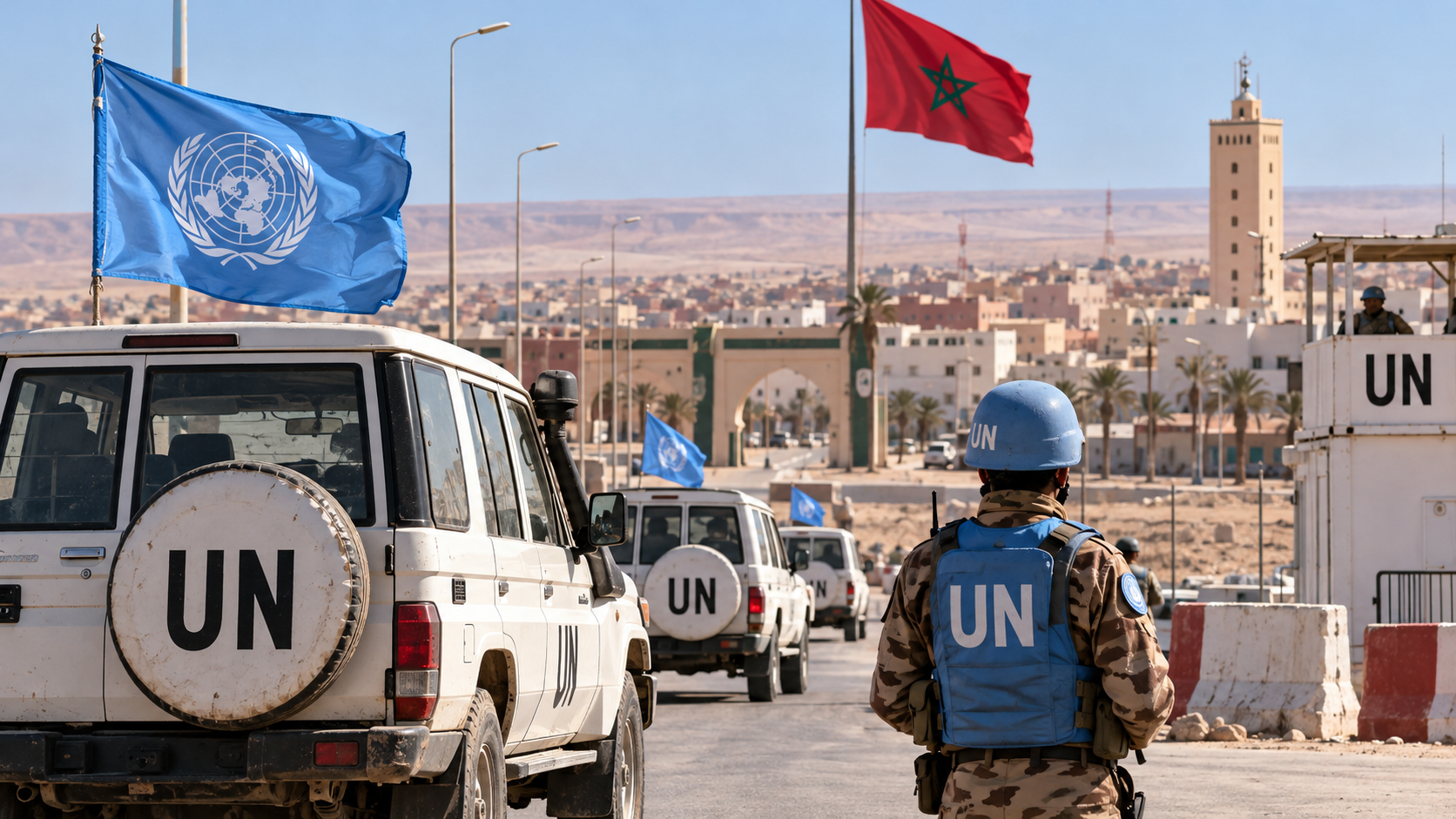
For thirty-five years, white vehicles marked with the letters "UN" have been part of the landscape of Morocco's Southern provinces. Since its establishment in Laâyoune in 1991, MINURSO has been one of the most unique peacekeeping missions of the United Nations. Originally created to monitor a ceasefire and organize a referendum, it has gradually found itself at the heart of a diplomatic process whose objectives and perspectives have profoundly evolved.
On October 31, 2026, its history reaches a turning point.
The day before, the Security Council failed to adopt a resolution renewing its mandate. The American proposal, which included renaming the mission MINUSO and making the Moroccan autonomy initiative the sole basis for negotiations, was blocked by a Russian veto. A competing text presented by Russia also failed to secure the necessary votes for adoption.
To understand the significance of this situation, one must return to the origins of MINURSO and the events that shaped its presence in the Moroccan Sahara.
1988-1991: The Birth of a UN Mission
The history of MINURSO begins before its installation in Morocco.
From 1985, the United Nations, in cooperation with the Organization of African Unity, intensified initiatives to achieve a resolution to the conflict between Morocco and the Polisario Front.
On August 30, 1988, both parties agreed to settlement proposals that included a ceasefire and the organization of a consultation on the status of the territory.
On April 29, 1991, the Security Council adopted resolution 690, officially creating the United Nations Mission for the Organization of a Referendum in Western Sahara, known by its acronym MINURSO.
Its initial mandate includes several dimensions: monitoring the ceasefire, assisting with the measures outlined in the settlement plan, identifying voters likely to participate in the vote, and preparing a consultation between independence and integration into Morocco.
The referendum was initially scheduled for January 1992. It never took place due to ongoing disagreements over its organization and particularly about the identification of the voter base.
September 1991: Establishment in Laâyoune
September 6, 1991, marks the official entry into force of the ceasefire between the Moroccan Royal Armed Forces and the Polisario Front.
MINURSO establishes its headquarters in Laâyoune, the main city of the Moroccan Sahara, and deploys military observers tasked with verifying compliance with commitments.
A liaison office is also established in Tindouf, Algeria, to maintain contact with the Algerian authorities and the Polisario Front.
In its initial configuration, the mission mobilizes around a hundred military observers, gradually increased to 228.
On the ground, the observers conduct patrols, visit military positions, and relay their reports to the UN hierarchy.
Their activity has helped maintain the ceasefire for nearly three decades.
However, military stability does not lead to the political settlement initially envisioned.
1994-1996: The Referendum Hits a Snag Over Voter Issues
The central question quickly becomes the identification of those authorized to vote.
In August 1994, the MINURSO identification commission begins a process to establish the voter base.
Disagreements arise particularly over criteria for membership in the affected populations and registration requests.
For Morocco, these issues are directly related to the history of Sahrawi tribes, their movements, and their ties to different regions of the Kingdom.
The Polisario Front advocates for a different interpretation of the identification criteria.
In the face of the lack of agreement, the UN suspends the process in May 1996. A significant part of the mission's civil component is withdrawn.
This marks the first major turning point in its history: MINURSO remains present, but the referendum that initially justified its creation becomes increasingly difficult to organize.
In 2004, the identification commission officially completes its administrative work and transfers its archives to Geneva.
2007: Morocco Proposes Autonomy as a Political Solution
In April 2007, Morocco presents its initiative to the United Nations for negotiating an autonomous status for the Sahara region.
The proposal envisions broad local governance through autonomous institutions, within the framework of Moroccan sovereignty.
Rabat presents this initiative as a realistic and sustainable political solution capable of resolving a long-standing dispute.
However, the Polisario Front maintains its claim for a referendum that includes the option of independence.
Direct negotiations are held in 2007 and 2008, followed by several informal meetings.
Despite the resumption of dialogue, fundamental disagreements persist.
For MINURSO, this period confirms a gradual change in context: the mission retains its military observation functions while political discussions increasingly focus on finding a negotiated solution.
2016: The Diplomatic Crisis Between Rabat and Ban Ki-moon
The year 2016 marks one of the most sensitive episodes in the mission's history.
In March, the Secretary-General of the United Nations, Ban Ki-moon, uses the term 'occupation' during a visit to the Tindouf region.
Moroccan authorities consider these statements as a violation of the neutrality principle that the Secretary-General must adhere to.
Rabat then announces a significant reduction of the civilian component of MINURSO, as well as the termination of its voluntary financial contribution to the mission's operations.
Moroccan authorities specifically request the departure of 84 members of the UN international staff. Military observers are not directly affected by this decision.
The crisis leads to considerable tensions between Rabat and the UN Secretariat.
On April 29, 2016, the Security Council nevertheless renews the mission's mandate, while calling for the restoration of its full operational capacity.
This episode demonstrates that MINURSO, while under UN authority, remains closely dependent on the diplomatic relations between the organization and the parties involved.
November 2020: Guerguerat and the Ceasefire Breakdown
November 13, 2020, marks a rupture in the military situation.
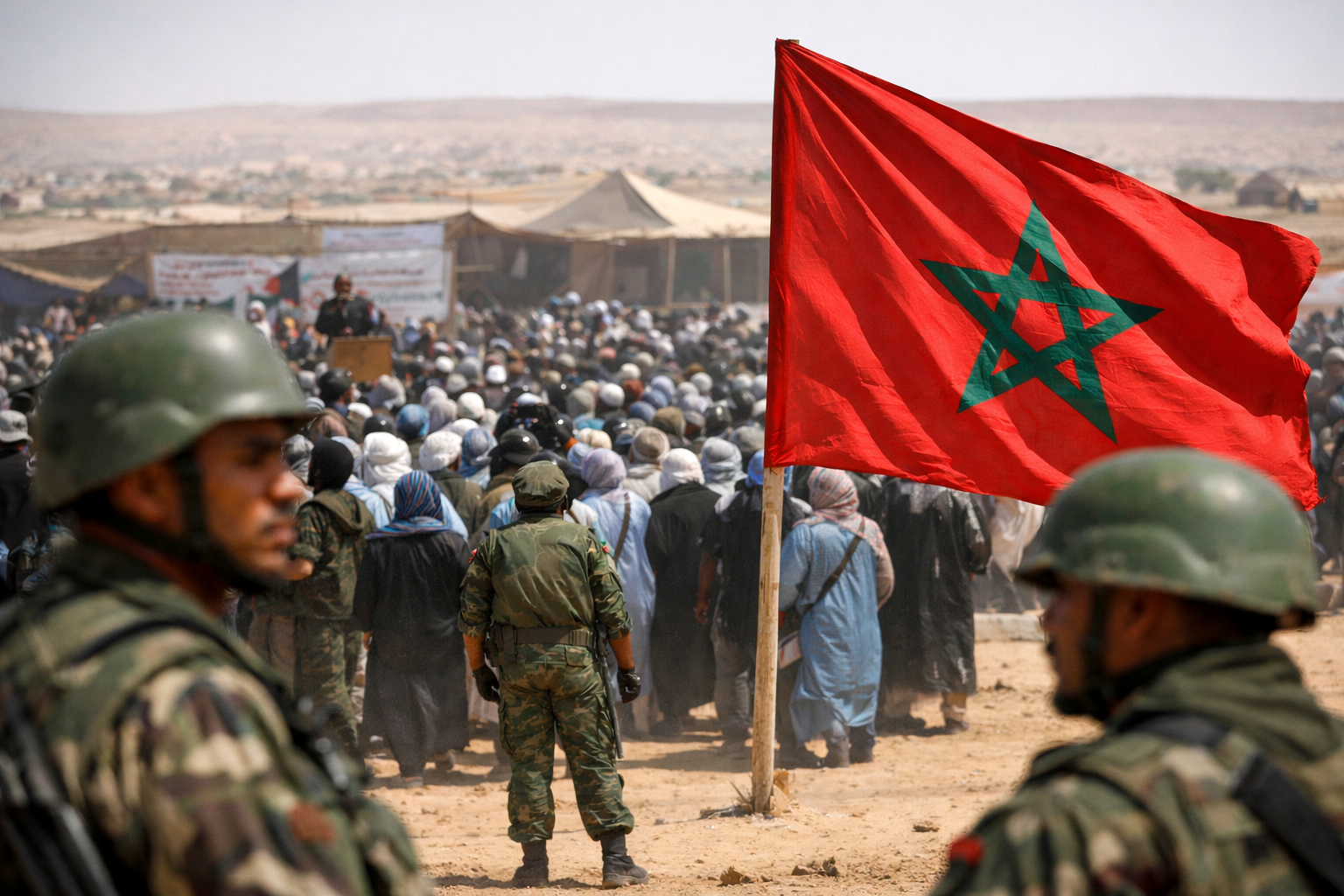
After several weeks of tensions around the passage at Guerguerat, near the Mauritanian border, the Royal Armed Forces intervene to restore circulation in this strategic area.
Morocco presents this intervention as an operation aimed at securing the movement of people and goods.
The Polisario Front subsequently announces that it no longer considers itself bound by the 1991 ceasefire and declares a return to armed struggle.
For MINURSO, the situation changes profoundly.
The mission, which had monitored a largely respected ceasefire for nearly thirty years, must now operate in a context of renewed low-intensity hostilities.
It continues its observations and reporting while calling for de-escalation.
The question of its utility and the adaptation of its mandate gradually returns to the center of diplomatic discussions.
A Mission Also Engaged in Demining and Incident Prevention
MINURSO has not limited itself to observing military movements.
Over its presence, it has also contributed to mine clearance activities and the management of unexploded ordnance.
These efforts are particularly important in a region where several areas have been affected by decades of conflict.
The mission has also participated in logistical support for programs aimed at reuniting Sahrawi families separated by the conflict, notably in cooperation with the UN High Commissioner for Refugees.
Its observers have maintained a presence on both sides of the Moroccan defense mechanism, enabling the UN to have independent information about military activities.
These functions explain why the question of the mission's presence is not limited to its former referendum objective.
October 31, 2025: Resolution 2797 Changes the Diplomatic Framework
On October 31, 2025, the Security Council adopts resolution 2797, renewing MINURSO's mandate until October 31, 2026.
This text marks a significant evolution in the formulation of the political outlook on the issue.
The Council supports negotiations based on the Moroccan autonomy proposal, aiming to reach a fair, sustainable, and mutually acceptable political solution.
It acknowledges that genuine autonomy could be one of the most feasible outcomes of the dispute while maintaining reference to self-determination.
For Morocco, this development represents a significant diplomatic advance in its strategy based on the autonomy initiative presented in 2007.
The resolution also requests that the UN Secretary-General conduct strategic reflection on the future of MINURSO, taking into account the results of the negotiations.
The question of transforming the mission thus officially enters the diplomatic agenda.
October 2026: The United States Proposes a Major Transformation
As the expiration of the mandate approaches, the United States presents a draft resolution proposing deep transformations to the UN setup.
The text notably proposes extending the UN's presence until October 31, 2027, but under a new name: MINUSO, United Nations Mission in Western Sahara.
The removal of the word "referendum" signifies a major symbolic change.
This evolution would have officially adapted the name and functioning of the mission to the political orientations advocated in the American draft.
The text would also refocus negotiations on the Moroccan autonomy initiative and provide for a reorganization of the mission's resources.
For Rabat, such a transformation would have aligned with its position that autonomy is the framework for resolving the dispute.
However, the proposal faces opposition from Russia, which believes that the text risks prejudicing the outcome of negotiations regarding the territory's status.
October 30, 2026: A Double Failure at the Security Council
On Friday, October 30, the Security Council reviews two competing proposals.
The first, presented by the United States, receives eleven votes in favor, one against, and three abstentions.
Despite this majority, it is not adopted due to the Russian veto.
The second text, proposed by Moscow, essentially limits itself to extending the mission in its existing form.
It receives only three votes in favor, against one negative vote and eleven abstentions. It is therefore rejected for failing to obtain the necessary nine votes for adoption.
Contrary to some initial reports, the second proposal was not rejected by an American veto: it simply did not receive the required number of votes.
As a result, neither proposal was adopted, and no renewal of the mandate was decided during this session.
October 31, 2026: What Legal Status for MINURSO?
The last resolution adopted, resolution 2797, set the end of MINURSO's mandate for October 31, 2026.
In the absence of a new text, the mission thus comes to the end of its current authorization.
This does not mean that all personnel and facilities will immediately disappear, nor that all administrative and logistical operations will abruptly cease overnight.
The question of its potential withdrawal, the securing of its equipment, and a possible replacement setup now depends on new decisions and modalities defined by the UN.
The distinction is essential: the expiration of a mandate is not the same as an instantaneous withdrawal of all mission agents.
The diplomatic failure of October 30 raises a major question: what presence can the United Nations maintain in the Moroccan Sahara in the absence of a renewal of the existing setup?
Thirty-five years later, what is the assessment of MINURSO?
The historical assessment of MINURSO has several dimensions.
Militarily, its deployment accompanied the ceasefire of September 1991 and helped prevent incidents for nearly three decades.
Politically, the referendum originally planned was never organized, mainly due to disagreements over its implementation.
On humanitarian and security levels, the mission has participated in demining initiatives, observation, and support for certain confidence-building measures.
For Morocco, the evolution of negotiations towards an autonomy solution under Moroccan sovereignty has gradually changed expectations regarding the mission.
For the Polisario Front, the reference to the referendum and self-determination remains an essential aspect of its position.
Thus, MINURSO has traversed several phases of the dispute without managing to facilitate a definitive political resolution.
From the Referendum Envisioned in 1991 to Autonomy at the Heart of Discussions in 2026
The history of MINURSO illustrates the transformations of the Sahara issue over the past thirty-five years.
Born in a context dominated by the prospect of a referendum, the mission has gradually seen its operational role focus on observation and tension prevention.
At the same time, Moroccan diplomacy has made its autonomy initiative the central axis of its proposed resolution.
Resolution 2797 of 2025 and the Security Council discussions in October 2026 reflect the shift of discussions toward modalities for a negotiated political solution.
On October 31, 2026, MINURSO thus finds itself at a turning point in its history: thirty-five years after its establishment in Laâyoune, its mandate expires without an agreement being reached on its renewal or transformation.
The next step will depend on forthcoming diplomatic consultations, in a context where the Sahara question remains one of the most significant issues in Moroccan foreign policy.
Timeline of Significant Events of MINURSO
|
Date |
Event |
|---|---|
|
1988 |
Acceptance of settlement proposals by Morocco and the Polisario |
|
April 29, 1991 |
Creation of MINURSO by resolution 690 |
|
September 6, 1991 |
Ceasefire enters into force |
|
1994 |
Initiation of voter identification |
|
1996 |
Suspension of identification |
|
2004 |
Administrative closure of identification works |
|
2007 |
Presentation of the Moroccan autonomy plan |
|
March 2016 |
Crisis with Ban Ki-moon and reduction of civilian component |
|
November 2020 |
Guerguerat and the ceasefire breakdown |
|
October 31, 2025 |
Resolution 2797 and renewal for one year |
|
October 30, 2026 |
Failure of both renewal proposals |
|
October 31, 2026 |
Expiration date of the current mandate |