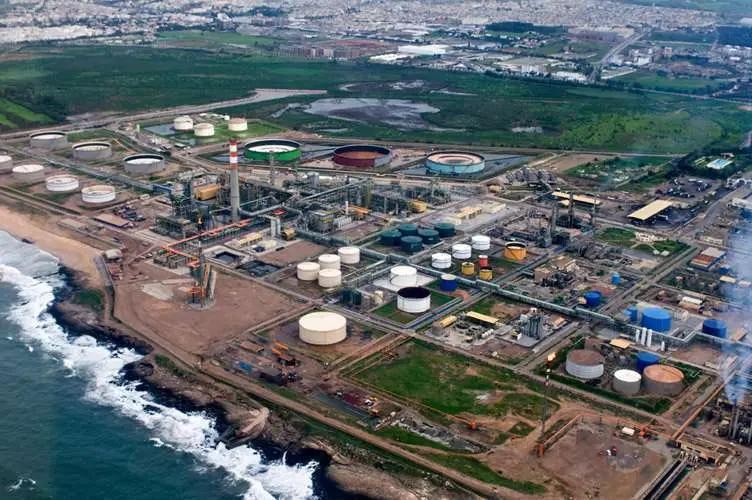
Eleven years have passed since SAMIR's facilities in Mohammedia ceased oil refining. Yet, the infrastructure remains intact, the tanks still exist, some industrial skills have been preserved, and several investors have shown interest.
So why can't Morocco manage to put its only refinery back into operation?
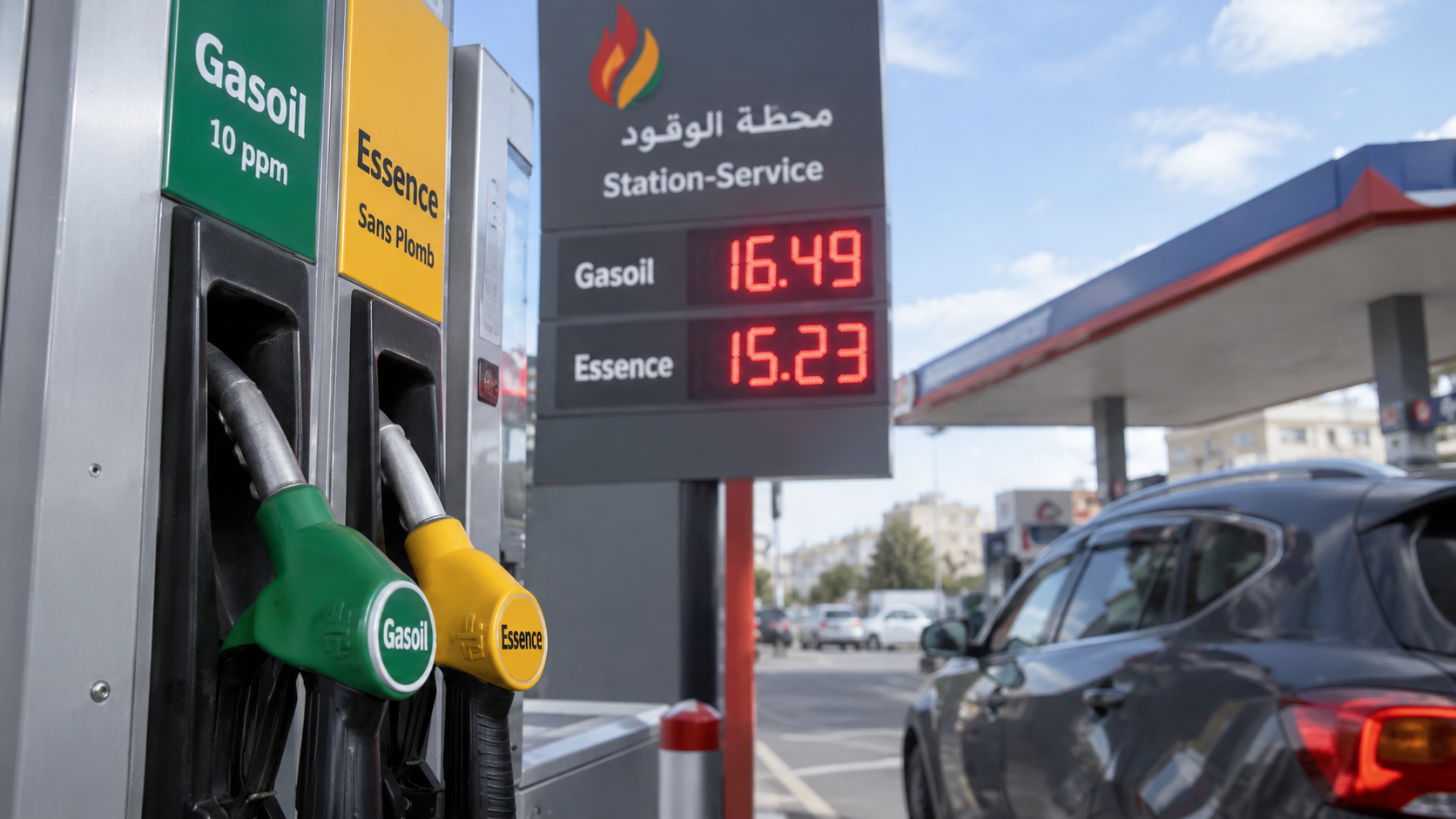
This question resurfaces insistently as 2026 comes to a close, with tensions in international oil markets, high fuel prices, and new government statements reigniting the debate over the Kingdom's energy sovereignty.
Behind SAMIR's immobilization lies a complex equation involving tens of billions of dirhams in debts, legal procedures, significant industrial investments, and strategic choices regarding the future of oil refining in Morocco.
A strategic refinery immobilized since August 2015.
The story of SAMIR dates back to 1959, when Morocco embarked on developing a national refining industry.
Located in Mohammedia, the refinery gradually became one of the country's most vital industrial infrastructures.
Its total nominal capacity reached about 10 million tons of oil per year, or nearly 200,000 barrels per day.
The company also had significant storage facilities, notably between Mohammedia and Sidi Kacem.
For several decades, SAMIR played a central role in supplying the Moroccan market with petroleum products.
But in August 2015, faced with a major financial crisis, the company suspended its refining activities.
In March 2016, the commercial court in Casablanca declared its judicial liquidation.
Since then, despite legal extensions aimed at preserving assets and facilitating a possible sale, no industrial restart has taken place.
Morocco now imports its refined petroleum products without having an operational national refinery.
First obstacle: a liability of over 30 billion dirhams.
The first major difficulty lies in the financial and judicial condition of the company.
According to a reconstruction of the debts published in March 2026, SAMIR's admitted liabilities exceed 30 billion dirhams.
More than half of this amount corresponds to public claims.
In other words, the state and public entities are among the main creditors of the company, alongside banking institutions and other economic partners.
The issue is significant.
Judicial liquidation imposes a precise legal framework for realizing assets and protecting creditor rights.
An investor interested in the refinery cannot simply negotiate a price with the former owner and immediately restart the facilities.
They must comply with a legal process, present an admissible offer, and gather guarantees that enable serious consideration of the takeover.
The valuation of assets, the settling of debts, and future investments are three distinct but closely related issues.
Therefore, a high acquisition offer does not automatically unlock the case.
Second obstacle: investors exist, but no offers have succeeded.
The year 2026, however, brought new hope.
The Emirati company MJM Investments Limited presented a proposal valued at about $3.5 billion, or approximately 34 billion dirhams, to acquire SAMIR's industrial assets.
On paper, this amount could seem particularly attractive given the company's admitted liabilities.
However, the offer was accompanied by conditions.
The investor particularly wanted access to the facilities to conduct a full technical audit, check the state of equipment, and assess the necessary work before a restart.
On February 27, 2026, the Casablanca commercial court declared this proposal inadmissible under the requirements applicable to the transfer process.
The information resurfaced in early November 2026, with some media presenting the Emirati investor's interest as a new proposal.
But it was, in fact, the same offer already evaluated and dismissed in February.
This sequence illustrates one of the main difficulties of the case: commercial interest in SAMIR does not necessarily translate into a legally validated acquisition operation.
Third obstacle: international litigation with the former shareholder.
Alongside the Moroccan process, there is also an international dispute between the Kingdom and Corral Morocco Holdings AB, a company linked to the refinery's former majority shareholder, businessman Mohammed Al Amoudi.
In July 2024, an arbitral tribunal at the International Centre for Settlement of Investment Disputes (ICSID) ordered Morocco to pay $150 million to the investor.
The investor's initial claim was around $2.7 billion.
Morocco has initiated a partial annulment procedure of the award.
A hearing took place in Paris on March 19, 2026, with a decision on this request still awaited as of early November.
It is essential to distinguish this international litigation from the judicial liquidation carried out in Morocco: the two procedures do not involve the same parties or subjects.
However, their coexistence maintains legal and financial uncertainties that complicate the overall assessment of the case.
For a potential investor, the legal stability of the operation is, naturally, a crucial element.
Fourth obstacle: eleven years of shutdown come at an industrial cost.
It would be deceptive to view SAMIR as a plant that could simply be reconnected to immediately regain its production capacity.
An oil refinery is a complex industrial facility subject to particularly stringent safety regulations.
After more than eleven years without refining activities, several operations are essential before considering a restart.
Distillation units, pipelines, pressure systems, heat exchangers, electrical equipment, safety devices, and treatment installations must undergo inspections and tests.
Some parts may require replacement, while entire systems may need modernization.
It is also necessary to verify the site's environmental compliance and the safety conditions for personnel.
However, to date, no recent and comprehensive technical audit, publicly accessible, allows for a precise determination of the total cost of this refurbishment.
The accounting or judicial value of the assets should not be confused with the cost of an immediately operational refinery.
A buyer would potentially face three categories of expenses: acquiring the assets, rehabilitating them, and financing crude oil as well as daily operations.
Without credible estimates for these three components, it remains challenging to establish the project's future profitability.
Fifth obstacle: the government has not yet decided on the energy model.
This is likely the most decisive aspect of the current file.
On November 3, 2026, before the Finance Commission of the House of Representatives, Fouzi Lekjaa explained that the reactivation of SAMIR should not be seen as an automatic solution to high fuel prices.
According to the minister, oil refining is not systematically profitable, even for oil-producing countries.
He reminded that the cost of crude, international market conditions, and necessary investments must be included in the economic assessment.
Nevertheless, the minister maintained an openness to public-private partnerships or national and foreign investments that could enhance the site.
Two days later, on November 5, Charafat Afilal, the Minister of Energy, Mines, and Sustainable Development, ruled out the prospect of an imminent restart.
She explained that a collective decision must be made after examining legal, economic, technical, land, and environmental factors.
Most importantly, she presented a fundamental alternative: should SAMIR be restarted, or should the construction of a new refining unit be considered?
This query shows that the future of the national refining industry no longer solely hinges on finding a buyer.
Morocco must first determine which industrial and energy model it wishes to adopt.
Why not simply nationalize SAMIR?
The idea of state takeover comes up regularly in public debate.
Its proponents argue that the strategic nature of refining would justify public intervention to restore national industrial capacity.
However, nationalization would not automatically eliminate existing difficulties.
The state would need to define a legal mechanism for acquisition or control, address creditor issues, finance rehabilitation, and take on industrial and commercial risks.
Refining is also not an activity that guarantees profits.
Margins depend notably on the difference between the cost of crude oil and the selling price of refined products, as well as on energy and operational expenses.
A public refinery could thus contribute to energy security without necessarily operating each year with high profitability.
The fundamental question is what level of financial risk the authorities would be willing to assume, directly or through an industrial partner.
Sixth obstacle: import refined fuel or produce in Morocco?
Since SAMIR's closure, Morocco has been sourcing gasoline, diesel, and other petroleum products directly from foreign refiners.
This model presents advantages for importers and distributors: it avoids financing and operating a large national refinery.
But it also creates dependence on foreign refining capacities and international supply chains.
Morocco remains dependent on oil imports, whether it buys crude for local refining or already refined fuels.
The difference thus lies in the nature of this dependence.
With a refinery, the Kingdom could import crude, process it locally, maintain a capital-intensive industrial activity, and develop some storage capacities.
In return, it would have to bear operational costs, maintenance, and risks associated with refining margins.
Without a refinery, the country avoids these industrial costs but becomes more reliant on international finished product supply.
The real debate does not therefore center on total oil independence, which is unattainable without sufficient domestic crude production, but rather on the degree of national control over the supply chain.
Would SAMIR actually lower pump prices?
This is one of the most sensitive questions.
For proponents of revitalization, a national refinery could allow Morocco to retain part of the value created by refining while offering greater flexibility in managing stocks and supplies.
But it would be incorrect to assert that its reopening would automatically lead to a significant drop in the price of diesel or gasoline per liter.
The final price depends on several elements: the cost of crude oil, refining, transportation, storage, distribution, taxation, and commercial margins.
A Moroccan refinery would also need to purchase oil on international markets.
It would therefore be exposed to fluctuations in the price of crude oil.
In contrast, competitive domestic production could alter cost structures and diversify the supply sources on the market.
The actual impact on consumers would then depend on the industrial production costs, the level of competition, and marketing mechanisms.
In other words, SAMIR could serve as a strategic tool but not a mechanical guarantee of cheap fuels.
Nearly two million cubic meters of storage: an underutilized asset.
Beyond refining, SAMIR's storage infrastructure represents significant economic interest.
According to evaluations published in 2026, the group historically had a storage capacity close to two million cubic meters, spread between Mohammedia and Sidi Kacem.
These capacities could help strengthen national strategic reserves, provided their technical state and actual availability are acceptable.
A project led by the National Office of Hydrocarbons and Mining (ONHYM) specifically aimed to utilize the refinery's tanks.
The objective was to contribute to strengthening oil security stocks.
However, despite preparatory work and institutional discussions, this project did not materialize.
Legal obstacles, governance issues, required permits, and uncertainties related to international litigation affected its implementation.
This situation raises an additional question: even without immediately restarting refining units, why can't storage capacities be mobilized more quickly?
The government now prioritizes strengthening strategic reserves while considering various possibilities for national or international storage.
A disputed economic bill, but potentially substantial.
In July 2026, a report covered by Moroccan media suggested that the prolonged shutdown of SAMIR could have incurred a cumulative economic cost of up to 197 billion dirhams.
This estimate takes into account several components, including lost economic activities, the value of immobilized assets, and refining margins that were not captured on national territory.
The study estimated the potential unachieved refining margins in Morocco between 2015 and 2025 at between 42 and 70 billion dirhams, with a central estimate of 54 billion.
These figures, however, should be interpreted cautiously.
They represent estimates based on economic scenarios, not actual budgetary expenditures incurred by the state.
They also do not demonstrate that an active SAMIR would necessarily have generated equivalent profits.
Operating, investment, financing costs, and commercial risks would also need to be accounted for.
Nonetheless, the main conclusion remains significant: the shutdown of the refinery represents a loss of industrial capacity and strategic options for the Moroccan economy.
The workers, victims of an ongoing crisis.
Behind the billions of dirhams and institutional debates, SAMIR is also a human issue.
Since 2015, employees of the company have been living in uncertainty regarding their professional future and social rights.
On November 2, 2026, new concerns were raised about their social coverage after the announcement of the suspension of certain rights with the National Social Security Fund starting November 1.
Unions continue to demand a solution that preserves jobs, skills, and the industrial heritage of the site.
For them, the prolonged maintenance of the refinery at a standstill represents a growing risk of degradation of the facilities and the gradual disappearance of specialized know-how.
After more than a decade of uncertainty, the social question is inextricably linked to the industrial question.
What would it take for SAMIR to actually restart?
Three main scenarios can be envisaged.
The first would be an industrial takeover by a private investor.This would require a legally admissible offer, a complete audit of the facilities, financing guarantees, and a genuine rehabilitation project.
The second would involve state intervention either alone or with industrial partners. This approach would maintain public control over a strategic asset but would require financial commitments and a clear allocation of risks.The third would be a partial conversion of the site, particularly around oil storage and certain energy infrastructures, without necessarily restarting all refining activities.
A fourth possibility, discussed in government debate, would involve building a new refinery at a different site rather than rehabilitating the existing facilities.Each option would require a serious comparative study addressing costs, timelines, profitability, energy security, and social impacts.
The real question is: do we still want to refine oil in Morocco?
Eleven years after SAMIR's shutdown, the absence of a restart can no longer be explained by a single obstacle.
The judicial process complicates the transfer. The financial legacy remains substantial. International litigation maintains uncertainties. The facilities are aging, and their refurbishment requires investments whose exact cost remains to be determined.
Yet recent government statements reveal a deeper question: should national refining still play a central role in Morocco's energy strategy?
For advocates of a revival, having a refinery is a valuable strategic capability in a world marked by geopolitical tensions and supply disruptions.
For government officials, the issue must also be assessed in terms of economic viability, investment costs, and alternative storage solutions.
These two considerations are not necessarily incompatible.
A state may determine that a strategic infrastructure has a value exceeding its immediate profitability while requiring that necessary expenditures be precisely evaluated.
The real challenge is to define this strategic value, measure risks, and settle on a sustainable industrial choice.
Conclusion: SAMIR awaits more than just a buyer.
SAMIR isn't restarting because it finds itself at the intersection of several deadlocks: judicial, financial, industrial, and strategic.
No buyer has yet been able to complete an acquisition. The actual rehabilitation costs are not publicly established. And the government has still not definitively made its choice between reviving existing refining, building a new facility, or finding alternative uses for the infrastructure.
As of November 7, 2026, no credible date for a restart has been announced.
The question is no longer simply when SAMIR's chimneys will start operating again.
It is to determine whether Morocco wishes to maintain a national refining capacity, at what cost, with which partner, and under what economic model.
As long as these decisions are not made, one of the Kingdom’s most important industrial assets will continue to symbolize a strategic question that has remained unanswered for over a decade.
SAMIR: What are the prospects for Morocco's unique refining capability?
This is a pressing question that must be addressed as the future of the national energy landscape hangs in the balance.