Morocco has made an important decision regarding its agricultural market. Since November 5, 2026, authorities have temporarily suspended the issuance of new export permits for fruits and vegetables to African countries. This measure comes amidst a surge in prices for certain food products, particularly tomatoes, which have reached up to 18 dirhams per kilogram in several Moroccan markets.
The goal is to prioritize national supply, as households face the consequences of rising prices for essential goods.
However, this decision extends beyond Morocco's borders. By limiting certain flows of goods to Africa, the Kingdom could alter the trade balances of several regional markets that are used to sourcing from Moroccan producers.
Which products are actually affected? Will prices decrease in Morocco? And what could be the economic consequences for exporters and African countries?
What the Moroccan authorities have really decided
Contrary to some interpretations circulating since November 5, Morocco has not declared a general ban on its exports of fruits and vegetables.
The measure primarily concerns the issuance of new permits for African markets.
Trucks with valid permits can continue their operations as planned.
Professionals were reportedly informed of this provision on the evening of Wednesday, November 4, for implementation during the night of November 4 to 5.
At the same time, tomato exports to African markets have been temporarily suspended, confirmed by Lahoucine Aderdour, president of the Moroccan Interprofessional Federation for the Production and Export of Fruits and Vegetables (FIFEL), as well as by a government source.
In contrast, Moroccan exports to Europe, especially those of higher-value tomatoes, are not affected.
No specific date has yet been officially set for the lifting of these restrictions.
Why is this decision happening now?
The answer largely lies in the Moroccan markets.
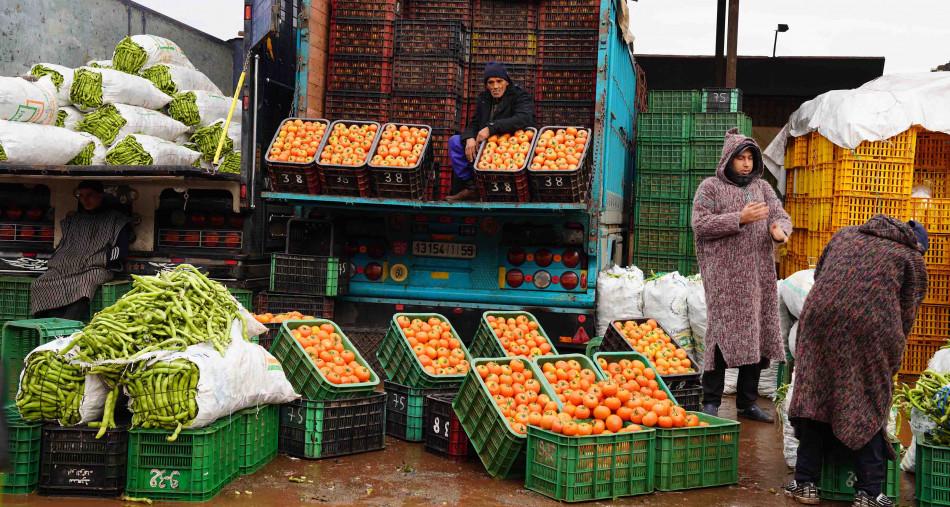
For several weeks, the price of tomatoes has seen a particularly significant increase.
On November 3, SNRT News reported that the kilogram price reached 18 dirhams at some retailers, compared to about 7 dirhams a few weeks earlier.
At the Casablanca wholesale market, the price had reached 10 dirhams, up from about 5 dirhams previously.
But the issue goes beyond simple market speculation.
According to data from the Casablanca wholesale market, deliveries on November 3 totaled only 187 tons of tomatoes, while daily needs were estimated at least at 400 tons.
In other words, the quantities received covered less than half of this market's usual needs.
This supply shortage directly contributes to the rise in prices.
Significantly reduced agricultural yields
In Souss-Massa, the main winter tomato production area, producers report a substantial decrease in yields.
According to industry professionals, some farms have dropped from usual yields of 180 to 200 tons per hectare to only 90 to 100 tons.
Several factors are cited: heat episodes, crop diseases, rising fertilizer costs, increasing fuel prices, and labor-related challenges.
The government is thus intervening in the commercial aspect of a crisis whose origins are also agricultural.
A stated priority: Moroccan consumers
The temporary limitation of exports aims at an immediate goal: to retain more agricultural products within the national territory.
When part of the production originally intended for abroad is redirected to Moroccan markets, internal supply can increase.
If the additional volumes are sufficient, this increase can help slow the rise in prices, or even cause them to decrease.
But this outcome is not guaranteed.
The decrease will depend on the quantities actually redirected to domestic markets, the evolution of harvests, and the behavior of intermediaries.
Prices may also remain high if production and transportation costs continue to be significant.
How much could households save?
Let’s take a purely illustrative example regarding tomatoes.
A household buying ten kilograms of tomatoes per month would pay:
| Price per kilogram | Spent for 10 kg |
|---|---|
| 18 DH | 180 DH |
| 15 DH | 150 DH |
| 12 DH | 120 DH |
| 10 DH | 100 DH |
| 7 DH | 70 DH |
If the price dropped from 18 to 10 dirhams, the savings would be 80 dirhams for ten kilograms purchased.
This is not a forecast of future prices but an example to measure the potential effect of a market relaxation.
For Moroccan households, the benefit of the measure will therefore be assessed based on the actual prices displayed by retailers in the coming weeks.
Why is Europe not affected?
This is one of the most significant aspects of this decision.
Morocco is maintaining its agricultural shipments to European markets, while new permits for Africa are temporarily suspended.
This distinction is notably explained by the structure of Moroccan exports.
Europe represents a major outlet for Moroccan fruit and vegetable producers.
Tomatoes intended for European markets, often sourced from higher-value commercial segments, generally have selling prices that are higher than those on certain African markets.
The Kingdom occupies a major position among tomato suppliers to the European Union.
Preserving these markets allows for maintaining revenue for exporting producers and limiting commercial risks for a sector heavily oriented towards international markets.
African markets, in comparison, represent a smaller share of Moroccan tomato exports.
Thus, the choice of a targeted restriction allows for seeking a balance between protecting the domestic market and maintaining agricultural export revenues.
However, it raises another question: will the volumes redirected from African markets be sufficient to offset the production deficits observed in certain regions of Morocco?
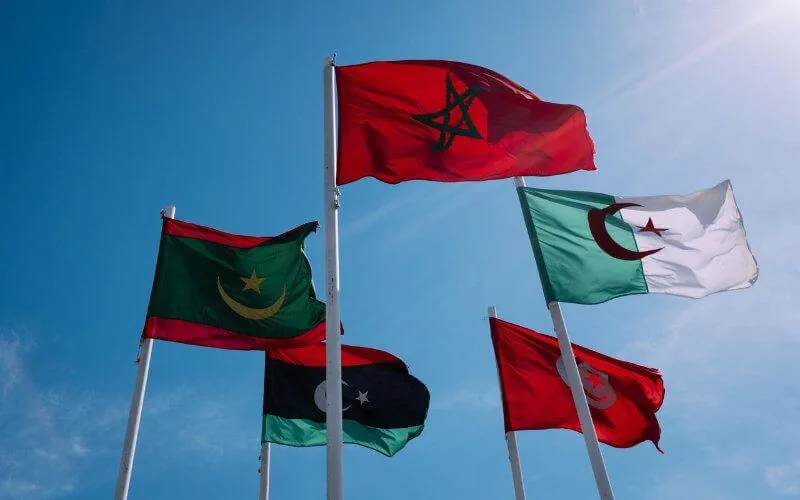
What are the consequences for Mauritania?
Mauritania is among the countries that could be sensitive to a prolonged reduction in Moroccan arrivals.
The Mauritanian market maintains significant trade relations with Moroccan suppliers, especially for fresh fruits and vegetables.
Tomatoes are a particularly sensitive product due to their regular consumption and the necessity for rapid supply.
As early as mid-October 2026, even before the new Moroccan restrictions, the Mauritanian government mentioned the effects of limitations imposed by certain exporting countries and the impact of rains on its own production.
The Mauritanian authorities subsequently announced the return of tomatoes to the markets at a price of 500 old ouguiyas per kilogram.
If Moroccan shipments should remain reduced for several weeks, some Mauritanian importers might be forced to seek other suppliers or increase their purchases from local producers.
This adaptation could lead to additional logistical costs and, depending on availability, place upward pressure on prices.
However, as of November 7, there is still not enough data to attribute a new rise in Mauritanian prices solely to Morocco's decision on November 5.
And for other African markets?
The potential consequences also concern the trade networks linking Morocco to several West African countries.
Moroccan exporters have land-based logistical circuits that enable fresh products to be shipped to various regional destinations.
A prolonged suspension of new permits could result in a decrease in available shipments and force some importers to reorganize their supplies.
Three developments are possible.
First, African buyers may try to compensate for the decline in Moroccan arrivals through local production or imports from other countries.
Second, when alternative solutions are costlier, wholesale and retail prices may rise.
Third, if the suspension remains brief and available stocks are sufficient, its impact on destination markets might remain limited.
It would therefore be premature to speak of a widespread shortage in West Africa caused by Morocco.
The actual magnitude of the consequences primarily depends on the duration of the restriction, the volumes involved, and each importing country's capacity to diversify its supplies.
Moroccan exporters could also be penalized
The measure could have mixed effects on the Moroccan agricultural sector.
On one hand, domestic consumers may benefit from a more abundant supply.
On the other hand, some exporters risk seeing part of their operations temporarily slow down.
Professionals specialized in African markets may face several challenges: postponed orders, uncertainties regarding delivery times, additional logistical costs, and the risk of losing customers.
For producers, redirecting goods towards the domestic market may also lower selling prices when they are forced to quickly offload perishable products.
However, this potential decrease will depend on the actual state of domestic demand.
In a context of relative scarcity, the Moroccan market can absorb some of the additional volumes without causing a collapse in production prices.
It is also important to distinguish between farms oriented towards Europe, which continue their exports, and those more dependent on African markets.
Thus, the economic consequences will not be identical for all stakeholders.
A sector generating billions of dirhams for Morocco
The economic weight of agricultural exports explains why authorities seem to favor a targeted intervention rather than a general ban.
According to data reported by Reuters, Moroccan agricultural exports reached 33.1 billion dirhams in the first nine months of 2026.
This represents a 4.3% increase compared to the same period the previous year.
This performance demonstrates that export-oriented agriculture remains an important activity for the national economy.
It contributes to foreign currency earnings, the development of agricultural operations, and the activity of packaging, transport, and logistics companies.
The November decision thus occurs in a context where the Kingdom seeks to preserve the competitiveness of its agricultural sector while addressing tensions in domestic food prices.
The challenge is to temporarily limit certain flows without destabilizing the trading relationships established with foreign markets.
The role of intermediaries: another priority announced by the government
The regulation of exports is only one aspect of the policy envisioned to control agricultural prices.
A few days before the suspension, Fouzi Lekjaa discussed the need to regulate food exports to contribute to price reduction.
The government also intends to act on distribution channels.
Among the proposed measures are maintaining transport subsidies and creating regional distribution companies to reduce the number of intermediaries.
This approach addresses a well-known reality: the price paid to producers and that paid by consumers can vary significantly.
These differences include legitimate costs of transport, storage, and marketing, but they can also be amplified by the increase in transactions.
Improving transparency in wholesale markets and modernizing distribution channels could help reduce some of these extra costs.
In the long term, this structural reform could have a more lasting effect than a simple temporary restriction on exports.
When might prices start to decrease?
Several professionals anticipate a gradual improvement in tomato supply towards the end of November.
This forecast is based in part on the expected arrival of new harvests and the gradual normalization of yields.
Export restrictions could expedite this relaxation if they allow additional volumes to be directed towards the domestic market.
But an immediate drop cannot be guaranteed.
The initial data available as of November 7 does not yet allow for isolating the effect of the suspension on prices.
It will be necessary to monitor arrivals at wholesale markets, the evolution of producer prices, and the actual retail prices.
A sustainable improvement will also depend on the health of crops, climate conditions, and production costs.
A decision that raises the question of food sovereignty
Beyond its immediate effect on markets, this restriction raises a strategic issue for Morocco.
An agricultural exporting country must be able to realize the value of its production abroad while ensuring sufficient and affordable supply for its own population.
These two objectives can sometimes come into conflict, especially when weather conditions reduce yields.
The answer cannot solely depend on increasing or suspending exports.
It requires an organization capable of anticipating periods of low harvests, better distributing volumes between domestic and foreign markets, and strengthening logistical capacities.
For producers, stability in commercial rules is also essential.
Frequent and unpredictable restrictions can make agricultural investments riskier and complicate the establishment of long-term contracts.
The difficulty thus lies in finding a sustainable balance between food security requirements, agricultural profitability, and commercial commitments.
Conclusion: a national protective measure whose results remain to be demonstrated
By temporarily suspending new export permits for fruits and vegetables to Africa and limiting tomato shipments, Morocco prioritizes strengthening the supply of its internal market.
The decision comes at a time when the price of tomatoes has reached as high as 18 dirhams, while arrivals at some wholesale markets have become insufficient.
In the short term, the measure could help stabilize prices and improve product availability for Moroccan consumers.
But it also holds potential consequences for national exporters and for African countries reliant on Moroccan supplies.
As of November 7, 2026, these effects remain primarily speculative. No widespread price drop in Morocco or regional shortage directly caused by this suspension can yet be established.
The coming weeks will be crucial in assessing the actual effectiveness of the measure.
For the Kingdom, the challenge is now clear: protect the purchasing power of Moroccans without weakening an agricultural export sector that significantly contributes to the national economy.
Success will not solely be measured by the number of trucks retained within the territory but mainly by the market's ability to sustainably offer available, accessible, and fairly priced fruits and vegetables at every stage of the supply chain.