In Morocco, a recurring question is heard in markets, businesses, and households: why does life remain so expensive when the country produces much of what it consumes?
With limited incomes, fixed expenses, and a succession of intermediaries each taking their margin, purchasing power has become a major concern for Moroccan society.
The problem now goes beyond mere price fluctuations. It questions the very organization of our economy, the distribution of wealth, and the mechanisms that determine what the consumer truly pays.
A country that produces, but consumers pay dearly
Morocco has a significant agricultural sector, particularly productive regions, and developing commercial infrastructure. However, this production capacity does not automatically guarantee affordable prices in local markets.
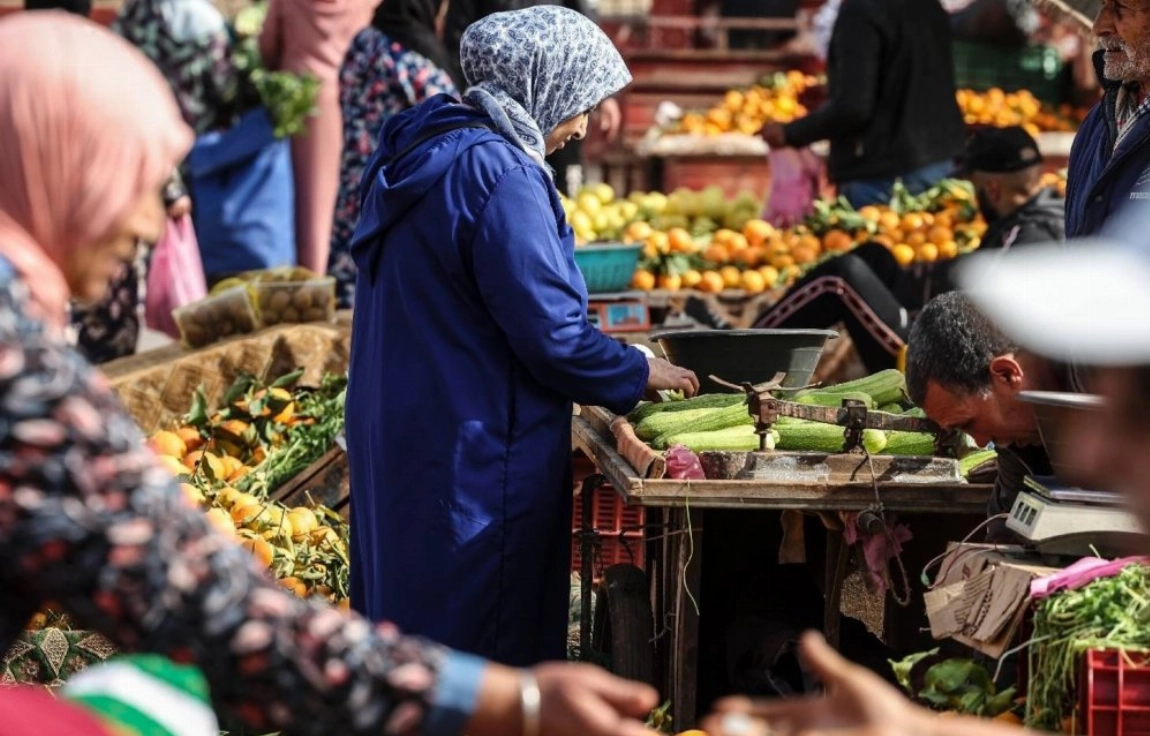
A tomato grown on a farm can go through several commercial stages before reaching a family's basket. Between the producer and the consumer, collectors, transporters, agents, wholesalers, semi-wholesalers, and retailers sometimes intervene.
With each transaction, a new margin can be added to the initial price.
Some of these margins relate naturally to essential services: transportation, storage, handling, or distribution. But when the supply chains become excessively long and opaque, they end up increasing the final price without necessarily improving the quality of the product.
This is precisely one of the dysfunctions identified by the Competition Council in its analysis of the Moroccan fruit and vegetable market.
The paradox is striking: the producer can sell at a relatively low price while the consumer pays dearly. The value is often distributed to the detriment of both producers and consumers.
Intermediaries: A System That Ultimately Costs Society Dearly
Commerce needs intermediaries. Their economic role is undeniable when they facilitate the movement of goods, ensure their preservation, and allow cities to be regularly supplied.
The problem arises when their proliferation becomes an end in itself.
In certain circuits, the product changes hands multiple times without significant transformation. Each transaction can lead to a new commercial margin, progressively increasing the price paid by the consumer.
The Competition Council has identified several categories of operators: collectors, stockists, wholesalers, semi-wholesalers, and other participants in wholesale markets.
The institution also highlighted the significant power of certain players in price formation and the imbalances in value distribution within the sector.
In other words, the rise in prices does not solely depend on drought, climatic conditions, fuel, or international markets.
It can also result from how products circulate within Morocco.
This raises a fundamental question: how many commercial interventions are truly necessary before an agricultural product reaches the consumer?
Slowing inflation, but life remains expensive
Official statistics show a clear deceleration of inflation after the sharp increases recorded in 2022 and 2023.
According to the High Commission for Planning, the average annual inflation rate reached 6.6% in 2022, then 6.1% in 2023, before slowing to 0.9% in 2024 and 0.8% in 2025.
Yet, in many households, the feeling of the high cost of living persists.
This contradiction is only apparent.
When inflation slows, it means that prices are increasing more slowly. It does not necessarily mean they are returning to pre-crisis levels.
A series of significant increases can thus permanently establish prices at a level that households continue to bear, even when official inflation becomes low.
In September 2026, the HCP recorded a monthly increase of 1% in the consumer price index, driven largely by a 1.6% rise in food products. The prices of meats and vegetables increased by 4.3% in just that month.
These variations demonstrate how exposed households remain to changes in the prices of essential products.
The real problem: incomes lagging behind
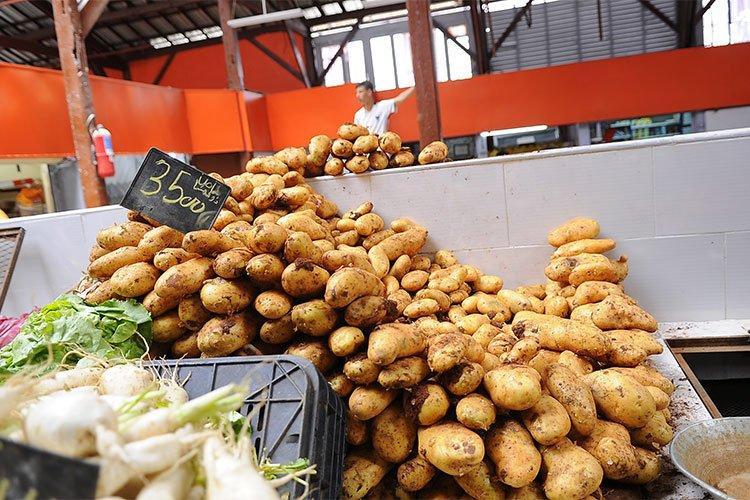
Purchasing power is not measured solely by the price of a kilogram of potatoes or a liter of oil.
It also depends on the disposable income after paying for housing, electricity, water, transportation, food, medical care, and schooling expenses.
For many families, these costs consume a significant portion of their monthly budget.
In its national survey on household living standards for 2022-2023, the HCP estimated the average annual income per household at 89,170 dirhams, with significant disparities between social categories and regions.
However, this average should not mask individual realities. It does not represent either the typical salary of a worker or the income actually received by each family.
Indeed, national accounts published in December 2025 reflect a 5.1-point improvement in household purchasing power in 2024. But an overall statistical improvement does not imply that all population groups are experiencing the same progress.
Low-income households, which allocate a significant part of their resources to essential needs, remain particularly sensitive to fluctuations in food prices.
For a family with a limited budget, a few dirhams increase on several everyday products can be enough to throw monthly expenses out of balance.
When the consumer becomes the adjusting variable
In a healthy economy, productivity gains, good harvests, and improvements in logistical infrastructure should benefit the entire economic chain.
The producer must be fairly compensated, the merchant must generate a reasonable margin, and the consumer must be able to access products at a justified price.
However, when competition does not function properly, cost reductions are not always passed on as quickly as price increases.
This phenomenon has also been observed in food distribution channels. Certain commercial mechanisms, notably price alignment among retailers or the weak transmission of price reductions, limit the benefits consumers might expect from effective competition.
Added to this are issues of transparency, informal circuits, and certain speculative practices.
The result can be particularly negative for households: they bear price increases without necessarily benefiting from reductions when economic conditions improve.
Producers: Another Victim of an Unbalanced System
It would be reductive, however, to merely oppose consumers to merchants.
Moroccan farmers also face many constraints: drought, water costs, energy, fertilizers, labor, transportation, and difficulties accessing markets.
Small producers, in particular, do not always have the financial or logistical means to market their production directly.
They may be forced to sell quickly to operators who have transport, storage, or cash resources.
This dependency weakens their negotiating power.
Thus, a producer can bear a significant portion of economic risks without necessarily benefiting from a proportional share of the final price.
This is one of the main weaknesses of certain agricultural circuits: the risks are largely borne by those who produce, while a significant portion of value can be captured during subsequent commercial stages.
The Social Cost of an Increasingly Difficult Life
The issue of purchasing power goes far beyond economic statistics.
It directly impacts quality of life, family stability, and future prospects.
When essential expenses become too burdensome, households are forced to change their habits.
Some reduce non-essential purchases. Others delay medical care, repairs, or family projects. Saving becomes more challenging, and unexpected financial issues can quickly create fragile situations.
This pressure also affects part of the middle class, whose incomes may seem reasonably comfortable on paper but who must face rising charges.
Thus, purchasing power becomes a matter of economic confidence and social cohesion.
A society cannot measure its progress solely by its infrastructure development or the growth of its gross domestic product. It must also question how this wealth concretely improves the daily lives of citizens.
Reforming Distribution Circuits: An Economic and Social Necessity
Morocco has several levers to gradually improve this situation.
Modernizing wholesale markets is one of the first priorities. Better organization of these infrastructures could enhance the traceability of goods, clarify transactions, and reduce certain inefficiencies.
The development of short supply chains also represents an important avenue.
By facilitating direct relationships between producers, cooperatives, merchants, and consumers, it becomes possible to limit some commercial stages without sacrificing the necessary logistical services.
Creating transparent marketing platforms could also improve farmers' access to markets and enhance their bargaining power.
At the same time, effective monitoring of anti-competitive practices, better publication of prices at different levels of the chain, and stricter regulation of informal circuits would help strengthen competition.
However, eliminating intermediaries does not automatically guarantee a price reduction. The functions they perform must be effectively taken over; otherwise, transportation, storage, and distribution costs could simply shift to other actors.
Reform must thus target unnecessary intermediaries, unjustified margins, and commercial opacity, rather than intermediation itself.
Purchasing Power Should Be Measured in the Moroccan Basket
Morocco continues its economic transformation, developing its infrastructure and seeking to enhance its attractiveness.
But economic progress should also be reflected in local markets, neighborhood businesses, and family budgets.
The fundamental question is not just how much the country produces or how much its economy grows.
It is also about understanding why some products become so expensive between their production site and their point of sale, and how to better ensure that producers and consumers benefit from the value created.
The proliferation of intermediaries is not the only explanation for the pressure on purchasing power. Income levels, production costs, climatic conditions, and fixed expenses also play a decisive role.
But it remains one of the structural problems on which public action and better market organization can yield tangible results.
Ultimately, a better-functioning economy should not only allow for increased sales. It should also enable citizens to live better.
And perhaps therein lies the true indicator of progress: not just in growth figures, but in what remains for a Moroccan family at the end of the month.