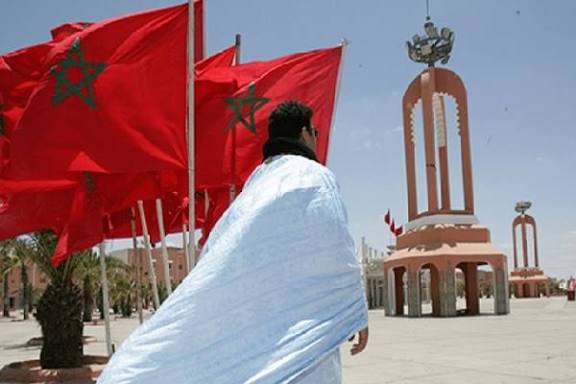
"From Tangier to Lagouira." This expression, deeply rooted in the Moroccan national consciousness, is not just a patriotic slogan. It reflects a vision of the territorial unity of the Kingdom, with Lagouira symbolizing its southernmost point and one of its least known symbols.
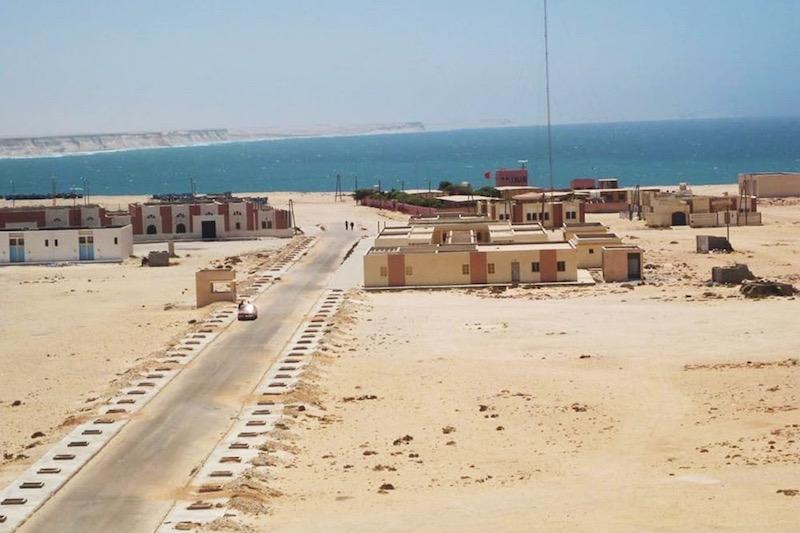
At the tip of the Ras Nouadhibou peninsula, between the Atlantic and the Mauritanian border, this former locality, now largely abandoned, is back in the diplomatic spotlight.
The issue arises from Mauritania's questions about the delimitation of its borders, as the Sahara dossier gains new international momentum.
But behind the speculation and claims, an essential question deserves to be asked: on what historical, territorial, and diplomatic foundations does Morocco consider Lagouira an integral part of its territory?
An examination of colonial archives, regional agreements, and the current situation helps to understand why the Kingdom maintains this claim, despite nearly half a century of Mauritanian presence on the ground.
Lagouira: a geography that clearly distinguishes territories
To understand the situation, one must first look at the map.
The Ras Nouadhibou peninsula, formerly known as Cape Blanc, juts into the Atlantic Ocean. It contains two areas historically separated by a border stemming from Franco-Spanish conventions.
To the west lies Lagouira, which belonged to the region of the Sahara administered by Spain.
To the east extends the territory relating to Mauritania, including the city of Nouadhibou, one of its main economic centers.
This distinction is an important element of the case.
The colonial agreements of the early 20th century attached Lagouira to Spanish Sahara, not to French Mauritania.
They do not alone prove Moroccan sovereignty prior to colonization. However, they establish that Lagouira was not part of the Mauritanian colonial territory.
This is a fundamental difference regarding contemporary claims.
Morocco claims Lagouira as part of the Sahara, which it considers belongs to its territorial integrity. Mauritania, on the other hand, has maintained de facto control of this locality since 1975, without this situation definitively resolving its status.
1975-1979: how Lagouira became a territorial exception
The contemporary history of Lagouira is inseparable from Spain's departure from the Sahara in 1975.
At the end of the colonial period, the territory became the subject of a political and military confrontation involving Morocco, Mauritania, and the Polisario Front.
In April 1976, Rabat and Nouakchott signed a delimitation agreement sharing the administration of the former Spanish territory.
Lagouira was then located in the southern zone allocated to Mauritania.
However, this situation changed three years later.
In August 1979, Mauritania concluded a peace agreement with the Polisario and renounced its territorial claims on Western Sahara.
Morocco then extended its control over much of the territory evacuated by Mauritania, but Lagouira remained in a particular situation.
Nouakchott retains a military presence in this area adjacent to its main economic port.
Since then, the locality has not been reintegrated under Rabat's effective control.
It is therefore necessary to distinguish between two realities: Morocco claims Lagouira and incorporates it into its territorial organization, but the physical administration of the site remains linked to Mauritanian presence.
This distinction, far from weakening the need for a resolution, precisely shows why the issue remains open.
The Mauritanian withdrawal of 1979: a central argument for Rabat
This is one of the most sensitive aspects of this issue.
When Mauritania renounced its claims on the Sahara in 1979, it withdrew from a territory it had administered for a few years following the 1976 partition.
On what basis, then, could Nouakchott today seek recognition of sovereignty over Lagouira?
From Morocco's perspective, the 1979 withdrawal represents a major argument against any new territorial claim by Mauritania over this part of the peninsula.
Indeed, the 1976 agreements and subsequent developments raise complex legal questions, particularly because the international status of Western Sahara has never been definitively resolved.
However, one thing remains clear: effective military presence by a state does not automatically equate to international recognition of its sovereignty.
The maintenance of the status quo should not therefore be presented as a definitive territorial resolution.
Morocco has arguments to defend the continuity of its claimed territory up to Lagouira while seeking a negotiated clarification with its Mauritanian neighbor.
Why does Mauritania revive the issue today?
The debate gained new dimensions in October 2026.
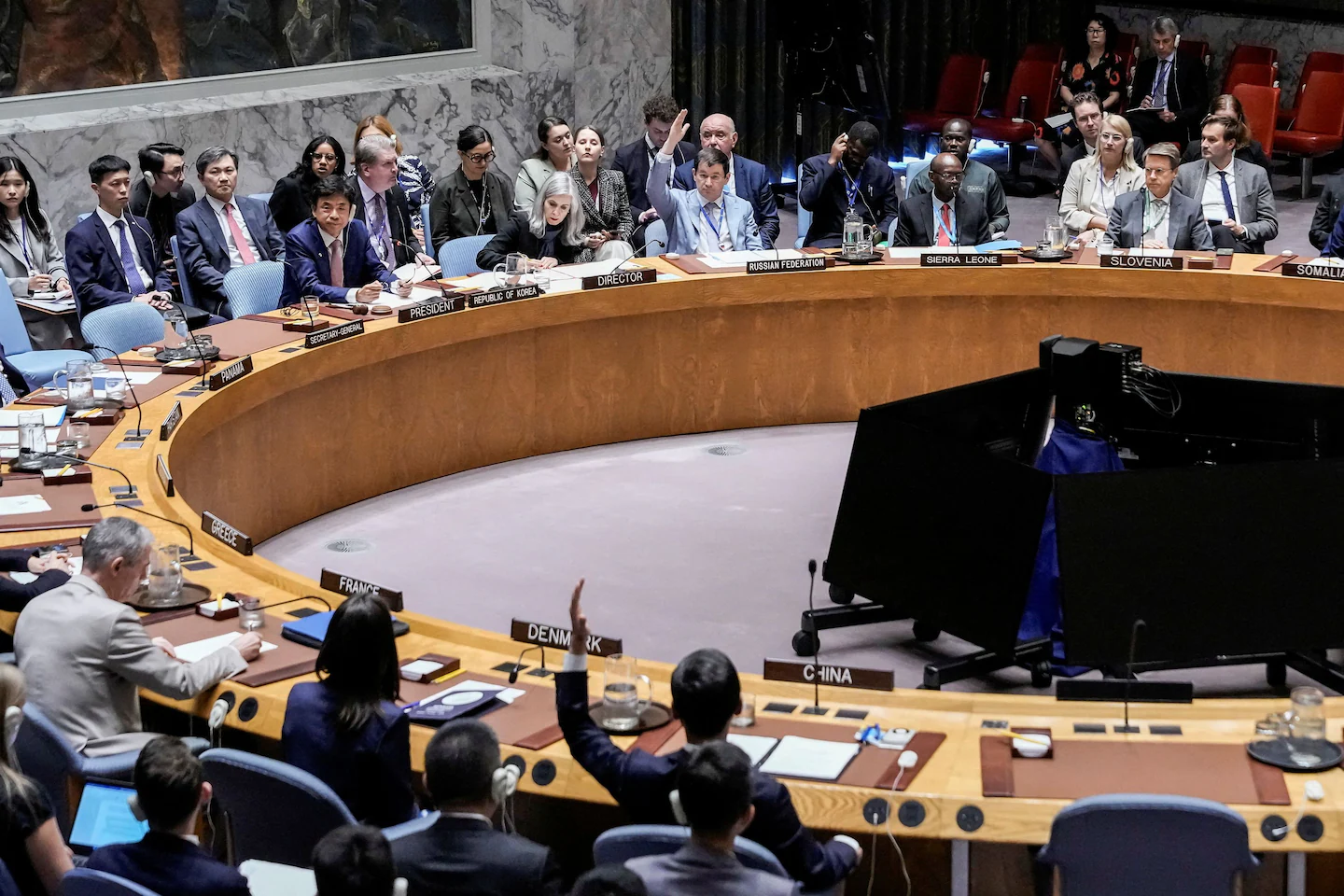
In his latest report on the Sahara, UN Secretary-General António Guterres mentioned a Mauritanian request concerning the delimitation of borders.
The report does not explicitly state that this action concerns Lagouira.
However, several analyses and regional publications associate this request with the locality's particular status.
On October 18, Jeune Afrique notably reported Nouakchott's desire to have its sovereignty over Lagouira recognized, a fact echoed in several Moroccan and Mauritanian media outlets.
On October 19, Médias24 also dedicated an analysis to this half-century territorial status quo.
This renewed interest is not insignificant.
It comes at a time when international discussions on the Sahara are increasingly granting attention to Morocco's autonomy plan.
Mauritania may wish to clarify its northern border before the emergence of a potential definitive political agreement.
However, the hypothesis of a formal claim over Lagouira should be distinguished from an international legal decision: no change of sovereignty has been established by the examined information.
A strategically located locality at the gates of Nouadhibou
Lagouira is not merely a historical symbol.
Its geographical location presents a genuine strategic interest.
It is on the Atlantic facade of the Ras Nouadhibou peninsula, in immediate proximity to the Mauritanian port of Nouadhibou.
This port serves as an important center for fishing, mineral exports, and Mauritania's maritime activities.
The prospect of future development in Lagouira could thus raise economic and security questions for Nouakchott.
From the Moroccan side, the locality could theoretically fit into a broader vision of the Atlantic development of the southern provinces, particularly in complementarity with the Dakhla Atlantic port.
However, it would be premature to present a port in Lagouira or a resumption of its control as already decided projects.
The strategic value of the area explains the interest it generates. It does not exempt the two countries from a diplomatic resolution considering their legitimate interests.
Moroccan territorial unity should not remain a mere formula
The question of Lagouira highlights a contradiction that would be difficult to overlook.
In its administrative organization, Morocco links Lagouira to the province of Aousserd, in the Dakhla-Oued Eddahab region.
This administrative affiliation aligns with Morocco's national claim over the entire Sahara, of which Lagouira represents the southernmost point.
Yet, the locality remains outside the effective control of Moroccan authorities.
This situation should not be minimized.
If Morocco defends the integrity of its territory from Tangier to Lagouira, it is legitimate for it to seek a definitive clarification of the latter's status.
This does not imply military confrontation or deterioration of relations with Mauritania.
On the contrary, a negotiated solution could turn this territorial anomaly into an opportunity for cooperation between two countries linked by their history, geographical proximity, and economic interests.
The defense of Lagouira's Moroccan identity would thus benefit from three complementary demands: the consistency of national claims, the rigor of historical arguments, and the pursuit of a lasting diplomatic agreement.
The 1979 agreement: a document worth recalling
An often overlooked element deserves to have a central place in the current debate.
The Mauritania-Sahrawi agreement signed in Algiers on August 10, 1979 includes an explicit renunciation by Mauritania of any territorial claim on Western Sahara.
This text was submitted to the United Nations and is included in their official archives.
It does not constitute a recognition of Moroccan sovereignty, as Morocco was not a party to this agreement. However, it represents a serious argument against the possibility of a new Mauritanian claim over a locality historically included within the boundaries of Spanish Sahara.
This is precisely where the strength of the Moroccan argument lies: rather than limiting itself to a patriotic assertion, Rabat can highlight historical maps, colonial delimitation instruments, and international commitments made by Nouakchott.
Sovereignty is not limited to military presence
The case of Lagouira reminds us of a fundamental distinction in international law: the material control of a territory and the legal title allowing for the claim of its sovereignty are not necessarily identical.
An extended military presence can create a reality on the ground. It does not automatically resolve a territorial dispute.
Conversely, the inclusion of a locality within a national administrative organization also does not suffice to establish internationally recognized sovereignty.
The Moroccan argument must therefore be built on a range of historical, legal, and diplomatic elements.
This approach is especially important since the United Nations continues to regard Western Sahara as a non-self-governing territory whose final status remains to be resolved.
Morocco's position today rests on the proposal for autonomy under the Kingdom's sovereignty, while the Polisario advocates for self-determination, including the option of independence.
In this context, Lagouira cannot be artificially isolated from the overall resolution of the Sahrawi issue.
Morocco and Mauritania have more to gain from an agreement than from confrontation
The defense of Moroccan territorial interests should not lead to portraying Mauritania as a natural adversary.
The two countries share deep human, commercial, and cultural ties. Their cooperation is essential for security and economic integration in West Africa.
The Guerguerat corridor, trade exchanges, and Atlantic opening projects demonstrate how interconnected their interests are.
A clarification regarding Lagouira could thus fit into a broader framework of cooperation, preserving Nouadhibou's security imperatives while also considering Morocco's territorial claims.
Respecting Mauritanian interests does not require Morocco to abandon its own positions.
Likewise, the defense of Lagouira should not prevent Rabat and Nouakchott from seeking pragmatic arrangements regarding security, infrastructure, and development in their border region.
From Tangier to Lagouira: a conviction to uphold through law and diplomacy
Today, Lagouira is neither a large settlement nor a major economic center. However, it still carries considerable political and historical significance.
This abandoned locality reminds us that the resolution of the Sahrawi issue does not merely concern major diplomatic capitals or Security Council resolutions.
It also involves places whose status remains suspended by past events.
For Morocco, the challenge is to consistently defend its claim over Lagouira, present the foundations of this position, and seek the conditions for a lasting solution.
The Mauritanian withdrawal of 1979, the old colonial delimitations, and Lagouira's administrative integration into the southern provinces constitute significant elements of this argumentation. None, however, absolves the need for a resolution respectful of international law.
Lagouira should not become an additional source of tension between two neighbors. Rather, it can be an opportunity to demonstrate that a firm territorial claim can coexist with responsible diplomacy.
For defending the Moroccanity of Lagouira also means advocating that issues arising from colonization should find their resolution through negotiation, regional stability, and respect for international commitments.