The Moroccan cement market has attracted renewed economic attention following the release of official analyses regarding its competitive functioning. The industry is largely controlled by three major industrial groups, which capture an estimated 80% to 90% of national sales. This oligopolistic configuration is not necessarily a legal anomaly, but it raises questions about the effective intensity of competition and price formation in a sector critical to the national economy.
Cement is an essential product. It is instrumental in the realization of public infrastructure, housing programs, industrial and tourism projects. Any significant change in its price directly affects construction costs, public and private investment budgets, as well as the indirect purchasing power of households. In this context, the sustained price stability, despite national production capacity exceeding effective demand, raises concerns.
The Kingdom indeed has a significant installed capacity, but the utilization rates of cement plants remain moderate. Theoretically, a situation of overcapacity should intensify competition and exert downward pressure on prices. However, in practice, rates remain relatively firm and the observed operational margins in the sector frequently exceed international standards found in more fragmented markets. This price rigidity is explained by several structural factors: product homogeneity, high cost transparency, territorial organization of production units, and the vertical integration of major operators.
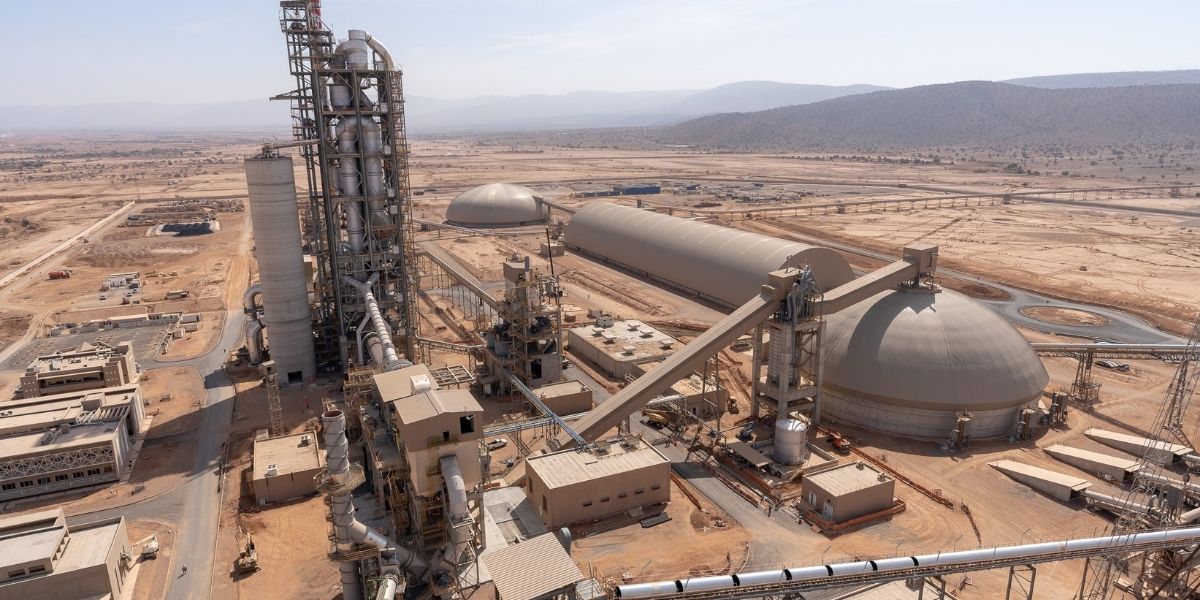
At the heart of the economic equation is clinker, an essential intermediate component in the production of cement. Mastery over this strategic input provides a crucial competitive advantage. Integrated groups control both limestone extraction, clinker production, and transformation into finished cement. This vertical integration limits the leeway for independent operators, particularly grinding centers that lack autonomous access to quarries. Access to clinker thus becomes a central issue for sectoral competition.
Barriers to entry remain high. Setting up a new cement plant requires massive investments, complex operating permits, and secure access to natural resources. Additionally, significant logistical constraints exist, with transportation representing a substantial portion of the final cost. These factors contribute to stabilizing the market structure and hindering the arrival of new players capable of redistributing balances.
Recent analyses also highlight the regional dimension of the market. Each operator has historical zones of influence linked to the location of its industrial units. This territorialization reduces incentives for direct price confrontation, favoring a form of implicit competitive stability rather than open price wars.
In light of these findings, potential improvement avenues have been suggested to enhance the sector's competitiveness. These include facilitating access to inputs for non-integrated operators, improving transparency, and encouraging innovation, particularly through the development of alternative or low-carbon cements. The stated objective is twofold: to ensure a robust domestic supply while promoting a more balanced competitive dynamic.
Beyond technical debates, the issue of cement relates to a broader challenge: the balance between industrial profitability and the general interest. In an economy engaged in significant structural projects looking towards 2030, the competitiveness of construction materials becomes a strategic parameter. The market's ability to evolve towards greater openness, without undermining industrial investment, will be one of the major challenges in the coming years.