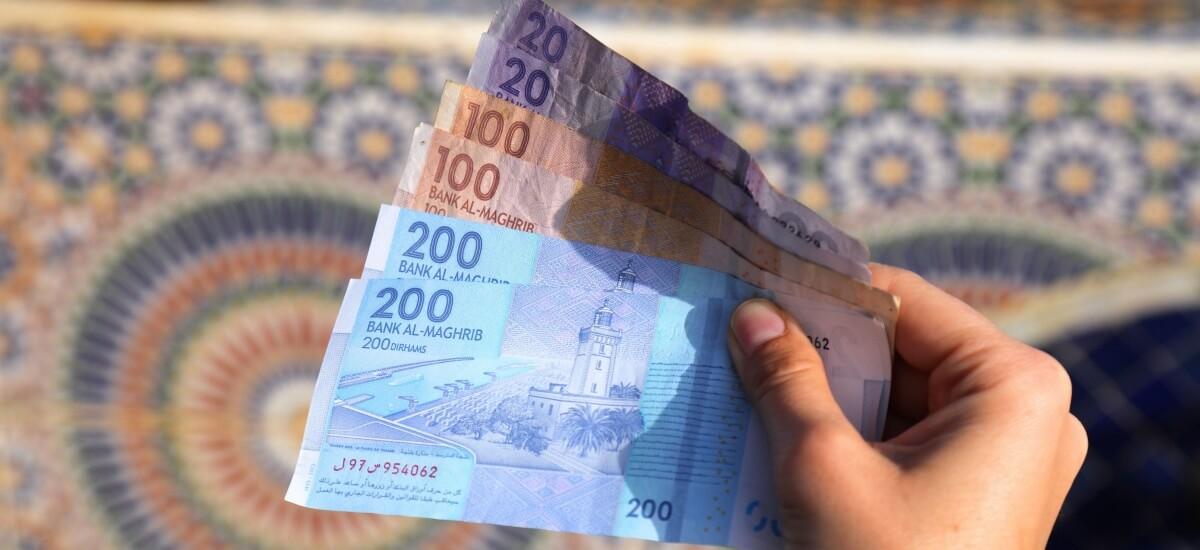
Sixty-seven years ago, Morocco made the dirham one of the symbols of its regained independence. Today, this same currency becomes a financing tool for one of the continent's major economic institutions.
On Friday, October 30, 2026, the African Development Bank (ADB) announced the success of its first bond issuance denominated in Moroccan dirhams, amounting to one billion dirhams.
Beyond its financial significance, this operation reflects the evolution of the national currency's role and the desire to develop financing in African currencies.
To understand the implications of this announcement, one must revisit the history of the dirham, closely linked to the economic sovereignty of the Kingdom.
The origins of the dirham, a story long preceding independence
Contrary to popular belief, the term "dirham" did not appear in Morocco in 1959.
Its history dates back to the early monetary civilizations of the Islamic world. Derived from the Greek word drachma, transmitted through monetary practices in the Near East, the dirham traditionally referred to a silver coin.
Over the centuries, various Moroccan dynasties minted their own currencies, making their issuance an essential attribute of political power and sovereign authority.
Under the Idrisids, Almoravids, Almohads, Marinids, and then the Sharifian dynasties, currency accompanied trade, taxation, and economic transformations in the territory.
Thus, Morocco had a long monetary tradition before the emergence of its modern dirham.
The protectorate and the introduction of the Moroccan franc
At the beginning of the 20th century, the Moroccan monetary system underwent profound changes.
The Algeciras Act of 1906 provided for the creation of a State Bank of Morocco, effectively established in 1907 amid rivalries between European powers.
This institution received the privilege of currency issuance. Starting in 1920, it circulated notes denominated in Moroccan francs.
This organization progressively integrated Morocco into a financial system heavily linked to France.
After the independence of 1956, the reconquest of monetary sovereignty thus became a strategic issue for the new Moroccan state.
1959: the birth of the modern Moroccan dirham
The decisive turning point came in 1959.
On June 30 of that year, Morocco established the Bank of Morocco, a national institution set to replace the State Bank of Morocco.
A few months later, on October 17, 1959, the dirham was established as the new national monetary unit.
The initial conversion rate was set at 100 old Moroccan francs for one dirham.
This reform represented much more than just a change of notes or coins: it contributed to the reconstruction of the economic institutions of an independent Morocco.
By adopting its own currency and its own issuing institute, the Kingdom asserted its ability to conduct national monetary policy.
The Bank of Morocco would officially take the name Bank Al-Maghrib in March 1987, a year also marked by the creation of Dar As-Sikkah, the industrial entity responsible for producing Moroccan banknotes and coins.
2026: the African Development Bank takes a new step
Sixty-seven years after the establishment of the modern dirham, the African Development Bank has just added a new chapter to its financial history.
The pan-African institution raised one billion dirhams through a private placement with qualified investors.
The figures for the operation
1 billion dirhams
Amount raised7 years
Maturity of the loanMONIA
Reference index for the variable rateOctober 30, 2026
Date of announcementThe operation involves seven-year bonds, accompanied by a variable interest rate indexed to the MONIA, the Moroccan overnight money market reference rate.
The ADB will thus be able to develop financing in dirhams, in addition to the loans it traditionally offers in euros and dollars.
However, it should be noted that the ADB is not the first international financial institution to issue bonds in dirhams. The International Finance Corporation, a member of the World Bank Group, had already undertaken such an operation in 2005. The novelty here lies in the first issuance by the ADB itself.
Why is the choice of the dirham important?
For a Moroccan company, borrowing in euros or dollars can pose a financial risk.
When its revenues are primarily generated in dirhams, any depreciation of the national currency against the borrowing currency can increase the cost of repaying its debt.
By offering financing in local currency, the ADB aims to reduce this exposure to foreign exchange risk.
The operation presents several advantages: it diversifies the available financing sources, allows certain borrowers to better align their debts with their revenues, and contributes to the development of financial market instruments in Morocco.
Therefore, this is not simply a symbolic transaction. This approach could open new possibilities for financing public and private investments, provided that they are effectively implemented.
Morocco, a laboratory for an African financial strategy
The choice of Morocco for this pilot operation is not coincidental.
A member of the ADB since its inception in 1964, the Kingdom has a long-standing relationship with this multilateral institution.
Since 1978, nearly 15 billion euros have been mobilized by the ADB to finance more than 150 projects in Morocco, particularly in transportation, energy, water, agriculture, and social protection.
The institution explains its choice by several factors: the significance of its Moroccan portfolio, the demand for financing in dirhams, and the development of the national financial market.
The lessons learned from this first operation could also serve to gradually extend similar arrangements to other African currencies.
Towards a more significant financial role for the dirham in Africa?
The issuance by the ADB does not mean that the dirham has become an international reserve currency, nor that it has acquired the status of a pan-African currency.
Its importance lies elsewhere: a leading multilateral institution now directly uses the Moroccan currency as a financing instrument.
The ADB is also considering establishing a treasury portfolio dedicated to the dirham, which could be funded by converting part of its foreign currency liquidity.
In the long term, this initiative could enhance local currency financing capacity and contribute to the development of the Moroccan bond market.
However, several pieces of information are still needed to accurately assess the economic significance of the issuance: the interest margin applied above the MONIA, the number of subscribers, and the exact placement conditions have not been disclosed in the initial press release.
From the independence dirham to the dirham of African finance
The history of the Moroccan dirham tells, in its own way, part of the economic trajectory of the Kingdom.
In 1959, its establishment accompanied the construction of a sovereign state and the reassertion of monetary instruments.
In 1987, the creation of Dar As-Sikkah strengthened national monetary manufacturing capabilities.
In 2026, its first use by the African Development Bank in a bond issuance reflects the expansion of its role in financial markets.
The progress made is considerable. But the true significance of this new step will be measured by the ability to translate this financial operation into financing that benefits the real economy.
For Morocco, the challenge is no longer just to have a national currency, but to continue developing the conditions that allow this currency to play an increasing role in financing economic development.