A Decade of Alarming Water Deficit
Dried up dams, collapsing wells, ruined crops: the images of Moroccan drought repeat every year with increasing intensity. In 2025, the national dam filling rate dropped to 28%, compared to 50% just five years ago.
Certain regions, such as Marrakech–Safi and Souss-Massa, have reached critical levels, forcing authorities to impose night water cuts and limit irrigation for several crops.
Farmers, already weakened by rising input costs, see their lands crack, while groundwater levels dangerously decline.
This crisis no longer affects only rural areas: Rabat and Casablanca have experienced their first instances of partial rationing. The specter of a water crisis in urban areas is no longer a distant hypothesis.
Desalination as a Survival Plan
To counter this threat, Morocco is now betting on an ambitious strategy: producing fresh water from the sea.
By 2030, the Kingdom aims to increase its desalination capacity to 1.7 billion cubic meters per year, up from the current 275 million.
Colossal projects are already underway:
-
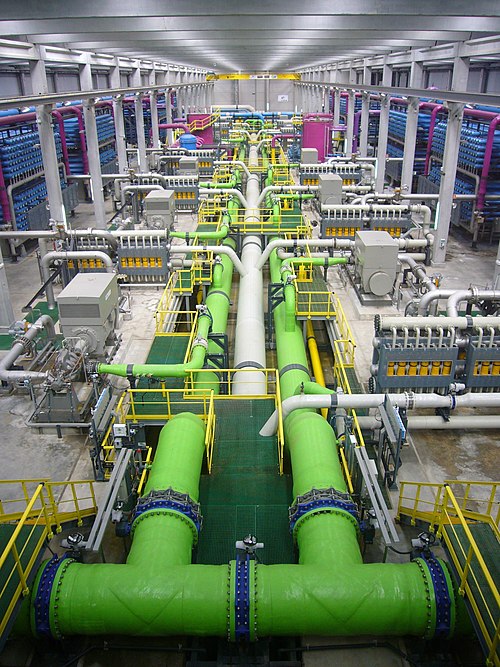
Casablanca Plant : the largest in Africa, capable of producing 300 million m³ per year.
-
Agadir Plant : operational since 2023, it supplies the city and 15,000 hectares of agricultural land.
-
Projects in Dakhla, Nador, and Safi : under construction, funded by public-private partnerships.
The model chosen by Morocco is based on a hybridization of solar energy and seawater: a costly short-term approach, but more sustainable than the over-exploitation of groundwater.
Interregional Transfers: Connecting the Country through Water
At the same time, the government has launched a hydrological basin interconnection from the north to the center of the country. Excess water from the Loukkos and Sebou dams is now being transferred to the drier regions of Bouregreg and Oum Er-Rbia.
A national-scale project, sometimes compared to the country’s ‘bloodstream,’ will ultimately provide water to Casablanca, Settat, and Marrakech, thus reducing the major cities’ dependence on local dams.
However, these transfers raise new tensions: the northern regions, historically better endowed, worry about a redistribution that could weaken their own long-term water security.
Agriculture on the Brink of Collapse
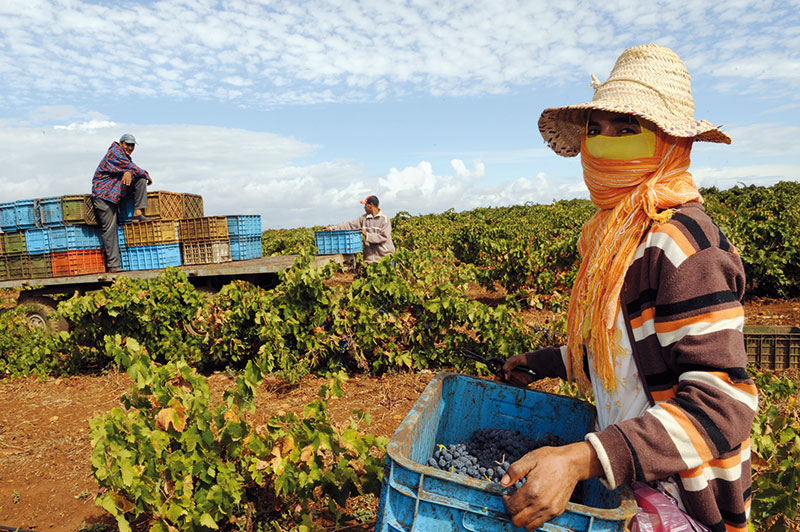
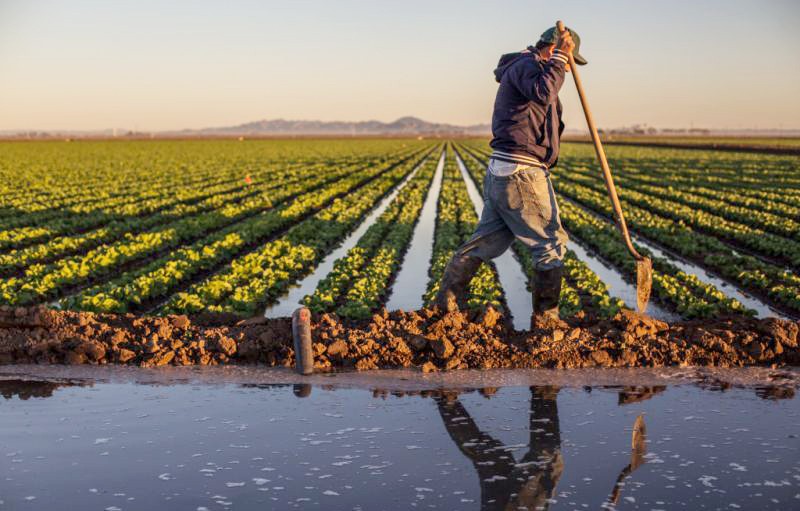
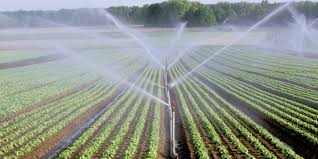
Agriculture, which consumes nearly 87% of Morocco's water resources, is at the heart of the crisis. Traditional crops like citrus fruits, beets, or watermelons are becoming untenable in certain areas.
Authorities have already prohibited several water-intensive plantations in Souss and the Zagora region.
Many farmers are forced to abandon their lands. Others are transitioning to more drought-resistant crops such as legumes, barley, or aromatic plants.
But these transitions require time, subsidies, and technical support that the state is still struggling to provide.
An Energy and Environmental Turning Point
Desalination has a considerable energy cost: between 3 and 4 kWh per m³ of water produced. To avoid worsening energy dependence, Morocco has opted for facilities powered more than 60% by renewable energy (solar and wind).
This green shift aligns with a sovereignty logic: reducing dependence on energy imports while ensuring water security.
But the equation remains fragile: the cost of desalinated water often exceeds 7 to 8 dirhams per m³, a price that is hardly sustainable for smallholder farmers without subsidies.
Upcoming Social and Political Challenges
While major cities will be the first to benefit from desalination, the water gap could widen between coastal and inland areas.
Voices are already rising to demand a fairer legislative framework: progressive pricing, regulation of illegal drilling, and transparency regarding water allocations to industrial and agricultural sectors.
In rural areas, the scarcity of water leads to a discreet but ongoing exodus: entire families are leaving the rural zones of Haouz and Souss to seek work in coastal cities.
The challenge of water thus becomes a demographic and social challenge.
Water, the New Frontier of Power in Morocco
Beyond infrastructure, the question of water is redefining the country's priorities.
It conditions economic balance, social stability, and even regional diplomacy, particularly with neighboring countries that share some underground aquifers and transboundary rivers.
Morocco has chosen to invest heavily, but success will depend on its ability to involve citizens, communities, and businesses in this water revolution.
Water is no longer just a natural resource — it has now become a strategic weapon and a test of governance.
Sources :
Reuters – June 13, 2025
Fanack Water – July 15, 2025
Bloomberg Green – September 22, 2025
Le360.ma – October 5, 2025