A Structural Water Crisis
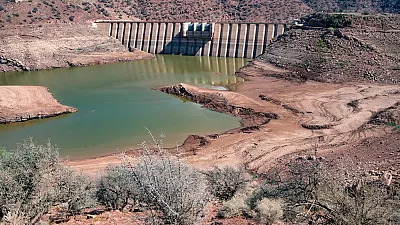
For over five years, Moroccans have been living with water restrictions. Rainfall has become scarce, and dams have reached historically low levels — below30% of their average capacity by 2025 — and temperatures are rising by nearly2°C compared to the average in the 1990s.
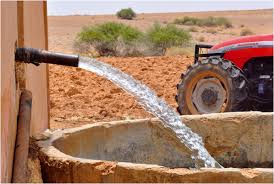
The regions of Marrakech, Safi, and Agadir are particularly affected. In some rural areas, drinking water is rationed, while farmers are gradually abandoning intensive crops.
The High Commission for Planning raised alarms as early as 2024 about a “critical” situation for national water security.
“Drought is no longer a climatic exception; it is a permanent factor,” acknowledged the Minister of Equipment and Water, Nizar Baraka, at a forum in Rabat.
Desalination of Seawater: A Technological and Strategic Response
To address this crisis, Morocco is heavily investing indesalination of seawater, a process that now lies at the heart of its national water strategy.
By 2030, the country plans to build15 desalination plants, several of which are already operational in Agadir, Laâyoune, and Boujdour.
The most notable is the plant inCasablanca, inaugurated in late 2025: a colossal project with a capacity of300 million m³ per year, developed in a public-private partnership with the Spanish group Acciona.
This infrastructure will supply10 million inhabitants in Greater Casablanca and reduce dependence on the Berrechid aquifer, which is currently over-exploited.
The total cost of the national desalination program is estimated at45 billion dirhams, funded by the state, the African Development Bank, and the Green Climate Fund.
However, desalination comes with a high energy cost. To mitigate this, Morocco plans topower its stations with solar and wind energy, particularly through the Noor Midelt and Tarfaya Wind projects.
This approach aligns with the“Green Water Policy”, focused on energy and environmental sustainability.
Interconnections and Reuse of Wastewater: A Turning Point in Integrated Management
In addition to desalination, the Kingdom is developing a strategy for interconnecting hydraulic basins to better distribute available resources.
The interconnection between theSebou and Bouregreg dams, commissioned in 2024, has already secured drinking water supplies for Casablanca and Rabat.
Other projects will follow, connecting the basins of Loukkos, Tensift, and Oum Er-Rbia.
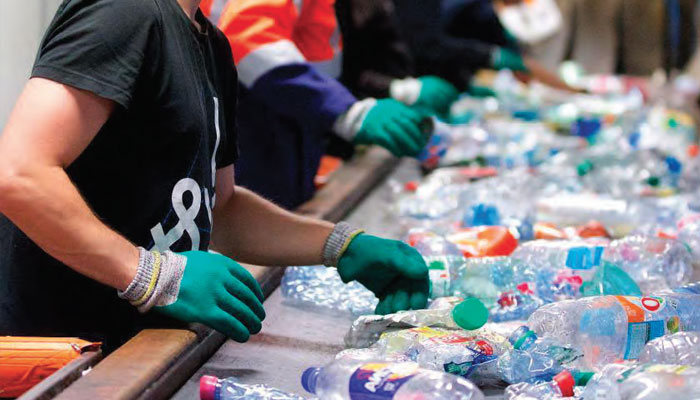
At the same time, Morocco is accelerating thereuse of treated wastewaterfor irrigation and urban cleaning.
According to the Ministry of Water,over 100 million m³ of wastewaterwere recycled in 2025, a figure significantly up from the 30 million in 2018.
“We must transition from a culture of abundance to a culture of rational management,” emphasizes hydrologist Abdelkader Bensalem, who advocates for responsible water use in agriculture.
Agricultural Challenges: Between Adaptation and Conversion
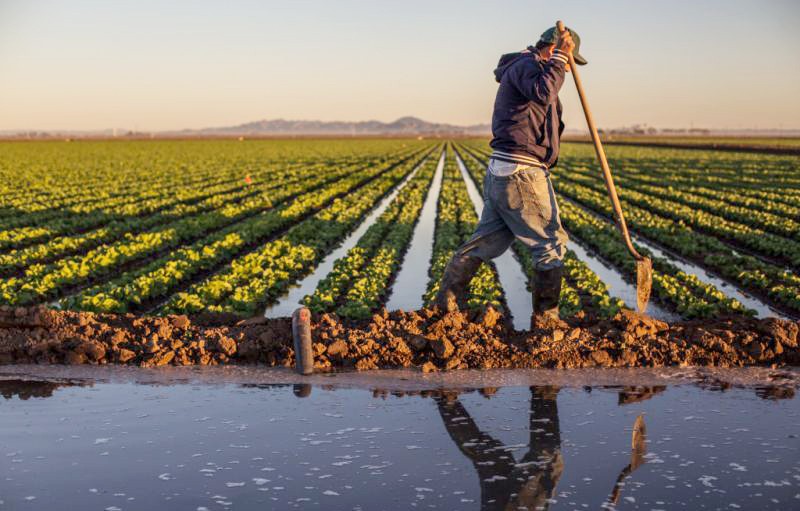
The agricultural sector, which accounts for nearly14% of GDPand employs35% of the workforce, remains the most vulnerable to the water crisis.
Water-intensive crops — such as watermelon or avocado — are increasingly criticized for their impact on aquifers, particularly in the Zagora and Souss-Massa regions.
The Ministry of Agriculture is now encouraging a shift towards less water-consuming crops (olive, almond, carob) and the widespread adoption ofdrip irrigation, already implemented on700,000 hectares..
Financial aids are also planned for farmers wishing to modernize their irrigation equipment.
However, this transition remains challenging: many smallholders lack the means or training necessary to adapt to new water technologies.
Towards a Sustainable and Citizen-Centered Water Policy
The drought acts as a revelation: it highlights the fragilities of a management model that is still too centralized and reactive.
The government now aims to make “water security” a constitutional pillar, alongside food and energy security.National awareness campaigns are also planned to encourage citizens toreduce their water consumption
and promote eco-responsible practices.Water, having become a strategic issue, reshuffles the cards of sovereignty and long-term stability.In a semi-arid country like Morocco,
mastering water means mastering the future.
Sources:Reuters — Morocco invests in desalination and waterways to mitigate drought (June 2025).
Ministry of Equipment and Water – Report on the National Strategy 2025-2030
-
HCP — Water Situation Bulletin 2025
-
Le360.ma — The Silent War Over Water: Morocco Facing Chronic Drought (October 2025)
-
African Development Bank — Financing the Moroccan Sustainable Desalination Plan (2025)
-
,
-
,