A night of strikes, an immediate political shift
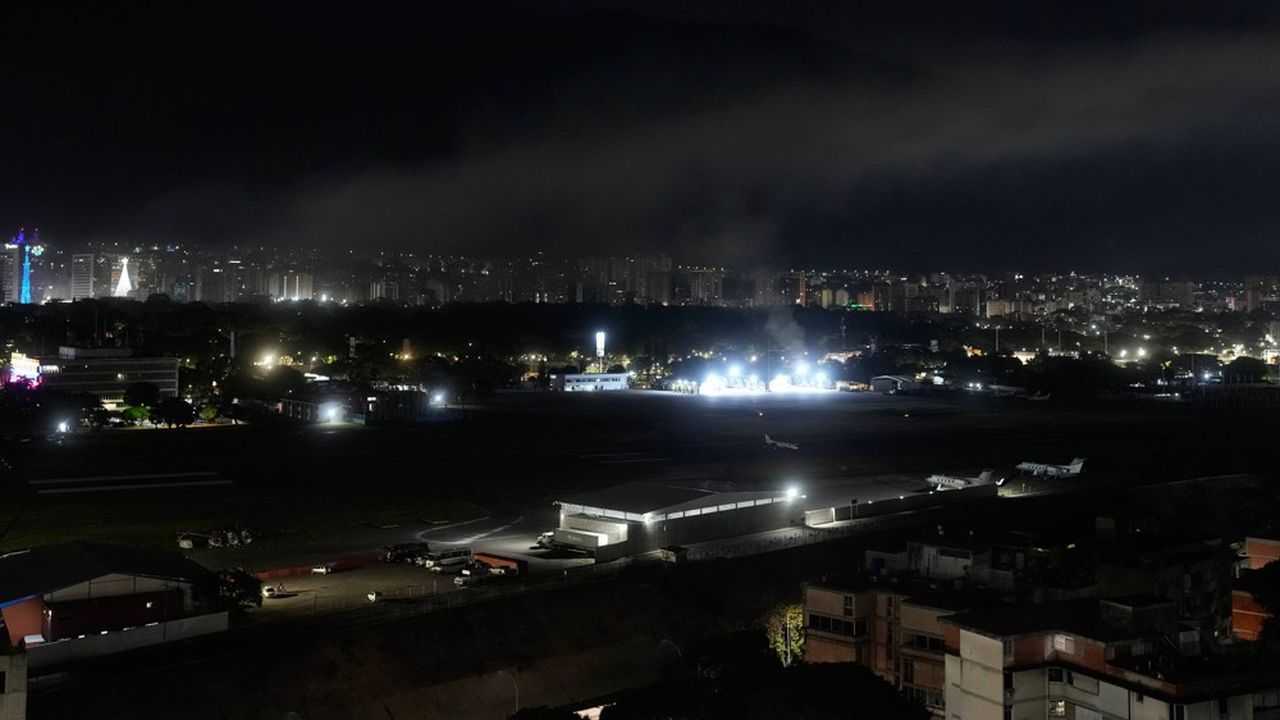
Shortly before 2 a.m. local time, explosions were reported in Caracas and around the capital, with testimonies of low-flying aircraft and columns of smoke visible in several areas. The shockwave quickly transcends security concerns: in Washington, Donald Trump claims a 'major attack' and states that Venezuelan President Nicolás Maduro, along with his wife Cilia Flores, have been 'captured' and later extracted from the country.
On the ground, the Venezuelan state apparatus triggers an emergency response. The government denounces a 'military aggression' and announces the activation of national defense plans, calling on its supporters to mobilize. The executive cites attacks in the capital and several states, including Miranda, Aragua, and La Guaira.
'Maduro captured': Trump's claim, institutional ambiguity in Caracas
The most politically explosive point remains the American assertion. According to Washington's version, the operation goes beyond strikes: it aims to decapitate the government by capturing the Venezuelan head of state. American officials cited by the press mention the involvement of elite units, and some American political figures echo the idea of transferring Maduro to the United States for trial based on long-standing legal cases.
On the Venezuelan side, the reaction is twofold: denunciation of sovereignty violations and a communication battle. Officials indicate they do not know Maduro's place of detention and demand proof of life. The Ministry of Defense vows to resist what it presents as a foreign intervention while seeking to display continuity of public authority.
What targets, what operational objectives?
Available information converges on a scenario mixing strikes and neutralization of strategic points. Local and international media report explosions near key military infrastructures around Caracas, with images showing material damage in areas associated with defense and control of the capital. The timing — a sequence concentrated in the heart of the night — reinforces the idea of an operation designed to disrupt the chain of command and secure an extraction.
A determining element remains: the exact extent of the damage and a consolidated human toll are difficult to establish independently at the moment. The Venezuelan government insists on the notion of multiple attacks and the necessity of emergency measures.
The state of emergency as a survival reflex of the regime
By declaring a state of emergency and implementing defense plans, Caracas aims to regain internal initiative. This type of arrangement generally broadens security prerogatives, facilitates deployments, and allows tighter control over public space and information. The political message is clear: transform the initial shock into a narrative of national resistance, beyond partisan divides.
At the same time, the possibility of a leadership vacuum — if the claimed capture is confirmed — raises a crucial question: who commands, and with what legitimacy? The name of Vice President Delcy Rodríguez emerges as a potential pivot, but any transition would be exposed to internal fractures, particularly within the military apparatus.
A region under tension: borders, refugees, and escalation risk
The domino effect is immediate. In Colombia, authorities fear an influx of refugees and announce strengthened border controls. President Gustavo Petro calls for emergency meetings at the international level, emphasizing the risk of ignition and the need for a multilateral framework.
Beyond the immediate neighborhood, the crisis reactivates a sensitive regional memory: that of American interventions in Latin America. Even governments critical of Maduro face a strategic dilemma: opposing Caracas does not necessarily mean accepting foreign military action, especially if the legal basis and international mandate are contested.
Law, mandate, and the question of international legality
The main political flaw of the operation, as perceived abroad, lies in legality. Several public reactions demand clarifications on the legal basis: UN mandate, self-defense, protection of nationals, or other justifications. Without an explicit framework, the operation is exposed to frontal contestation in the name of international law and the United Nations Charter.
In the United States itself, the debate may arise over the balance of powers regarding war and foreign intervention, and the risk of an unanticipated prolonged engagement.
Global reactions: condemnations, support, geopolitical fractures
The sequence provokes rapid polarization. Allies of Caracas denounce a violation of sovereignty and call for a diplomatic international response. Other states, often more hostile to Maduro, express direct or indirect support for the American initiative, presenting it as a turning point against a regime accused of authoritarianism and security excesses.
Europe emphasizes restraint, protection of civilians, and the need for a political resolution. On the energy front, markets scrutinize one specific point: the continuity of Venezuelan oil production and the possibility of a regime change that could reshape sanctions and flows in the medium term.
What to watch in the coming hours
Three confirmations could tip the crisis one way or the other: proof of Maduro's detention (or lack thereof), the actual posture of the Venezuelan armed forces, and the potential internationalization of the case through an emergency UN Security Council meeting. Added to this is a human factor: the stability of Caracas, the risk of political violence, and the scale of potential population displacement.
One thing is already certain: Venezuela has abruptly entered a new phase of confrontation where the outcome depends not only on internal politics but on an open struggle on the international stage.