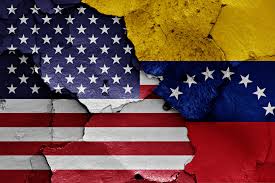
The United States has crossed a new threshold in its confrontation with the Venezuelan regime by officially designating the 'Cartel de los Soles' as a foreign terrorist organization. The decision, dated November 16, 2025, and published in the Federal Register, places the network—already accused of drug trafficking, corruption, and transnational criminal activities—under the same status as several armed groups considered a direct threat to U.S. security.
According to the official notice, Washington claims to have sufficient evidence establishing that the activities of the Cartel de los Soles meet the criteria set by the Immigration and Nationality Act. This designation now allows the United States to freeze all assets related to the organization, prohibit any financial transactions with it, and initiate, if necessary, further actions against its members and allies.
This classification implicitly targets the highest officials of Nicolás Maduro's regime. The U.S. government had previously offered a $50 million reward for any information leading to the arrest of these individuals, as well as others associated with state criminal networks. By placing the Cartel de los Soles on the international terrorism blacklist, Washington sends a clear signal: it now regards the Venezuelan regime not only as an authoritarian dictatorship but as an organized criminal structure on a global scale.
The reaction from Caracas was immediate. The regime swiftly condemned it as an 'imperialist aggression,' accusing the United States of seeking to destabilize the country and justify future sanctions. Several governments allied with Venezuela, including Russia and some Latin American states, have expressed their opposition, labeling the U.S. decision as an attempt at interference.
However, this designation is likely to profoundly alter the regional diplomatic balance. By explicitly classifying an organization linked to a sovereign state as a terrorist group, Washington opens the door to increased isolation for Venezuela, as well as a reshaping of alliances in Latin America. Financial systems, energy flows, and military relations could be directly affected.
It remains to be seen how Caracas will respond in the long term and whether this U.S. strategy, based on maximum pressure, will succeed in weakening a regime that, despite successive sanctions, has so far always found new support to maintain its hold on power.