A crisis that goes beyond sanctions
For years, the relationship between the United States and Venezuela was dominated by economic sanctions, accusations of electoral fraud, and diplomatic breaks. Washington targeted the Venezuelan state apparatus, its political and security officials, as well as the oil sector, which is seen as the economic lifeline of the regime. Caracas, for its part, denounced an 'economic war' and turned to partners like Russia, China, or Iran to circumvent Western isolation.
In 2025, the dynamics changed drastically. The White House no longer confines itself to financial and diplomatic pressure: it now combines sanctions, targeted military operations, and deployment of strategic assets in the immediate environment of Venezuela. The crisis has transitioned from a political-economic standoff to one with a high military content.
Sea strikes that open a new phase
A major turning point was the series of American strikes against vessels leaving Venezuela, officially framed as operations against drug trafficking networks. Since September 2025, US forces have ramped up attacks in the Caribbean and Atlantic, targeting boats accused of transporting drugs, arms, or money on behalf of cartels backed by elements of the Venezuelan forces.
One of these strikes particularly shocked: a second shot reportedly targeted survivors already in the water after the destruction of a vessel. This incident triggered an intense legal-political debate in the United States, with some experts citing possible violations of international law. But strategically, the message is clear: Washington is willing to use lethal force in a theater directly linked to Venezuela.
A radar in Trinidad and Tobago and accelerated militarization of the Caribbean
Alongside these strikes, the United States is bolstering its surveillance and projection capabilities. The installation of a state-of-the-art military radar, the AN/TPS-80, on the island of Tobago, just a few kilometers from the Venezuelan coast, symbolizes this escalation. Officially, it aims to enhance the fight against drug trafficking and modernize aerial and maritime surveillance of a Caribbean partner. In reality, this deployment provides US forces with detailed insight on air and sea movements in a zone directly oriented towards Venezuela.
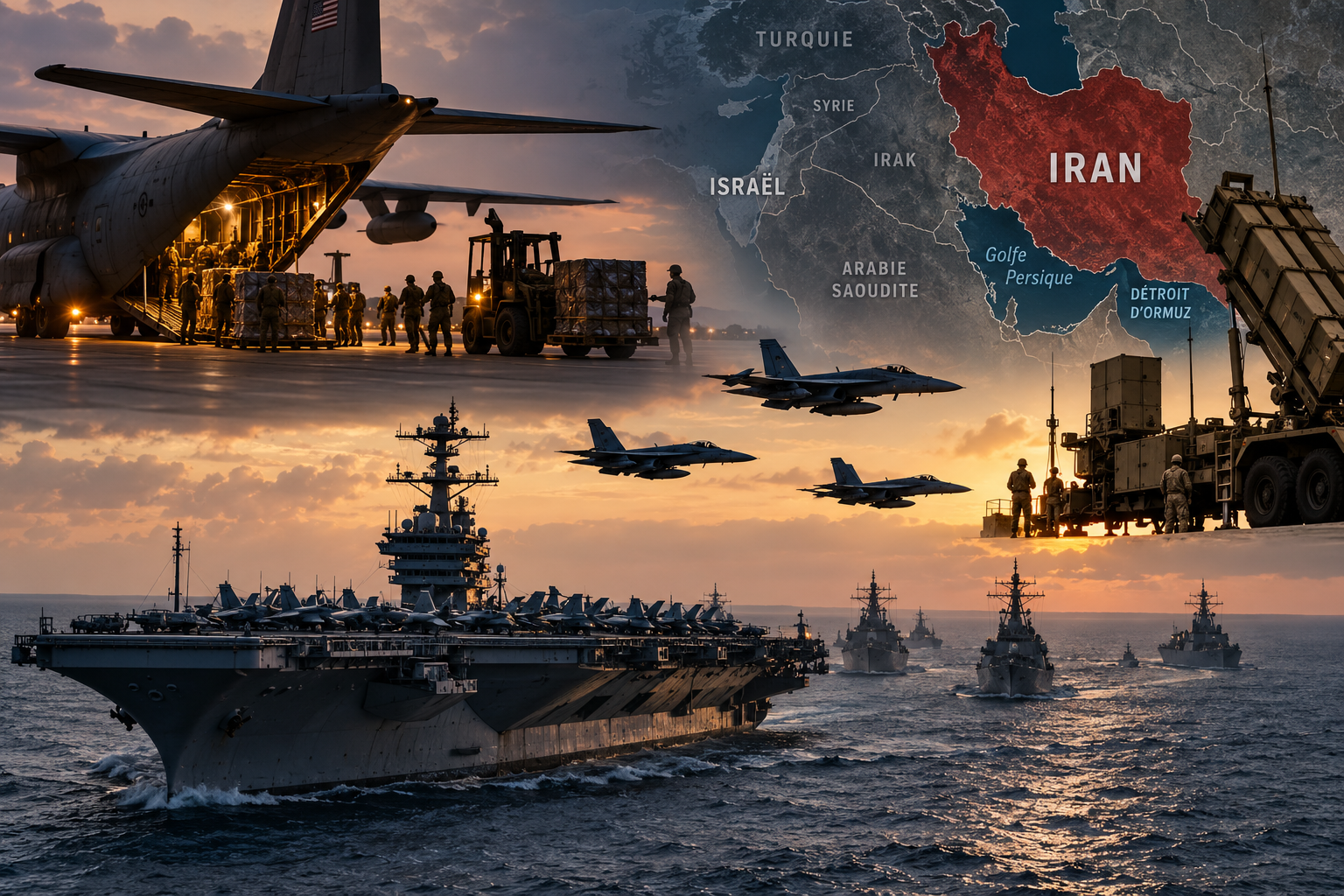
This installation occurs within a much broader military build-up: aircraft carriers, destroyers, fighter jets, drones, and special forces are being redeployed to the Caribbean theater. For many observers, this marks the largest US military reinforcement in the region since the operation against Panama in the late 1980s.
The shadow of Essequibo and the risk of regional escalation
This direct confrontation is compounded by another hotspot: the long-standing territorial dispute between Venezuela and Guyana over the Essequibo region, rich in oil resources. Caracas claims this territory, which Georgetown has administered for decades. Internal referendums organized by the Venezuelan government, threatening statements, and naval incursions near ExxonMobil's facilities have revived a conflict long relegated to diplomatic maps.
For Washington, any attack against Guyana, or against oil infrastructure exploited by American companies, would constitute a red line. US officials have already warned that aggression against Essequibo would have 'severe consequences'. This clear alignment with Guyana adds another dimension to the crisis, transforming a bilateral dispute into a potential confrontation issue between powers.
'Panama 2.0': The Temptation of Intervention
In this climate, some US officials close to power are now openly discussing the possibility of a 'Panama 2.0'. The term refers to the American invasion of 1989 that ousted Manuel Noriega. The parallel is not innocent: it suggests that Washington could, as a last resort, consider an operation aimed at removing Nicolás Maduro by force.
The White House officially leaves all options open. It emphasizes the fight against drug trafficking, the defense of democracy, and the protection of its strategic interests. For its part, Caracas accuses the United States of 'fabricating a war,' using the pretext of drugs and Essequibo to justify an intervention, and seeking to impose a regime change through military pressure and clandestine operations.
A 'near' war, but still avoidable
To say that war is 'near' is no longer an exaggeration. Objective elements are present: lethal strikes at sea, massive military deployments, advanced radar within reach of the Venezuelan coast, public threats regarding a Panama-like scenario, and escalating tensions around Essequibo. The line between maximum pressure and pre-war has already been crossed.
However, conflict is not inevitable. The human, political, and geopolitical costs of intervention would be colossal, for Washington as well as for all of Latin America and the Caribbean. Some regional actors, alongside international partners, still advocate for a solution combining targeted sanctions, diplomatic mediation, and a negotiated political transition in Caracas. The question now is whether this slow and uncertain path can withstand the escalation logic already at play in the skies, on the seas, and in the rhetoric of leaders.