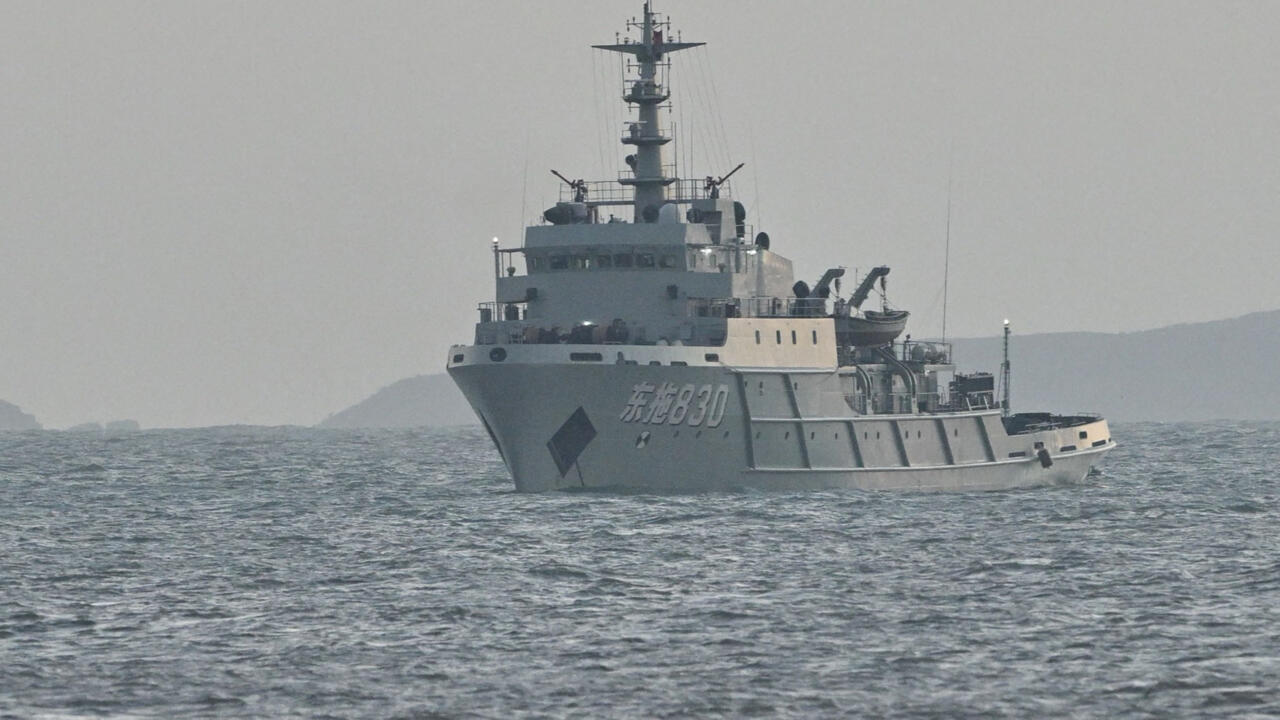
The extensive military maneuvers conducted by China around Taiwan concluded without direct confrontation, yet their scope far exceeds that of routine exercises. By mobilizing naval and aerial resources close to the island, Beijing has once again reminded us of its ability to exert constant military pressure on the strait, while carefully avoiding crossing the threshold into open confrontation.
Officially, these operations fall within a defensive framework and respond to national security imperatives. In reality, they represent a multi-level strategic message. First directed at Taiwan, reminding it that any challenge to the status quo would immediately face a show of force. Secondly, aimed at international partners, underlining that China remains the dominant actor in its immediate regional environment.
In Taipei, authorities have adopted a posture of measured vigilance. The state of alert has been maintained throughout the exercises, without verbal escalation or disproportionate military demonstrations. This restraint fits into a well-established strategy: to avoid any reaction that could be exploited as justification for further hardening by Beijing, while reassuring the population about the island's defense capacity.
On the international front, this sequence has rekindled concerns related to the stability of the Indo-Pacific region. Several capitals have reiterated their commitment to freedom of navigation and the preservation of the status quo, yet they have not concretely changed their posture. This caution illustrates the limits of diplomatic deterrence in the face of a gradually constructed strategy of pressure, patiently built over the long term.
The central issue lies less in these isolated maneuvers than in their repetition. As tension becomes normalized, the risk of unintentional incidents increases, as does the risk of misinterpreting intentions. The current status quo does not rely on lasting stability but on a fragile balance, maintained by the constant calculation of the costs and benefits of each action.
In the short term, calm seems to have returned to the strait. In the medium and long term, the question remains: how much longer can this balance hold against a strategic rivalry that continues to intensify?