Limited but politically significant clashes
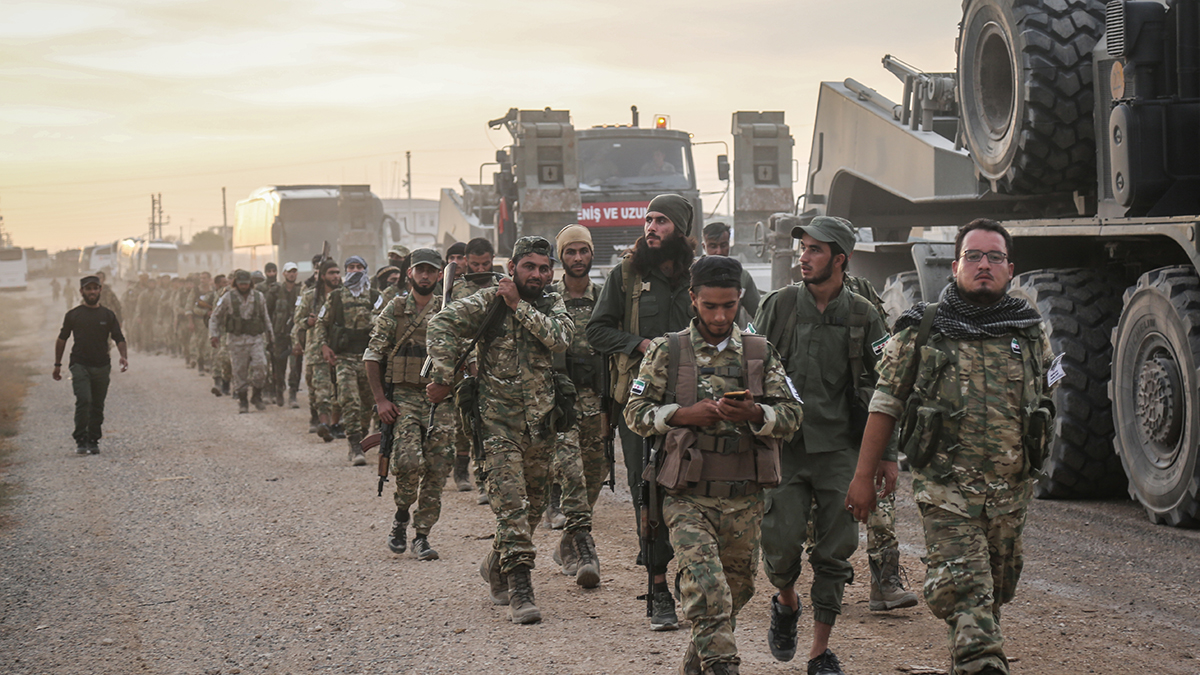
In recent days, several areas in northern Syria have witnessed skirmishes between Syrian state forces and Kurdish units affiliated with the Syrian Democratic Forces. The exchanges of gunfire, concentrated around checkpoints and strategic routes, have not escalated into widespread confrontations, but their recurrence is causing concern among observers.
Militarily, the intensity remains restrained. Politically, the message is strong. These incidents serve as a reminder that, despite the overall reduction in fighting since the end of major offensives, Syria is still divided by unresolved fault lines.
A central issue: sovereignty versus autonomy
At the heart of these tensions is a structural disagreement. Damascus is seeking to reassert its authority over the entire national territory and integrate all armed forces under a unified command structure. The Kurdish forces, on the other hand, defend the military and administrative gains achieved during the war against jihadist groups, as well as a form of local autonomy.
This divergence is not new, but it is becoming more visible today, in a context where the Syrian state is trying to consolidate its diplomatic and regional comeback. The skirmishes appear as displays of strength, aimed at both testing red lines and sending political messages.
A region under external influence
The situation is also shaped by regional balances. Northern Syria remains a strategic area where Syrian, Turkish, American, and Russian interests intersect. Each local incident is observed, interpreted, and at times exploited by external actors.
In this context, Kurdish forces find themselves in a delicate position: crucial partners in the fight against terrorism, yet contested by both Damascus and Ankara. Government forces are proceeding cautiously, aware that an escalation could provoke regional reactions that are difficult to manage.
Civilians caught in persistent instability
For local populations, these clashes revive a chronic sense of insecurity. The affected areas are already facing significant economic and humanitarian pressures. The skirmishes disrupt movement, undermine basic services, and fuel fears of a return to a broader cycle of violence.
Even if limited, these tensions have a direct impact on daily life, reminding us that the official end of major battles has not yet brought lasting peace.
A future hinging on a political compromise
Recent clashes demonstrate that the stabilization of Syria cannot rely solely on military means. Without a clear political agreement regarding the role of Kurdish forces within the Syrian state framework, incidents are likely to multiply.
The issue is no longer just about territorial control, but about the state model that will emerge from the post-war period: centralized or partially decentralized, inclusive or coercive. As long as this equation remains unresolved, every skirmish carries the risk of a larger conflagration.
Conclusion
The clashes between Syrian state forces and Kurdish forces do not signify a resumption of large-scale war. However, they are symptomatic of a deep and lasting malaise. In Syria, stability is contingent upon a still-elusive political compromise, where national sovereignty and local realities struggle to coexist.