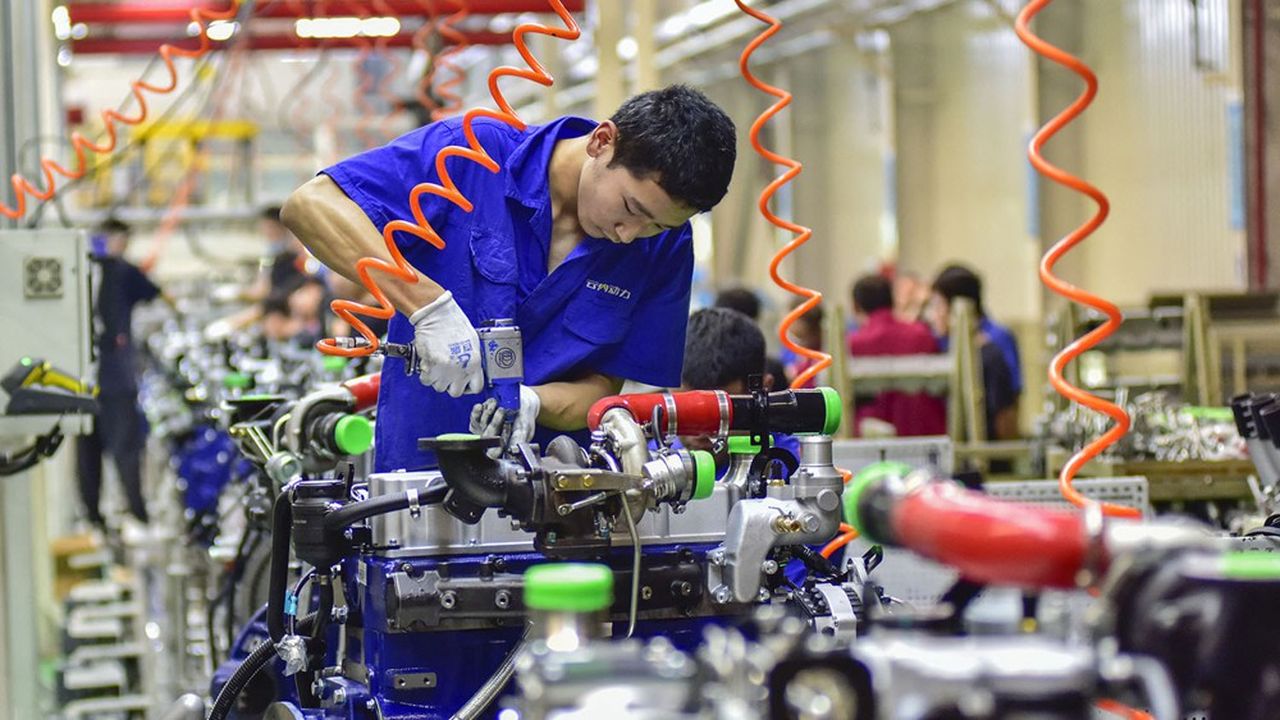
After eight months of continuous contraction, China's manufacturing sector has finally shown a return to growth. The official Purchasing Managers' Index (PMI) has risen above the 50-point threshold, marking an unexpected expansion of activity. This improvement is supported by a resurgence in both domestic and international new orders, indicating stronger than anticipated demand.
For Beijing, this rebound comes at a timely moment. The Chinese economy has faced a turbulent 2025, marked by fragility in its real estate sector, declining domestic consumption, and ongoing trade tensions with the United States and the European Union. The government has implemented various targeted stimulus measures, including tax cuts and credit facilities for industrial enterprises. The initial benefits now seem to be visible.
Asian markets reacted immediately to the announcement. Major financial centers in the region recorded a notable increase, welcoming a positive signal amid global uncertainty. Investors see this as an encouraging indicator: China remains capable of stabilizing its economy and reviving its industrial engines.
However, this rebound needs to be interpreted cautiously. Analysts emphasize that many challenges still persist: a strong dollar weighing on exports, instability in global demand, and structural difficulties in the real estate sector. The manufacturing recovery will need to be confirmed over several months to establish a true trend.
For Beijing, the stakes go beyond mere economic conditions. In a context where China seeks to maintain its central role in global value chains, the strength of its industry remains a strategic pillar. This unexpected industrial rebound offers the government a valuable respite while sending the world a message of an economy capable of absorbing shocks and regenerating.