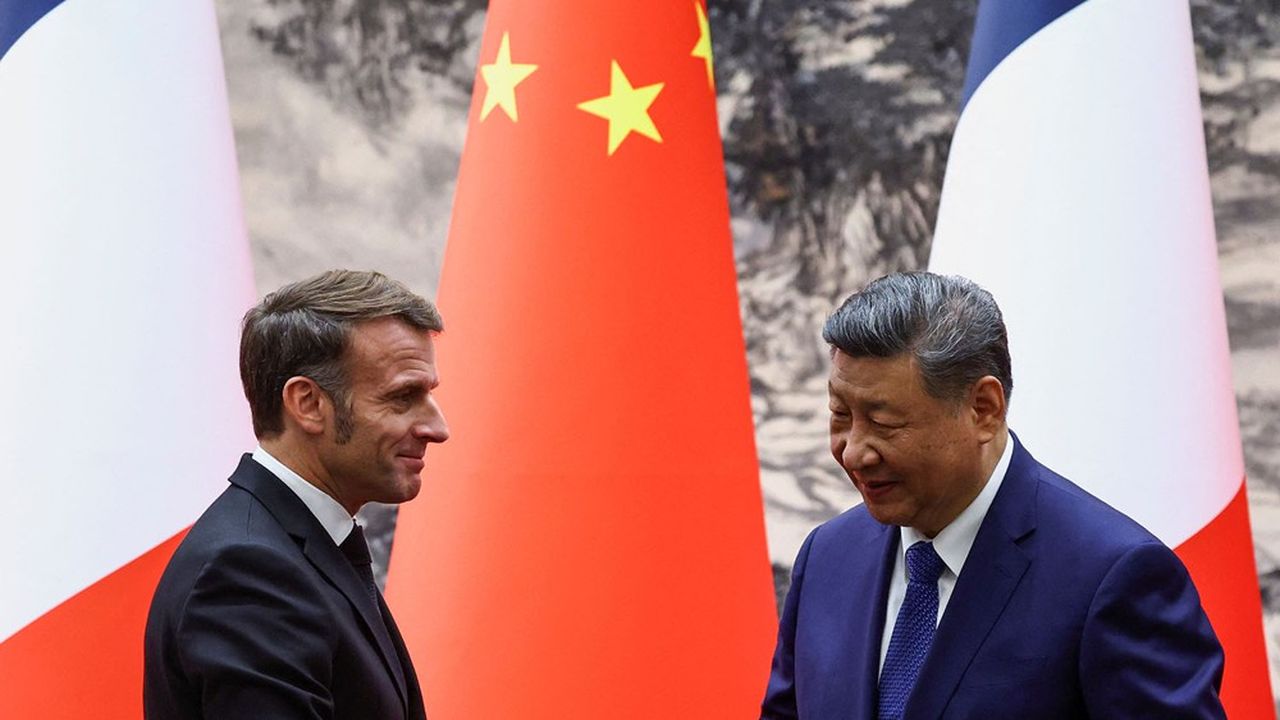
Emmanuel Macron's state visit to China aimed to reestablish a delicate political and commercial dialogue between the European Union and the world's second largest economy. Beijing remains an essential economic partner, but also a strategic competitor whose influence raises heightened awareness among European capitals.
During the discussions, the French president emphasized the need for a more balanced relationship. Europe frequently criticizes China for what it sees as unfair trade conditions, subsidized competition in sectors like electric vehicles, and a lack of mutual openness in its domestic market. Macron argued that a sustainable partnership cannot exist without reciprocity, a message that both France and the European Union have been trying to convey for several years.
Geopolitically, the discussions mainly focused on the war in Ukraine and the fragility of multilateralism. Paris hopes that China will play a more assertive role in limiting escalation risks, while maintaining diplomatic pressure on Moscow. Beijing, for its part, positions itself as a global player seeking to balance its relationships without breaking ties with any bloc.
Despite signs of goodwill, few concrete agreements were announced. The visit appears more as a strategic step in a relationship undergoing redefinition than a moment of rupture. Europe is trying to keep an open channel with China while reducing its economic dependence, while Beijing seeks to preserve its partnerships in a fragmented international context.
The meeting underscores that Euro-Chinese dialogue remains essential but fragile. With divergent economic objectives and ongoing geopolitical tensions, the room for maneuver remains limited, suggesting a close cooperation but under conditional terms.