An electricity grid under constant fire
Since the onset of the large-scale invasion, Ukraine has been subjected to targeted strikes on its energy infrastructure. Far from being collateral damage, power plants, high-voltage transmission networks, gas depots, and district heating facilities are among the explicitly stated objectives of the Russian strategy. The aims are twofold: in the short term, plunging entire regions into darkness and cold, weakening the economy, and forcing millions to flee or accept their fate; in the long term, eroding the Ukrainian state's ability to maintain basic public services, thereby undermining its legitimacy.
The winters of 2022-2023 and 2023-2024 had already been marked by waves of missiles and drones targeting electricity production and transmission. The winter of 2024-2025 and the current season of 2025-2026 have confirmed this pattern of intermittent escalation. Several rounds of attacks have nullified the capacities of certain thermal power plants, damaged the lines connecting nuclear plants to the rest of the country, and imposed rotating outages of several hours per day in major cities. In some frontline regions, having power for more than ten consecutive hours has once again become an exception.
A diminished but unbroken energy capacity
The brutality of these attacks has profoundly transformed the Ukrainian energy system. Before the war, the country had significant dispatchable capacity, relying on a mix of nuclear, coal and gas thermal energy, hydropower, and renewables. In just a few months, a substantial part of this fleet has been destroyed or damaged, forcing Kyiv to urgently reinvent its production-consumption balance.
Ukrainian engineers have employed numerous technical feats to reconnect plants, reconfigure lines, and install backup equipment. Thousands of generators have been distributed to hospitals, public buildings, and critical areas. Integration into the European grid has accelerated, enabling electricity imports from neighboring countries to address the most severe deficits. Yet despite these efforts, the situation remains one of a system on life support, forced to organize planned outages, prioritize vital infrastructure, and accept frequent cuts for households and businesses.
The statistics narrate this war of attrition. The truly available production capacity was reduced by half at the height of the attacks. At times, national demand exceeded what the grid could deliver by several gigawatts. The authorities had no choice but to limit supply to a few hours per day in the most vulnerable regions. Electricity has become an intermittent commodity, to be managed closely, like a logistical front in its own right.
Europe plugged into Ukrainian resilience
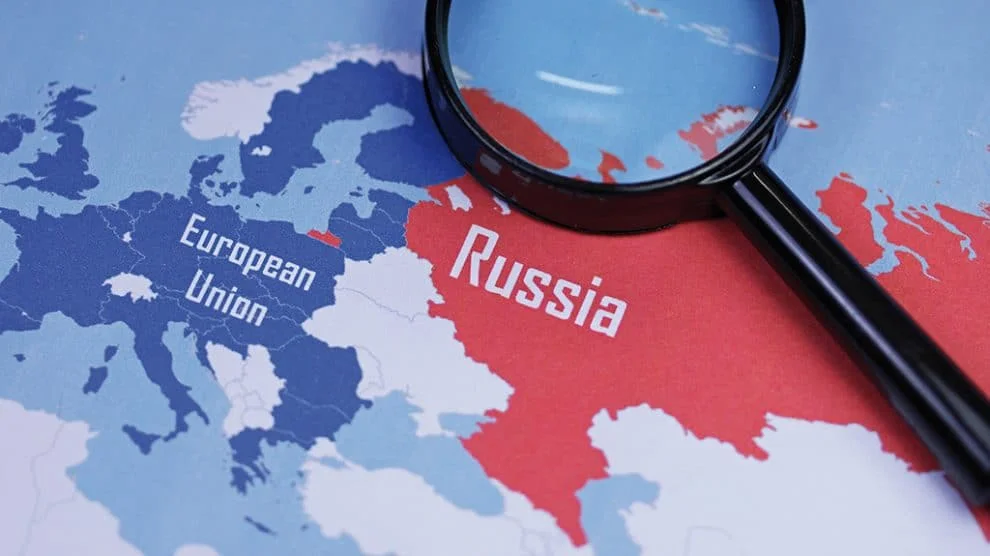
This energy front does not stop at Ukraine's borders. By systematically attacking the grid, Moscow also sends a message to Europe: the war can shift to the battleground of dependency and energy flows. Following the gas shock of 2022, which drove the European Union to fill its storages to over 90% and urgently diversify its supply, the winter of 2024-2025 saw the testing of a new solidarity framework.
For Ukraine, interconnection with the European grid has proven vital. Electricity imports from the EU reached record levels, amounting to several terawatt-hours over the year, even as the country had previously been a net exporter. European grid operators increased export capacities to Ukraine while monitoring the stability of their own systems. This flow of electricity is not merely technical assistance; it is also a political signal, indicating an Europe ready to share part of its energy security to support a country at war.
In return, Kyiv regularly reminds that the defense of its grid serves as an advanced shield for the continent. Every substation restored, every temporarily secured power plant, every megawatt imported or produced locally helps avoid a new confidence crisis in European energy markets. Paradoxically, Ukraine is becoming a laboratory of resilience, where accelerated solutions are tested that others might adopt tomorrow: microgrids, distributed solar, storage, and fine demand management.
Cold as a psychological weapon
Behind the figures and network diagrams, the human dimension remains central. When the thermometer drops well below zero, a power cut for several hours means not only the absence of light but also the loss of heating, difficulties in accessing water, and the inability to recharge a phone or reach a loved one. The repeated attacks on energy infrastructures also aim to mentally exhaust the population, making cold and darkness daily companions of a calculated fatigue.
Ukrainian authorities must juggle between messages of firmness and calls for constrained sobriety. Residents are urged to minimize the use of energy-intensive devices, limit lighting, and organize their activities around supply hours. In major cities, some neighborhoods are plunged into darkness while others remain powered to ensure the operation of hospitals, the metro, or command centers. Municipalities open 'heating points' where residents can warm up, recharge their devices, and follow the situation's evolution.
This management of cold becomes an integral part of political communication. For Kyiv, it is about demonstrating that, despite the outages, the state is holding, essential services continue to function, and organization is not collapsing. For Moscow, every massive blackout is presented as evidence that Ukraine cannot protect its population. The energy war is also a war of narratives.
A standoff that redraws the energy map
In the medium term, this energy front could permanently transform the map of flows and infrastructures in Europe. Ukraine, forced to repair, rebuild, and rethink its system, is increasingly turning towards a more decentralized architecture, less reliant on vulnerable major nodes. Plans discussed with international donors envision an increase in renewables, rooftop solar, and smart grids capable of isolating portions of territory in case of an attack.
For Europe, the lesson is just as harsh. The previous dependency on Russian gas, exposed by the war, has already triggered a rapid shift toward other suppliers and low-carbon energies. However, the increasing attacks on critical infrastructures, in Ukraine and elsewhere, necessitate viewing energy as a pillar of collective security at the same level as defense or digital security. The question is no longer just whether the continent has enough gas or electricity, but whether it can protect its networks against hybrid and persistent threats.
In this context, the war in Ukraine acts as a revealing agent. It shows that control over energy is no longer solely a matter of contracts and pipelines, but also of the capacity to absorb, repair, diversify, and share. The front line is not limited to the trenches of Donbass; it also runs through transformer stations, buried cables, and interconnections linking Kyiv, Warsaw, Berlin, or Paris.
By targeting the Ukrainian energy system, Moscow has opened an attritional front that far exceeds the traditional military framework. This front tests the resilience of a country, the solidarity of its European partners, and the continent's ability to treat energy as a genuinely protected strategic asset. The outcome of this invisible battle will weigh heavily on how Europe considers its security, well beyond the current winter.