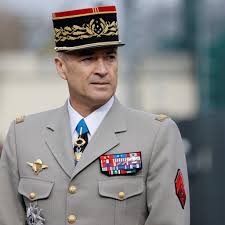
On November 18, 2025, before a gathering of elected officials at the Congress of Mayors of France, General Fabien Mandon, Chief of the Armed Forces, delivered a straightforward speech about the state of the country and external threats. With the geopolitical situation deemed "significantly deteriorating," he called for a "change of mindset," urging the nation to accept "to harm ourselves to defend what we are" and, more strongly, to "accept losing our children."
This statement is shocking as it exceeds the usual realm of military communication. It raises several questions: what is the real intent? Is it a call for national resilience, a message of deterrence, or an attempt to prepare public opinion for broader mobilization? How are these words received politically and socially?
Substantively, General Mandon does not overlook the rising international tensions. He cites Russia as a major threat, believing that Europe risks a high-intensity conflict by 2030. He identifies France as being in a state of active deterrence but highlights a deficit, in his view, of "strength of soul" among both citizens and decision-makers.
In other words, the message is two-fold: on one hand, material capabilities are not in question — France "has everything to deter" — but on the other hand, the collective will, the acceptance of efforts, human losses, or sacrifices, is deemed insufficient. That is what makes the phrase "accept to lose our children" particularly powerful: it aims to serve as a wake-up call.
From the perspective of reception, the reaction is immediate:
-
Very critical from the political side: some believe that the Chief of Staff is overstepping his role, that this type of vocabulary is more political than military strategy.
-
Institutional support: the Minister of the Armed Forces, Catherine Vautrin, defended the general, asserting that his comments were taken out of context and related to the credibility of a military leader facing the realities of his job.
-
In public opinion, the phrasing shocks due to its brutality, but it also sparks a debate about the country's preparedness for war, deterrence, and national effort.
On a strategic level, several implications are worth noting:
-
Psychological preparation of the nation: The general issues a direct call to local elected officials ("talk about it in your communities"), suggesting a desire to raise the level of collective awareness.
-
Deterrence message: By stressing that "we live in a world at risk," he aims to assert that France can no longer afford to be "naive" in the face of its adversaries.
-
National effort and sacrifices: The mention of "losing our children" and "suffering economically" places the themes of effort, mobilization, and sacrifice at the heart of the discourse.
-
Tension between politics and the military: The speech highlights the challenge for the military to explain the realities of war to civil society and for elected officials to assume strategic choices that can directly affect human lives.
Ultimately, this type of speech raises a fundamental question: when does France, as a democratic society, accept that war, its costs, and losses are no longer "off-topic" but fall within its political horizon? General Mandon seems to suggest that this point has already been reached: the threat is real, and preparation is essential.
In conclusion, General Fabien Mandon's statement represents more than just a communication stunt: it calls for a reassessment of the foundations of national defense, deterrence, and mobilization. While the phrasing will likely remain contentious, the strategic background warrants careful consideration. The country must decide if it is ready to face the reality of a war effort, its implications, and its costs.
KEY TAKEAWAYS
General Fabien Mandon's statement marks a turning point in French military communication. By asserting that "France must accept to lose its children," the Chief of Staff seeks to provoke a national wake-up call. His speech takes place against a backdrop of rising tensions with Russia and concerns about a potential high-intensity conflict by 2030. More than a provocation, it is a call for psychological preparation, collective resilience, and an awareness of the potential human costs of future military engagements. However, the ensuing controversy reveals a divide between a military institution aware of the risks and a civil society still reluctant to contemplate these sacrifices.
QUESTIONS FOR READERS
-
Should France really prepare for a high-intensity conflict in the coming years?
-
Is the Chief of Staff justified in speaking so directly about potential human losses?
-
Are these remarks part of a necessary strategic discourse or do they exceed the institutional role of a military leader?
-
Are the French, as Fabien Mandon suggests, ready to accept human and economic sacrifices for national defense?
-
Should the debate on resilience and war preparedness be more widely opened in civil society?