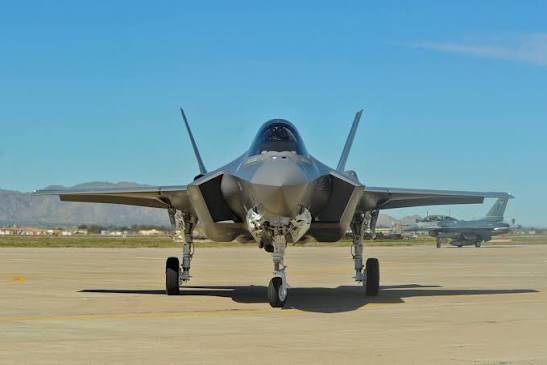
An Unprecedented Deployment from Hill Air Force Base
In 2025, units from the 388th Fighter Wing and the 419th Fighter Wing executed a deployment described as 'historic' by the U.S. Air Force. The F-35A Lightning IIs were sent in March to an undisclosed base in the Middle East under Central Command's authority. The detachments, comprising the 34th Expeditionary Fighter Squadron, were mobilized for a rapid response, with combat operations launched within 24 hours of their arrival.
Operation Rough Rider: Neutralizing Houthi Capabilities
During the first phase of the deployment, F-35As participated in missions aimed at degrading the military capabilities of the Houthis in Yemen. The aircraft conducted targeted strikes against radars, surface-to-air batteries, command centers, and ammunition storage facilities. This deployment also marked a first with successful intercepts of attack drones, confirming the effectiveness of the F-35 in air superiority missions against asymmetric threats.
Operation Midnight Hammer: Penetration into Iranian Airspace
In June 2025, the aircraft were integrated into a much larger operation aimed at striking underground nuclear facilities in Iran. The F-35As paved the way for B-2 Spirit bombers by first penetrating Iranian airspace to neutralize surface-to-air defense systems. Their role was critical in enabling the bombers to reach highly protected sites such as Natanz, Fordo, and Isfahan. Pilots reported that the entire force exited Iranian territory without losses, with the F-35s being the last to leave the area.
Strategic Validation of F-35A Capabilities
This lengthy and complex deployment showcased the full range of advanced capabilities of the F-35A: stealth, electronic warfare, neutralization of anti-air defenses, precision strikes, and versatility in varied environments. According to military officials, these operations confirm that the aircraft is now at the core of U.S. strategic missions, both against armed groups and in contexts of high technological confrontation.