Dakhla, where the desert meets the Atlantic
In the south of Morocco, on a peninsula bordered by the Atlantic Ocean, Dakhla has a charm that few destinations can claim. Here, the Sahara's dunes seem to stretch to the sea, the landscapes change with the tides, and the horizon gives an impression of nearly infinite freedom.
Long known primarily to water sports enthusiasts, Dakhla now attracts a much more diverse tourist clientele. European travelers, nature lovers, families, sportspeople, and fans of upscale stays are gradually discovering the many facets of this region of the Moroccan Sahara.
Its tourism development relies on a particularly attractive combination: exceptional natural heritage, a favorable climate, authentic Saharan culture, developing hospitality infrastructure, and air connections that ease its access to international markets.
An exceptional lagoon, a true natural treasure
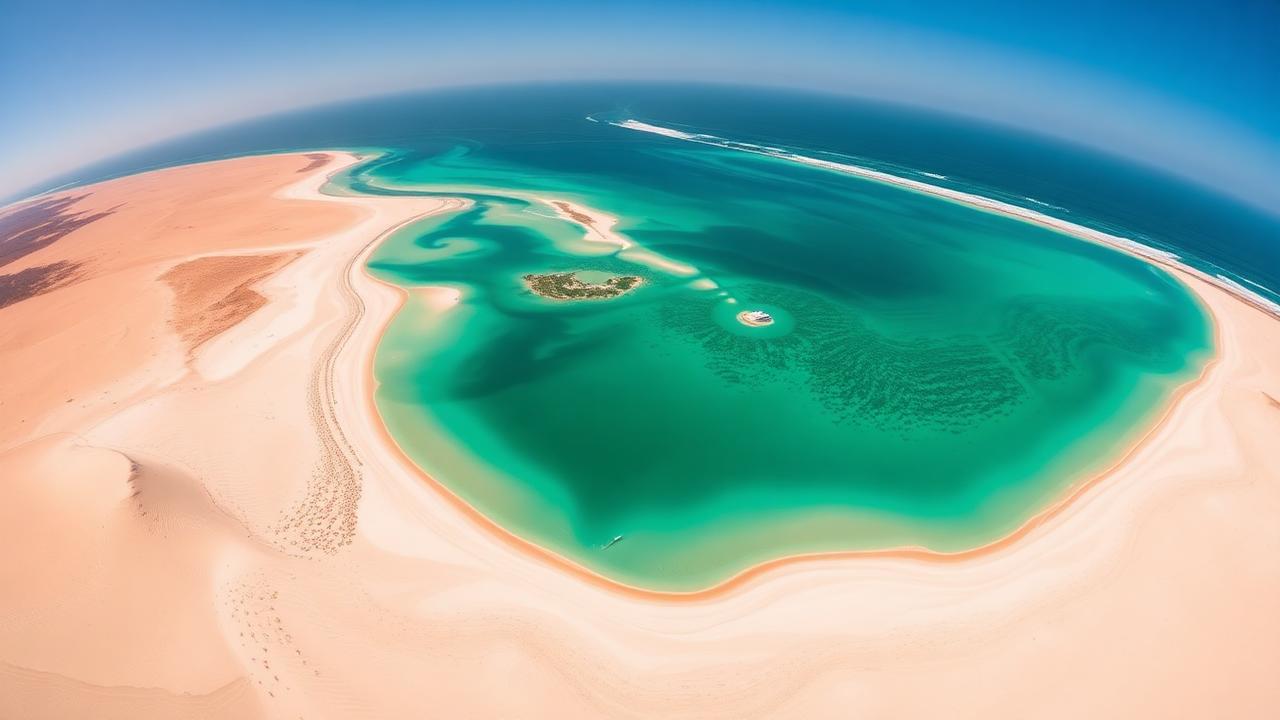
The Dakhla lagoon is undoubtedly one of the region's main attractions. Its waters of turquoise and emerald hues, surrounded by desert landscapes, create a spectacular panorama.
This vast natural space offers visitors an experience distinctly different from traditional beach resorts. The absence of large urban concentrations along part of the coastline, the silence of the desert, and the beauty of sunsets create an atmosphere particularly sought after by tranquility lovers.
Several sites deserve special attention.
The White Dune, an impressive sand formation dominating the lagoon's waters, is among Dakhla's iconic landscapes. The Dragon Island, accessible during certain tide conditions, offers another remarkable setting. Further south, Porto Rico beach captivates with its wild character and long stretches of sand.
These locations are major arguments for the development of nature tourism, discovery, and photography.
A reference destination for kitesurfing and water sports
Dakhla has built an international reputation in the world of glide sports.
Thanks to its steady winds, the expanse of its lagoon, and favorable sailing conditions, it attracts enthusiasts and professionals of kitesurfing, windsurfing, and wingfoiling every year.
Specialized schools, sports camps, and hotels dedicated to these activities have progressively enriched the tourist offer.
The region also holds interest for surfers, who can enjoy various spots along the Atlantic coast.
However, Dakhla's appeal extends beyond sports enthusiasts. Boat excursions, walks along the lagoon, desert outings, and relaxation activities allow a much broader audience to engage with the destination.
The Moroccan National Office of Tourism highlights the White Dune, Dragon Island, water sports, and beaches among the must-try experiences of the destination.
A climate that encourages tourism almost year-round
Unlike many destinations whose activity heavily depends on the summer season, Dakhla has a significant advantage: its desert oceanic climate.
The influence of the Atlantic helps to moderate temperatures, while generous sunshine promotes outdoor activities for much of the year.
The windiest months attract glide enthusiasts, while other periods are more suitable for travelers seeking calm, exploration, or excursions.
This seasonal diversity represents a considerable economic opportunity. It allows tourism operators to develop offers beyond just summer holidays and to better distribute their activity throughout the year.
A Saharan culture that enriches the tourist experience
Visiting Dakhla is not solely about discovering beaches and practicing water sports. It is also about connecting with a cultural heritage deeply rooted in the history of southern Morocco.
Local hospitality, Hassani traditions, music, craftsmanship, and culinary practices constitute an essential part of the regional identity.
Travelers can particularly discover Saharan tea traditions, seafood specialties, and a cuisine related to Atlantic resources.
Dakhla's oysters, cultivated in the region, represent one of the destination's most renowned culinary products.
The development of cultural experiences, heritage tours, and encounters with local stakeholders could help enhance tourist appeal while boosting local economic benefits.
National air links that connect Dakhla to the rest of the Kingdom
Accessibility is a key factor determining Dakhla's tourism growth. Located over 1,600 kilometers from Casablanca by road, the city now benefits from air connections that significantly reduce travel times.
As of November 2026, internal connections include direct flights to Casablanca, Rabat, Agadir, Marrakech, and Laâyoune.
Royal Air Maroc plays a significant role in this connectivity, particularly with the Rabat-Dakhla route, scheduled for three weekly flights in autumn 2026. The journey lasts around two and a half hours.
These connections represent a benefit for Moroccan tourists wishing to explore the southern provinces without undertaking a long road trip.
They also enable the development of short stays, organized trips, and business tourism.
Paris, Madrid, Marseille, and the Canary Islands: Dakhla is increasingly opening up internationally
One of the most significant changes for Dakhla's tourism future involves strengthening its international connectivity.
The city is no longer only accessible from abroad via Casablanca. Several direct connections now facilitate the arrival of European visitors.
International direct flights to Dakhla
|
Departure city |
Airline |
| Paris-Orly | Transavia and Royal Air Maroc |
| Marseille | Transavia (seasonal) |
| Madrid | Ryanair (seasonal) |
| Las Palmas, Gran Canaria | Binter Canarias |
The connection with Paris-Orly, operated by Transavia and Royal Air Maroc, is a strategic asset for attracting French travelers. The seasonal service from Marseille enhances this opening towards southern France.
On the Spanish side, Ryanair flights between Madrid and Dakhla ease access to the destination from one of Europe’s main air hubs. The link with Las Palmas, operated by Binter Canarias, helps connect Dakhla to the Canary Islands archipelago.
These air routes create new opportunities for tourist establishments, trip organizers, and hotel investors. They primarily position Dakhla as a full-fledged vacation destination, no longer merely a stop requiring a connection.
However, the strengthening of air services must be accompanied by ongoing improvements in accommodation capacity, service quality, and tourism promotion in foreign markets.
Accommodations between nature, sport, and premium offerings
Dakhla’s hotel offering stands out due to its environment. Several establishments prioritize close proximity to the lagoon, allowing visitors to stay amid natural landscapes.
Kitesurf camps, ecolodges, bungalows, hotels, and more upscale structures cater to varying expectations.
This diversity paves the way for several tourist segments: sports vacations, couple getaways, wellness tourism, family escapes, or business trips.
Dakhla particularly possesses interesting potential in disconnection tourism. Against the backdrop of accelerating life rhythms in big cities, the vastness of desert, natural spaces, and the tranquility of the lagoon present a particularly attractive proposition.
A destination that can contribute to regional economic development
Beyond the landscapes and beaches, tourism serves as a development lever for the Dakhla-Oued Eddahab region.
Hospitality, dining, transportation, water activities, and tourist services generate local employment and entrepreneurial opportunities.
The destination's rise can also benefit artisans, local producers, guides, and companies specializing in organizing excursions.
To sustain this dynamic, several crucial challenges remain: the training of professionals, ecosystem protection, sustainable water and waste management, as well as the preservation of natural heritage.
For the main tourist capital of Dakhla lies precisely in what makes it unique: a still largely preserved nature and a distinctive cultural identity.
The challenge of sustainable and respectful tourism for natural wealth
Dakhla's rise on the international tourist map comes with a particular responsibility.
The lagoon, coastal areas, and desert zones are fragile environments. Their protection must be central to tourism development.
Promoting resource-efficient accommodations, regulating motorized excursions, responsibly managing water activities, and raising visitor awareness are all priorities.
A controlled development would allow Dakhla to sustainably distinguish itself from beach destinations marked by excessive urbanization.
The goal is not just to attract more visitors, but to build a tourism model capable of preserving the region’s wealth while improving living conditions for its inhabitants.
Dakhla, a tourist potential that transcends borders
Today, Dakhla has rare assets: spectacular landscapes, a lagoon recognized by international sports enthusiasts, wild beaches, a pleasant climate, a strong cultural identity, and improving air accessibility.
Its ability to attract both Moroccan travelers and European visitors presents a major opportunity for the tourism development of the Moroccan Sahara.
With the strengthening of air connections, diversification of the hotel offering, and ambitious international promotion, Dakhla can reinforce its position among the Atlantic's most attractive destinations.
For ultimately, Dakhla's strength lies in a simple promise: to offer travelers an experience of a territory where the desert meets the ocean, where vast spaces invite exploration, and where travel takes on a profoundly different dimension.