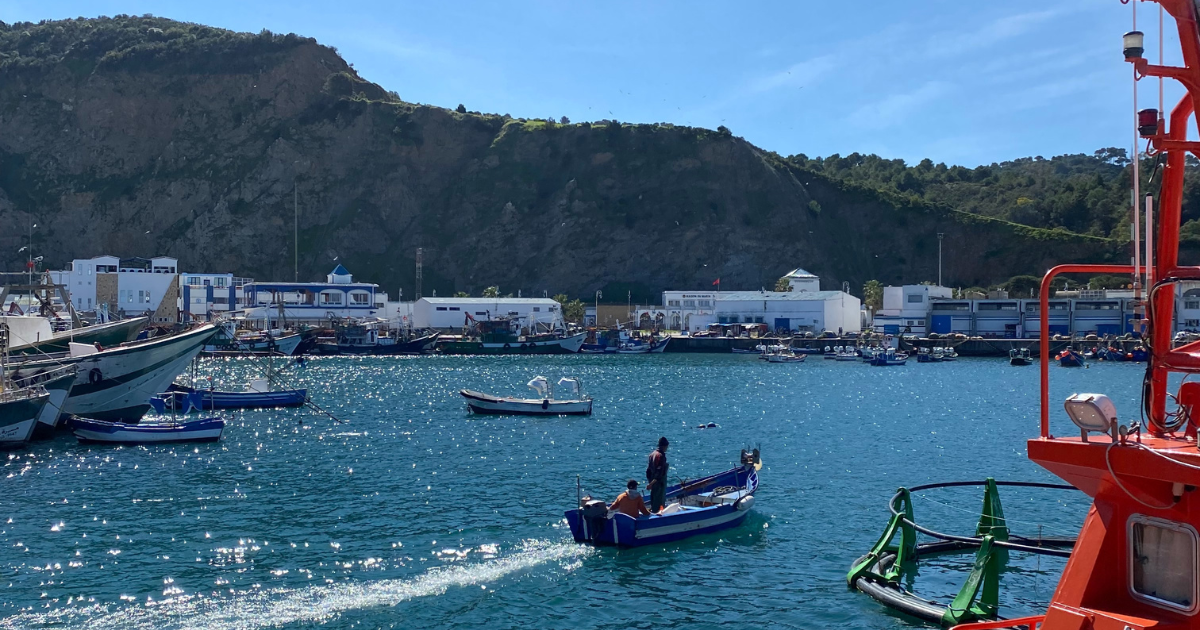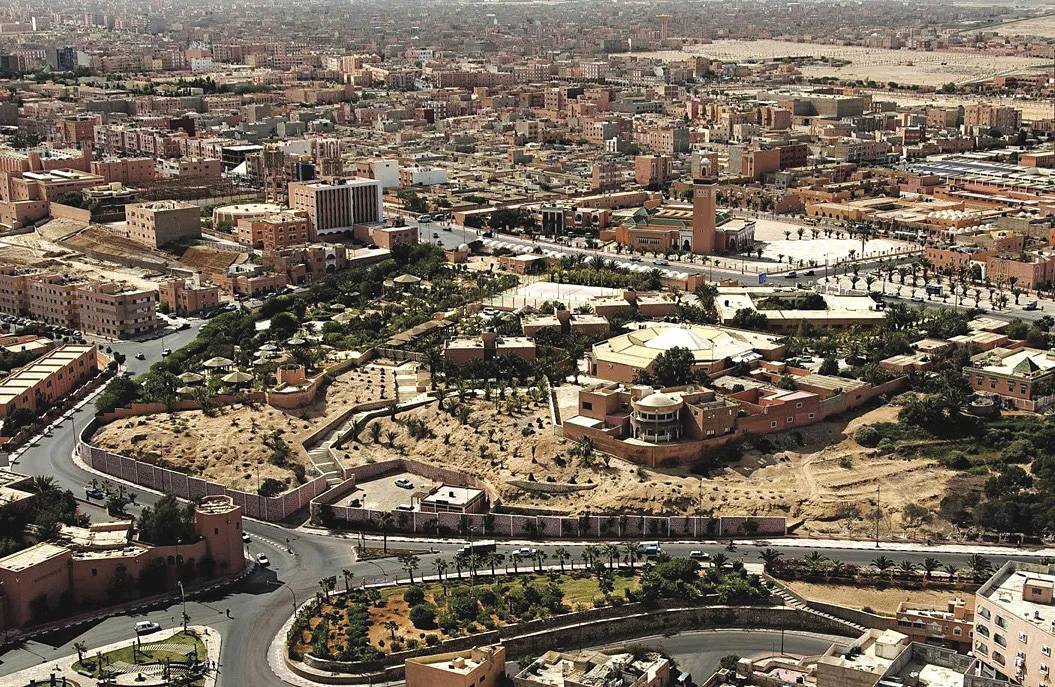
From the Atlantic desert to the ultramodern ports of Dakhla and Laâyoune, the Southern Provinces are undergoing unprecedented transformation.
This territory, long marginalized, has become in the span of two decadesone of the most ambitious projects of modern Morocco.
Infrastructure, fishing, renewable energy, tourism, logistics… transformations are multiplying and redefining the economic landscape of the Kingdom.
Behind these projects lies a clear goal:to make Southern Morocco a regional hub between Africa and Europe, serving as both a showcase for national development and a lever for continental integration.
1. From Marginality to Centrality: A Historical Turning Point
Since the presentation of theautonomy plan in 2007, Morocco has placed the development of the Southern Provinces at the heart of its national strategy.
Thedevelopment model of the Southern Provinces, launched by King Mohammed VI in 2015, has mobilized over77 billion dirhams in investments.
The priorities include: roads, ports, health, education, agriculture, energy, and tourism.
The results are evident:
-
Therural electrification ratethere exceeds 99%, compared to less than 50% in the 1990s.
-
TheDakhla Atlantic Port, under construction, will become one of the largest in West Africa.
-
Road and airport networks now connect these regions to the rest of the country and the continent.
Far from being peripheral, these territories are emerging asthe new geo-economic centerof Morocco.
2. Dakhla, the Laboratory of the Future
Dubbed “the pearl of the South,”Dakhlabetter embodies this transformation than any other city.
Located between ocean and desert, it now attracts investors, diplomats, and entrepreneurs.
Its industrial and logistics zones are designed to host export-oriented businesses, particularly in the fishing, agro-industry, renewable energy, and tourism sectors.
TheDakhla Atlantic Port, whose construction is progressing rapidly, will open a direct sea route to sub-Saharan Africa and South America.
It will become a key link in theTanger-Dakhla corridor, connecting northern and southern Morocco via a highway of over 1,000 kilometers.
Dakhla is also attracting high-end international tourism, notably throughkitesurfing, ecotourism, and international conferences, such as theDakhla Investment Forumand theCrans Montana Forum..
3. Laâyoune and Boujdour: Industrial and Logistical Foundations
Further north,Laâyoune, the administrative capital of the Southern Provinces, concentrates significant public and private investments.
Its modernized port serves as a strategic platform for fishing and maritime trade.
The phosphate industry is also expanding, with thePhosboucraasubsidiary of the OCP Group, which has invested several billion dirhams in an integrated industrial complex.
Boujdour, for its part, is focusing on renewable energy and the valorization of fisheries resources.
The wind farms in the region supply electricity to a large part of the territory, contributing to national energy transition.
This self-sufficiency policy strengthens the role of the Southern Provinces in theGreen Moroccoproject and theHalieutis plan..
4. Renewable Energies: Pillar of Sustainable Development
The Moroccan Sahara has an exceptional advantage:high sunshine and wind potential among the highest in the world.
Projects like theTarfaya Wind Farm(300 MW) or the Laâyoune Solar Park are part of theMorocco Renewable Energies 2030, which aims to increase the share of renewables to52% of the national energy mix..
These infrastructures position the South asMorocco's energy laboratory, a potential exporter of green electricity to Europe and Africa.
The local benefits are already visible: jobs, social infrastructure, and the creation of a more resilient local economy.
5. Diplomacy and International Recognition
The Southern Provinces have also become amajor geopolitical actor..
Since 2020, several African and Arab countries have openedconsulates in Dakhla and Laâyoune, implicitly recognizing Moroccan sovereignty over the region.
These diplomatic openings are not merely symbolic: they promote economic, cultural, and academic exchanges.
The Southern Provinces are now integrated into Morocco's African policy.
They serve as thegateway of the Kingdom to sub-Saharan Africa, in line with Rabat's “South-South” partnership approach.
It is in Dakhla that this field-based economic diplomacy is being constructed, founded on cooperation and shared development.
6. Persisting Challenges: Employment, Inclusion, and Sustainability
Despite remarkable progress, challenges remain.
Youth unemployment, especially among graduates, remains high in certain areas.
Dependence on public investments still exposes the local economy to structural fragility.
The sustainable success of the model will depend onstrengthening local entrepreneurship, vocational training, and diversifying sectors.
The environmental issue is also central.
The rapid urbanization of Dakhla and Laâyoune raises questions about water, waste, and ecological balance management in sensitive areas.
Sustainability must accompany growth, or risk undermining achieved gains.
7. The South, a Reflection of Tomorrow's Morocco
What is happening today in the Southern Provinces goes beyond their territorial framework.
It is a vision of theMorocco of the Future:connected, autonomous, focused on Africa, and grounded in sustainability.
The massive investments in infrastructure are not an end in themselves, buta lever for national transformation..
The Southern Provinces embody this idea: development and sovereignty go hand in hand..
They symbolize a Morocco that invests in its most remote territories to assert its place in the world.
Conclusion
The Southern Provinces of Morocco are no longer margins: they are nowthe driving force of an ambitious economic and territorial diplomacy..
Through Dakhla, Laâyoune, and Boujdour, Morocco demonstrates that balanced, sustainable, and inclusive development is possible, even in the most arid areas.
The South is no longer a distant horizon: it is thebeating heart of a dynamic Morocco, a symbol of a nation that resolutely looks to the future.
Sources:
-
Ministry of the Interior – Development Model of the Southern Provinces, Report 2024
-
OCP Group – Phosboucraa Report 2024
-
Moroccan Agency for South Development (ANDZOA)
-
ONHYM – Renewable Energies and Infrastructure of the South
-
UN – Report on South-South Cooperation 2024
-
African Development Bank – Economic Outlook Morocco 2024