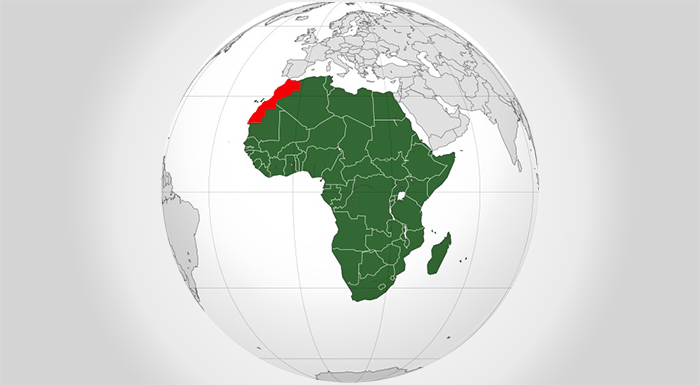
The creation of the African Continental Free Trade Area (AfCFTA), which came into force in January 2021, represents one of the most ambitious projects in the continent's history.
With 54 member countries and a potential market of 1.4 billion consumers, this initiative by the African Union aims to stimulate intra-African trade, currently limited to less than 17% of the continent's total trade.
For Morocco, which has chosen for a decade to strengthen its African ties, this area represents both a strategic opportunity and a test of competitiveness.
1. A Consolidated African Ambition
Since its return to the African Union in 2017, Morocco has been multiplying bilateral and multilateral agreements across the continent.
The signing of the AfCFTA aligns with this logic of economic and diplomatic cooperation, supported by a clear vision: to make Morocco a regional platform for investment and export to Africa.
The country has major advantages:
-
a geographical position as a crossroads between Europe, Africa, and the Americas;
-
world-class port infrastructure (Tanger Med, Nador West Med, Dakhla Atlantique);
-
and a long-term policy of economic openness.
Thus, Morocco approaches the AfCFTA not just as a commercial zone, but as an opportunity for continental leadership.
2. Infrastructure, the Backbone of African Trade
The success of the AfCFTA will largely depend on logistics.
In this regard, Morocco has a head start.
The Tanger Med Port, ranked as Africa’s and the Mediterranean's top container port, connects the country to over 180 ports worldwide and serves as the main gateway for intra-African trade.
The future Sahara Highway, linking Tanger to Dakhla, and the construction of the Dakhla Atlantique port, will further enhance this south-south connectivity, facilitating exports to West Africa.
Morocco is also developing integrated logistics zones, such as those in Kénitra and Casablanca, to streamline regional exchanges.
With this robust infrastructure, the kingdom can position itself as an African commercial hub, capable of connecting African markets to Europe and Asia.
3. Moroccan Industry Taking On the Continent
Integration into the AfCFTA opens new perspectives for Moroccan industry.
The automotive, pharmaceutical, agrifood, textile, and green energy sectors now have a preferential access to a rapidly expanding continental market.Morocco, already Africa's top car exporter, sees the AfCFTA as an opportunity to increase its production aimed at other African countries.
Companies like
Renault Morocco and Yazaki are considering expanding their distribution networks to West Africa.In the pharmaceutical sector,
Sothema and Cooper Pharma are multiplying regional establishments (Rwanda, Côte d'Ivoire, Senegal).This industrial dynamic is supported by favorable public policies, such as the
2023 Investment Charter, which encourages Moroccan companies to internationalize.4. Economic Diplomacy as a Tool for Integration
One of the keys to Morocco's strategy in Africa lies in its
proactive economic diplomacy..
Through institutions such as Morocco Export, AMDIE or Attijariwafa Bank, the kingdom facilitates cross-investments, partnerships, and the training of African executives.
Royal visits to around thirty African countries have resulted in the signing of more than 1,000 cooperation agreements covering areas as diverse as agriculture, infrastructure, finance, energy, and training.
These agreements place Morocco at the heart of a network of positive interdependencies and solidify its image as a reliable African partner.
5. Challenges to Moroccan Competitiveness
Despite its advantages, Morocco will face several challenges to fully benefit from the AfCFTA:
-
the internal logistics costs, which remain high for certain sectors;
-
the customs complexity between member countries, despite promises of simplification;
-
and the diversity of regulations, which hinders the fluidity of exchanges.
The country will also need to strengthen its industrial competitiveness against economies like South Africa, Nigeria or Egypt.
Success will depend on the ability to harmonize standards, share infrastructures, and invest in innovation and training.
6. Financial Integration to Support Trade
Morocco plays a driving role in the bankarization of the continent..
Major Moroccan banks — Attijariwafa Bank, BCP, and Bank of Africa — operate in over 25 African countries, facilitating cross-border payments and financing for SMEs.
This financial integration is a pillar of the AfCFTA: it helps to support trade flows and reduce dependence on foreign currencies.
The medium-term ambition is to establish an integrated pan-African payment system, already being tested within the African Export-Import Bank (Afreximbank), which Morocco intends to fully participate in.
7. Towards a More Connected and Sovereign Africa
The AfCFTA is not limited to trade: it represents a political and civilizational project..
By promoting the free movement of goods, services, and capital, it paves the way for an African economic sovereignty, less dependent on external markets.
Morocco, with its stability, infrastructure, and development model, has the means to play a catalytic role, in this transformation.
Its geographical position — between North and South — makes it a natural bridge between Africa and the world.
Conclusion
The African Continental Free Trade Area is not just an economic reform: it is a vision for the future of a continent in search of unity and power..
By engaging actively, Morocco confirms its intention to participate in building an integrated, strong, and united Africa..
From Tangier to Dakhla, from ports to logistics corridors, the kingdom is weaving the fabric of a new continental trade: an African trade among Africans, based on complementarity, cooperation, and trust.
Sources:
-
African Union – AfCFTA: Assessment and Perspectives 2025
-
Moroccan Ministry of Industry and Trade – Report on African Competitiveness
-
African Development Bank – Africa Economic Outlook 2024
-
Tanger Med Port Authority – 2024 Assessment
-
OCP Africa / AMDIE – Moroccan Investments in Sub-Saharan Africa