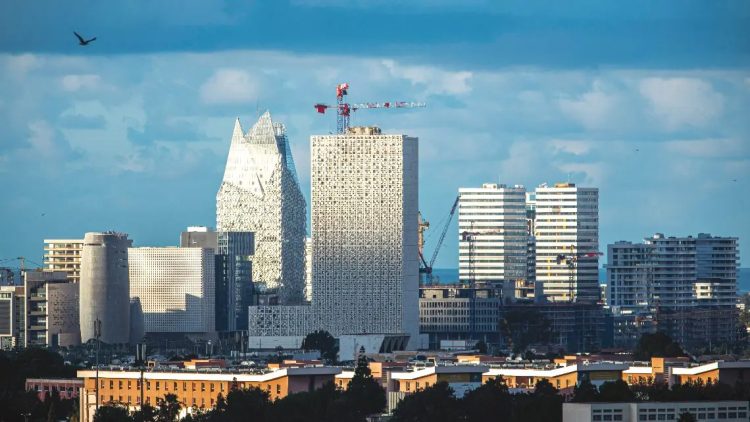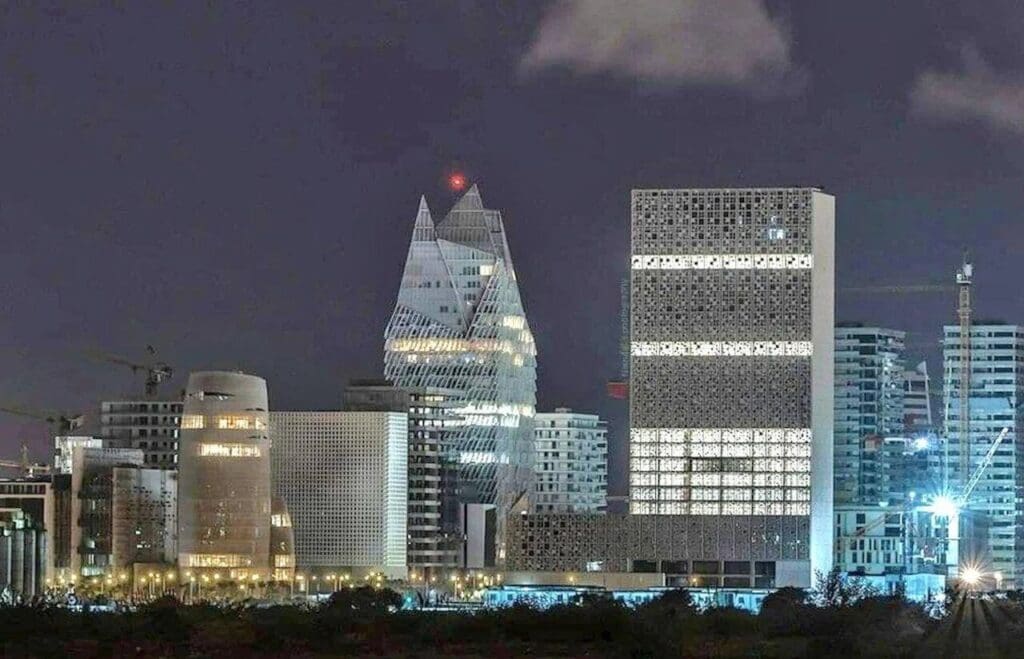
A project at the heart of Morocco's economic strategy
Launched in 2010,Casablanca Finance City (CFC) is part of the royal vision to make Morocco a major economic player in Africa.. The idea is straightforward: transform the economic capital of the Kingdom into a financial center capable of attracting multinational companies operating on the continent.
With its favorable tax framework, modernized legal environment, and strategic geographical position between Europe and Africa, CFC quickly becomes aninstrument for regional integration.. It symbolizes the economic turning point of a country that is now assuming its role as aAfrican investment platform..
Reforms supporting competitiveness
To realize this ambition, Morocco has implemented a series ofstructural reforms. The regulatory framework of CFC offers companies attractive tax exemptions and unprecedented legal security in the region.
The state has concurrently invested in thedigitization of the banking system, improving financial governance, and promotingnew high-value-added sectors: fintech, green finance, inclusive insurance, and sustainable investments.
These efforts are bearing fruit. By 2025, over250 international companies are registered under the CFC status, including several global leaders in consulting, finance, energy, and technology. This attractiveness enhances Morocco's credibility with foreign investors.
Casablanca facing African competition
Despite these advances, the challenge remains significant. Other African metropolises likeJohannesburg, Lagos, or Nairobi also compete for the title of regional financial center.
Casablanca's main advantage lies in itspolitical and institutional stability, a determining factor in a continent often marked by uncertainty. Moreover, Morocco is relying on anactive economic diplomacy,multiplying cooperation agreements with French-speaking and English-speaking African countries.
Through theAfrican Continental Free Trade Area (AfCFTA), the Kingdom intends to act as a bridge between African and European markets. Casablanca Finance City positions itself as thelink between North and South,facilitating intra-African investment flows.
Towards a sustainable and digital financial hub
The future of CFC now depends on its ability toanticipate global changes.Morocco has initiated a shift towardsgreen finance andfinancial technology (fintech), in order to make the sector more inclusive and resilient.
Initiatives like theGreen Bonds Market,supported by the Casablanca Stock Exchange, and thepromotion of African startups,are part of this modernization effort.
Thus, by the end of the decade, Casablanca could becomethe first sustainable financial center on the continent, integrating technological innovation, ethical finance, and inclusive growth.
An ambition worthy of the Kingdom
Casablanca Finance City is not just an urban development project; it isa reflection of national ambition.That of a modern Morocco, connected and focused on Africa.
Far from a purely economic vision, CFC embodies a political conviction: thatthe continent's development must be led by Africans for Africans, with strong regional hubs capable of competing with the world's major financial centers.
If successful, Casablanca could become for Africa what Dubai represents for the Middle East:a symbol of openness, stability, and economic success.
Sources:
-
The Guardian – Casablanca’s ambitions as an African finance hub
-
Reuters – Morocco’s investment reforms and CFC strategy
-
Morocco World News – Digital finance and green growth initiatives in Morocco
-
Le360 – Casablanca, an economic lever for Moroccan sovereignty.