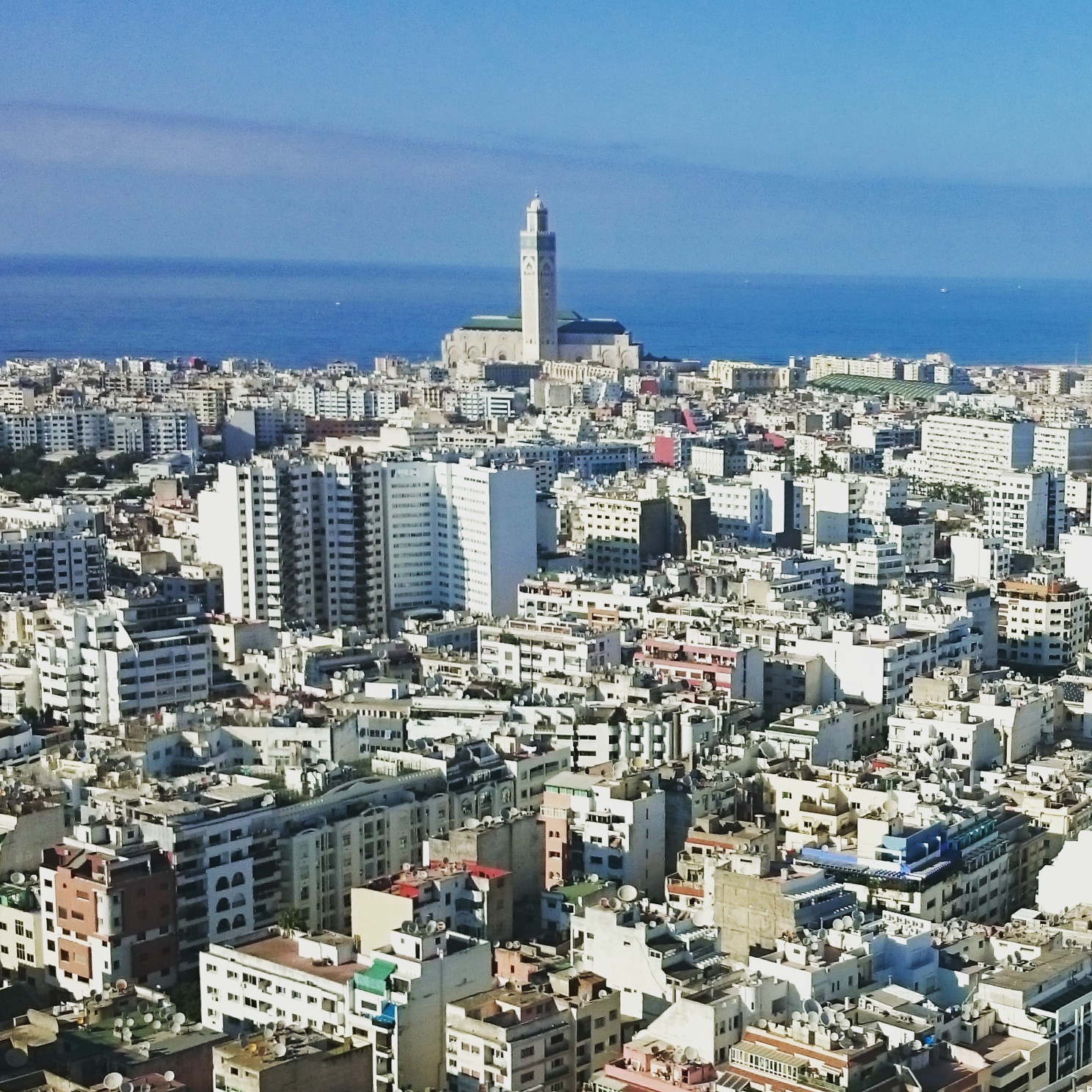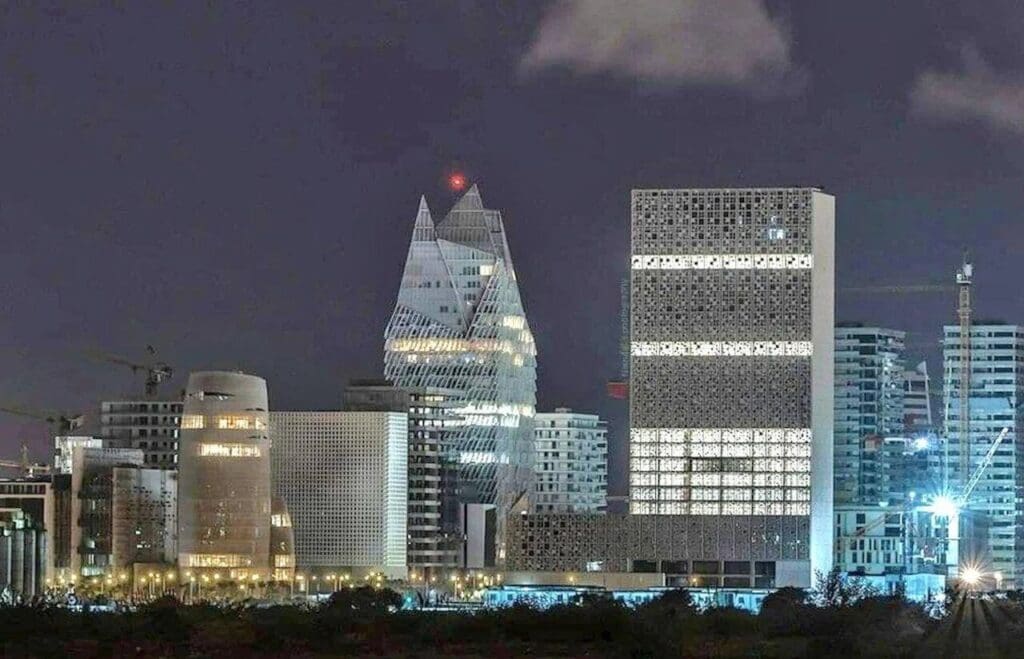
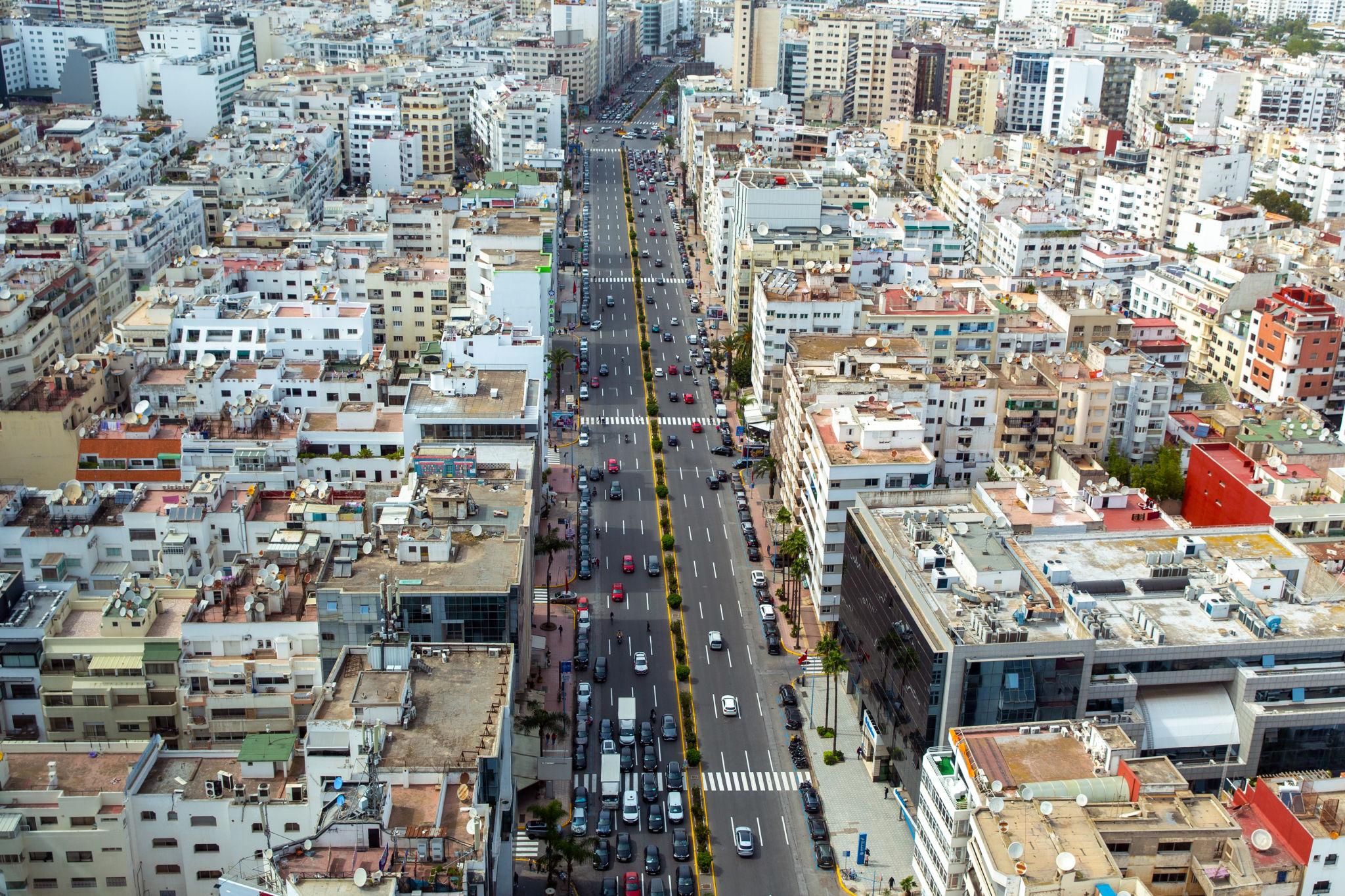
Casablanca is Morocco's largest city and its main economic, industrial, and financial center. Every day, hundreds of thousands of workers, students, and merchants traverse its broad boulevards, residential neighborhoods, and activity zones.
Yet, in November 2026, this metropolis still has no metro line, whether underground or above ground.
This observation might seem mundane if the metro had never been part of the city’s ambitions. But that is not the case.
For decades, various projects have been considered. Some have led to technical studies, financial estimates, and even provisional timelines.
The last major aerial metro project was supposed to be operational by 2018. Eight years after that deadline, no construction has begun.
What’s most surprising is that Casablanca has not stopped investing in public transport. The city has actually significantly expanded its tramway and Busway networks.
The issue, therefore, is not simply one of a lack of investment. It’s about the choice of infrastructure and the long-term vision for Casablanca's mobility.
1. The numbers of a city still searching for its mobility solutions
|
Indicator |
Number |
|---|---|
|
Population of the municipality (2024) |
3.22 million |
|
Metro lines |
0 |
|
Tram lines |
4 |
|
Busway lines |
2 |
|
Length of the tram network |
Approximately 74 km |
|
Length of the Busway network |
Approximately 24.5 km |
|
Tramway and Busway trips in 2025 |
Over 110 million |
These figures reflect a contrasting reality.
On one hand, Casablanca now has a true modern collective transport network, a significant advancement compared to the situation in the 2000s.
On the other hand, the lack of a metro raises questions about the metropolis’s ability to sustainably manage its densest travel demands, particularly on major routes connecting peripheral neighborhoods to the economic center.
The tramway has transformed mobility for many residents. But can it alone serve as the definitive backbone of transport for a metropolis of this size?
2. The Casablanca Metro: A History of Abandoned Projects
The idea of a metro in Casablanca is not new.
As early as the 1970s and 1980s, discussions began around high-capacity collective transport systems.
These projects evolved over the decades without resulting in any realization.
It wasn't until the 2000s that the project gained a more concrete dimension.
The Urban Transport Plan of 2008 notably envisioned the development of the tramway and the study of an aerial metro line.
Under the leadership of municipal council president Mohamed Sajid, the project advanced enough for its characteristics to be presented publicly.
It was to be a line of about 15 kilometers, aimed at connecting several densely populated neighborhoods to the main hubs of downtown.
The planned route was set to serve Moulay Rachid, Sidi Othmane, Sbata, and Derb Sultan.
The announced capacity could reach 450,000 passengers per day.
Studies progressed, and officials spoke of initiating works that would allow for a launch by 2018.
But in June 2014, everything changed.
Municipal officials decided to prioritize tramway development. On July 24, 2014, the abandonment of the aerial metro was confirmed by the City Council.
The main reason given: the project’s cost was deemed excessive and there were difficulties in financing it.
The Casablanca metro then joined the long list of major infrastructures that have been studied, announced, and then abandoned.
3. Nine billion dirhams: Too expensive for Casablanca?
The aerial metro project was estimated at around 9 billion dirhams, based on figures published at the time of its abandonment.
For 15 kilometers of line, this represented an average of 600 million dirhams per kilometer.
|
Characteristic of the abandoned project |
Announced data |
|---|---|
|
Length |
15 km |
|
Investment |
9 billion dirhams |
|
Average cost per kilometer |
600 million dirhams |
|
Announced capacity |
Up to 450,000 passengers/day |
|
Planned service launch |
2018 |
|
Abandonment |
July 2014 |
These are historical data, not updated to 2026 prices.
At that time, officials presented two possibilities.
The first involved constructing the aerial metro, coupled with other transport infrastructures.
The second prioritized an extended tramway network, capable of reaching more neighborhoods with a budget deemed more manageable.
The second option was selected.
From an economic standpoint, the decision was justifiable: with a limited budget, it was possible to serve a larger area of Casablanca by developing multiple tramway lines.
However, this logic raises a fundamental question.
Should one prioritize the number of kilometers constructed or the capacity to transport large flows of passengers quickly?
A metro can carry more passengers per hour on the busiest routes, particularly due to longer trains, higher frequencies, and completely independent operations from road traffic.
The tramway, on the other hand, offers an excellent collective transport solution but tends to be more affected by intersections and urban space constraints.
Thus, the comparison cannot be limited to construction costs per kilometer.
It must also consider the number of passengers transported, time savings, operating costs, and future needs of the metropolis.
4. The tramway has progressed, but traffic jams remain a reality
It would be unfair to deny the progress made.
The first tram line, inaugurated in December 2012, profoundly transformed the landscape of public transport in Casablanca.
The second line followed in 2019, and the T3 and T4 lines were put into service in September 2024.
Two Busway lines also began operation in March 2024.
Today, the network totals nearly 100 kilometers of dedicated public transport facilities.
Over 110 million trips were made on the tramway and Busway networks in 2025, according to operator RATP Dev Casablanca.
This result demonstrates the utility of these infrastructures.
However, the development of collective transport does not mean that traffic difficulties have disappeared.
On several major routes, drivers continue to face slowdowns, traffic jams, and travel times that are difficult to predict.
The current network does not directly serve all residential, employment, or educational locations.
Connections, frequency of service, and links between peripheral neighborhoods and major employment centers remain essential challenges.
The debate is therefore not about systematically opposing the tramway and the metro.
Rather, it concerns the complementarity of both systems and the possibility of equipping Casablanca with a heavy transport option capable of handling the most significant travel demands.
5. Traffic Jams: An Invisible Cost for Casablanca's Economy
Traffic jams represent more than just a daily nuisance. They also have an economic cost.
An employee spending two hours in transit devotes a significant portion of their day to travel. For a company, delays, delivery difficulties, and unpredictability of travel times can impact work organization.
To understand the financial stakes, let’s consider an illustrative hypothesis: 500,000 people losing an additional 30 minutes per day in traffic.
This would amount to 250,000 hours lost daily.
Over 250 working days, the total would reach 62.5 million hours per year.
Theoretically valuing each hour at 30 dirhams, the corresponding economic cost would be 1.875 billion dirhams annually.
These figures do not constitute an official estimate of Casablanca’s congestion. They simply illustrate the scale that time lost can reach in a major metropolis.
Moreover, the costs of congestion extend beyond lost time. They also include additional fuel consumption, air pollution, vehicle wear, and logistical difficulties.
A high-performing metro would not eliminate all traffic jams. However, it could offer a fast alternative on certain routes, provided it is correctly integrated with trams, buses, and other modes of transport.
6. Algiers, Cairo, and Riyadh: Other Metropolises Have Chosen the Metro
The absence of a metro in Casablanca is all the more striking given that several major metropolises in the region already have heavy urban rail networks.
In Cairo, Egypt, the metro has been operational since 1987. Its network has been gradually expanded to meet particularly high demand.
In Algiers, Algeria, the first metro line was inaugurated in 2011 after a lengthy process marked by technical and financial difficulties.
In Riyadh, Saudi Arabia, a vast metro network began operation in 2024 as part of a program to transform urban mobility.
These experiences are not directly translatable models for Casablanca.
Each city presents different geography, density, financial capabilities, and travel needs.
They do, however, illustrate a principle: major transport infrastructures are built over several decades, based on planning that anticipates future needs.
Casablanca has opted for a gradual development of the tramway. This model has resulted in concrete achievements.
However, the existence of less expensive alternatives does not exempt from regularly assessing the merits of a metro network along routes where demand could justify it.
7. In 2024, the Metro Returns to Discussions... Without Construction Decisions
Ten years after the abandonment of the aerial metro project, the question has resurfaced.
In June 2024, the economic press reported preparations for a new feasibility study of the Casablanca metro.
However, the reactions from local officials highlighted a coordination issue.
Questioned by Le Desk, Abdellatif Maâzouz, then president of the Casablanca-Settat Regional Council, indicated he was unaware of any region-wide metro project being pursued.
The prospect of operational service before 2030 thus seemed unrealistic.
This information must be distinguished from an official construction decision.
A feasibility study serves to determine the relevance and potential conditions of a project. It does not equate to budgetary approval or the commencement of construction.
As of November 2026, Casablanca still has no operational metro line.
Available public information also does not identify a firm official timeline for the first service launch.
After decades of discussions, the matter remains unfulfilled.
8. The Real Problem: Has Casablanca Prioritized Short-Term Solutions?
The decision to abandon the aerial metro in 2014 was driven by real economic considerations.
Nine billion dirhams represented a significant envelope, particularly for a community facing multiple infrastructure needs.
Developing tramway lines allowed for better coverage of more neighborhoods and relatively quick improvements.
However, this logic carries a risk: systematically opting for less expensive solutions at the time of construction without sufficiently measuring their long-term limitations.
A lower investment today may lead to supplementary needs, costly adaptations, or saturation of certain corridors tomorrow.
Conversely, building a metro too early on an insufficiently frequented line could divert considerable resources from other priorities.
Therefore, a serious comparison should take into account actual demand, urban density, ridership forecasts, and total cost over several decades.
The problem is not that Casablanca has invested in the tramway. It’s that it still lacks a public, detailed roadmap to determine if, where, and when a metro might become necessary.
9. What Metro Would Actually Suit Casablanca?
Three scenarios deserve exploration.
The first would be an underground metro along the most frequented central corridors.
This would help preserve surface space and achieve traffic independent of road congestion, but its cost would be particularly high.
The second would be an aerial metro on main routes where the insertion of viaducts would be technically and urbanistically acceptable.
Its cost could be lower than that of a tunnel, but its visual impact and installation constraints would be significant.
The third would be a mixed solution, combining underground sections in dense areas and aerial sections on broader corridors.
The challenge would not necessarily be to build an extensive network immediately.
A first line designed around the most significant flows could constitute a realistic step, assuming studies demonstrate its relevance.
The sectors of Sidi Moumen, Moulay Rachid, Sidi Othmane, Derb Sultan, Mâarif, and key transfer hubs could be among the areas to analyze.
This is not about proposing a definitive route but rather emphasizing the importance of focusing future studies on the actual needs of residents and businesses.
10. The Questions Casablanca Officials Should Answer
After several decades of announcements and studies, several questions remain legitimate.
What was the final cost of the studies dedicated to previous metro projects, and which documents remain usable?
Were the feasibility studies mentioned in 2024 actually initiated and completed?
Which corridors now present sufficient demand to justify a metro?
What would be the cost difference over thirty years between a metro, an enhanced tramway, and a high-capacity bus network?
Is there a funding strategy that can involve the state, local governments, and international partners?
Does Casablanca's development plan for 2040 still account for reserving space for a future metro?
These questions require public, precise, and quantified answers.
Mobility is much more than a traffic issue. It conditions access to employment, the competitiveness of businesses, economic attractiveness, and quality of life.
Conclusion: Does Casablanca Finally Deserve Its Metro?
Casablanca has not remained stagnant.
Since 2012, the city has built a tramway and Busway network that represents significant progress for daily commuting.
These achievements deserve recognition.
But they do not end the debate over the absence of a metro in the Kingdom's economic capital.
The history of the project abandoned in 2014 shows that Casablanca has already considered larger-capacity collective transport. It also shows that financial decisions can bind a city for decades.
Today, the priority should be to move beyond announcements and isolated discussions to establish a true long-term metropolitan mobility strategy.
It’s not about building a metro for prestige or blindly copying foreign models.
It’s about determining, based on transparent economic and technical grounds, whether Casablanca's needs now justify this infrastructure.
Because a major city is not judged solely by its buildings, shopping centers, or business districts.
It is also judged by how easily its residents can move around, work, study, and return home.
Casablanca has managed to build tramways. The question remains whether it will ever build the metro that some of its officials had already drawn plans for over fifteen years ago.