A Response to Transport Saturation
Casablanca, Morocco's economic metropolis, has more than 4 million inhabitants and a continually expanding car fleet.
Daily traffic jams, pollution, and pressure on public transport have compelled local authorities to adopt a comprehensive strategy: to make the light metro a cornerstone of the new urban mobility plan.
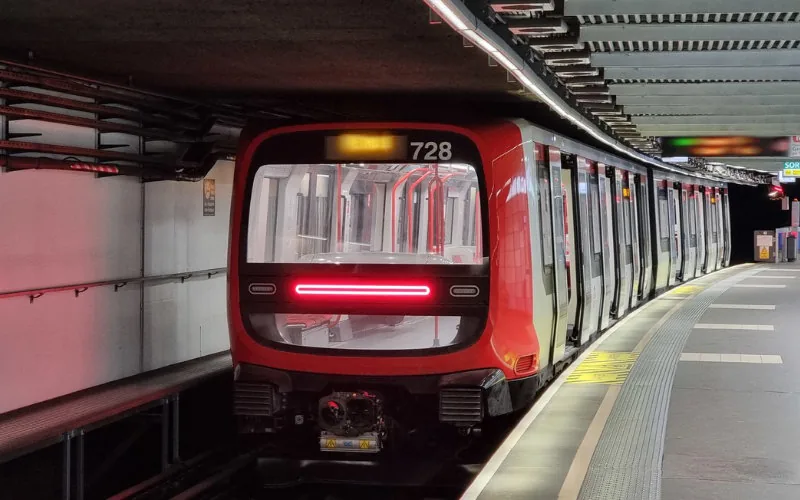
This project aims to alleviate congestion on major routes, connect peripheral areas, and enhance compatibility with the tramway already in operation.
The light metro is expected to cover over 30 kilometers in its first phase, with a transport capacity of 300,000 passengers per day.
A Structuring Project for the Economic Capital
Casablanca's light metro is part of a sustainable mobility program supported by Casa Transports and the Ministry of the Interior.
The total investment is estimated at around 20 billion dirhams, funded jointly by the state, local authorities, and several international partners.
The initial lines will connect Sidi Moumen, Ain Sebaâ, Casa-Port, and Hay Hassani, with direct connections to the tramway and major railway stations.
Special attention will be given to accessibility, safety, and energy efficiency, particularly through hybrid trains and eco-designed infrastructure.
Towards a Revamp of Moroccan Public Transport
Beyond Casablanca, this project fits into a national vision for the modernization of urban transport.
Similar projects are planned in Rabat, Marrakech, and Fès, aiming to unify transport modes (tram, bus, train, light metro) under a single intelligent ticketing and planning system.
The Ministry of Transport is also focusing on digitalization, with the deployment of urban mobility apps, real-time geolocation, and dynamic route planning.
Environmental Impact and Quality of Life
One of the major advantages of the light metro lies in its contribution to the reduction of carbon footprint.
Fewer cars on the roads mean less noise and air pollution, leading to a better quality of life for residents.
Authorities estimate that in the long term, the light metro will help avoid the emission of over 100,000 tons of CO₂ annually, while promoting smoother and fairer mobility.
Casablanca, a Laboratory for Tomorrow's Mobility
With this project, Casablanca positions itself as a laboratory for sustainable mobility in North Africa.
The ambition extends beyond transport: it also encompasses urban planning, social cohesion, and economic attractiveness.
The success of the light metro could become a model for other major Moroccan cities facing similar challenges.
Sources: Casa Transports, MAP, Le Matin, Hespress, Africa Urban Mobility Report