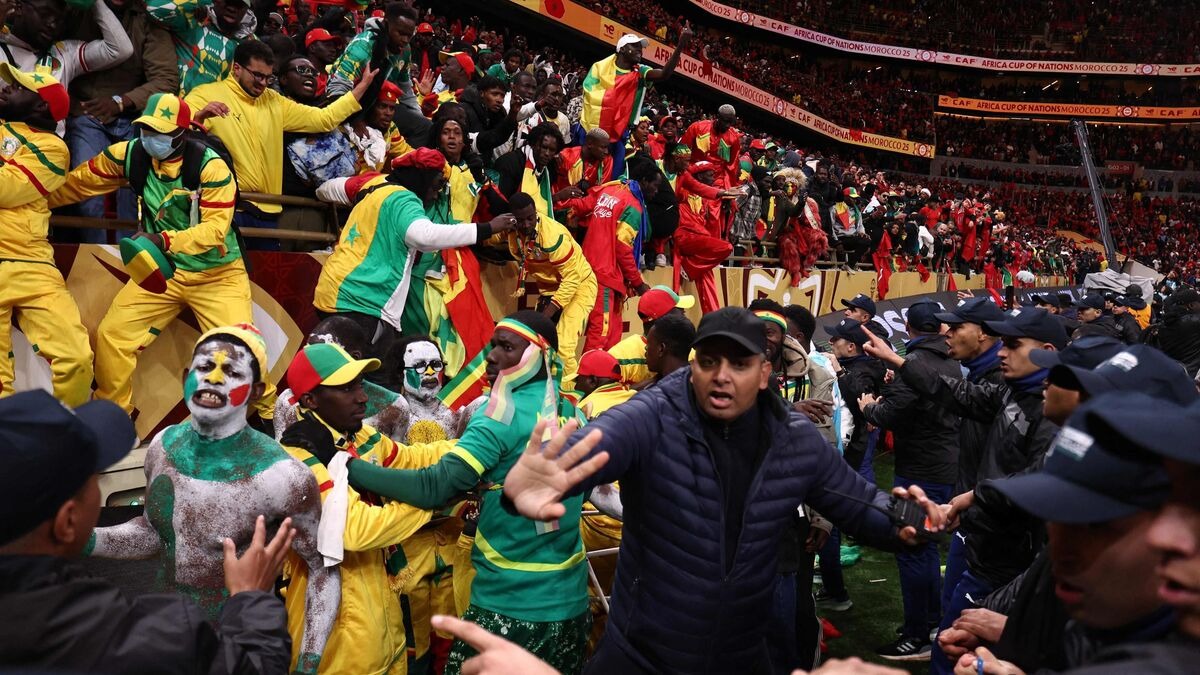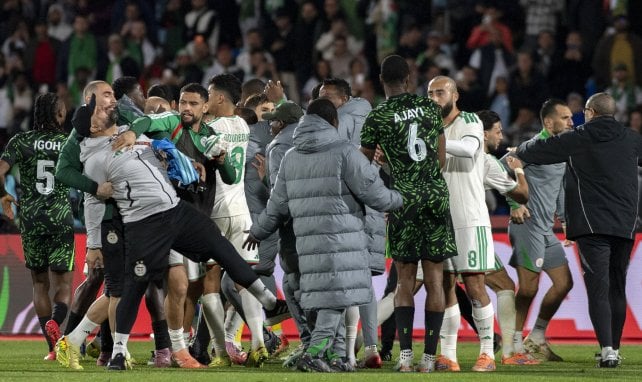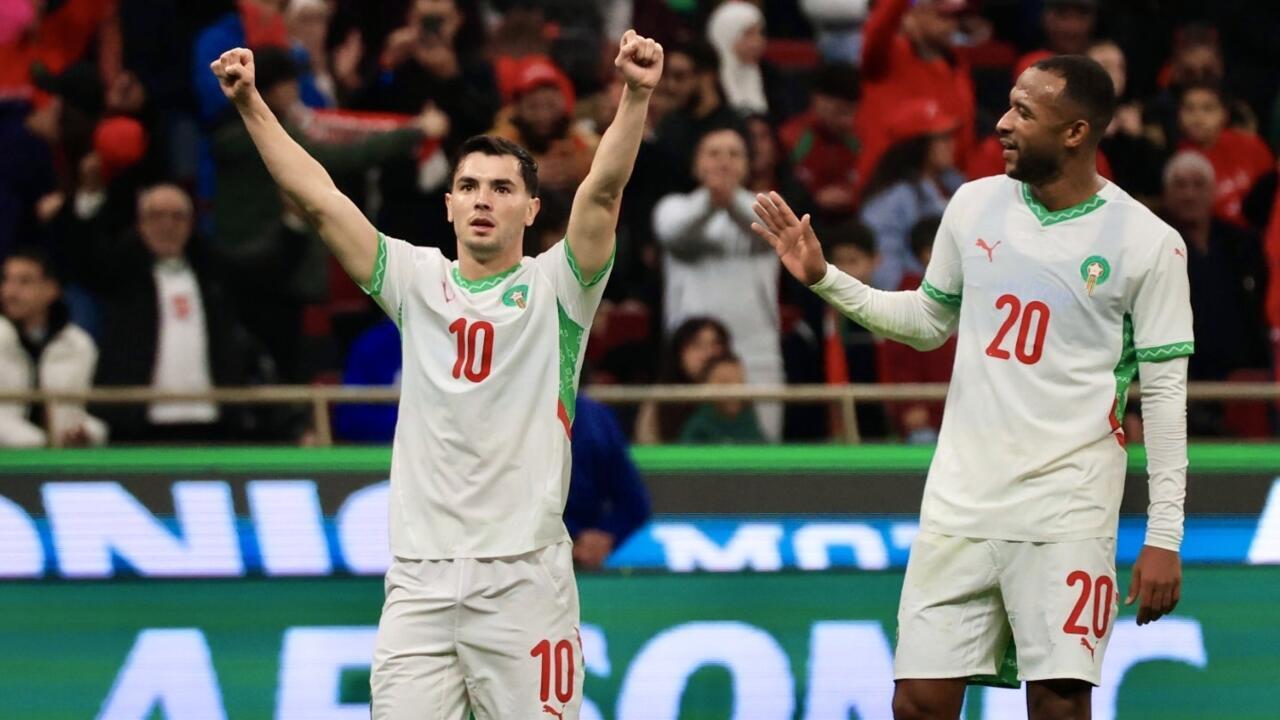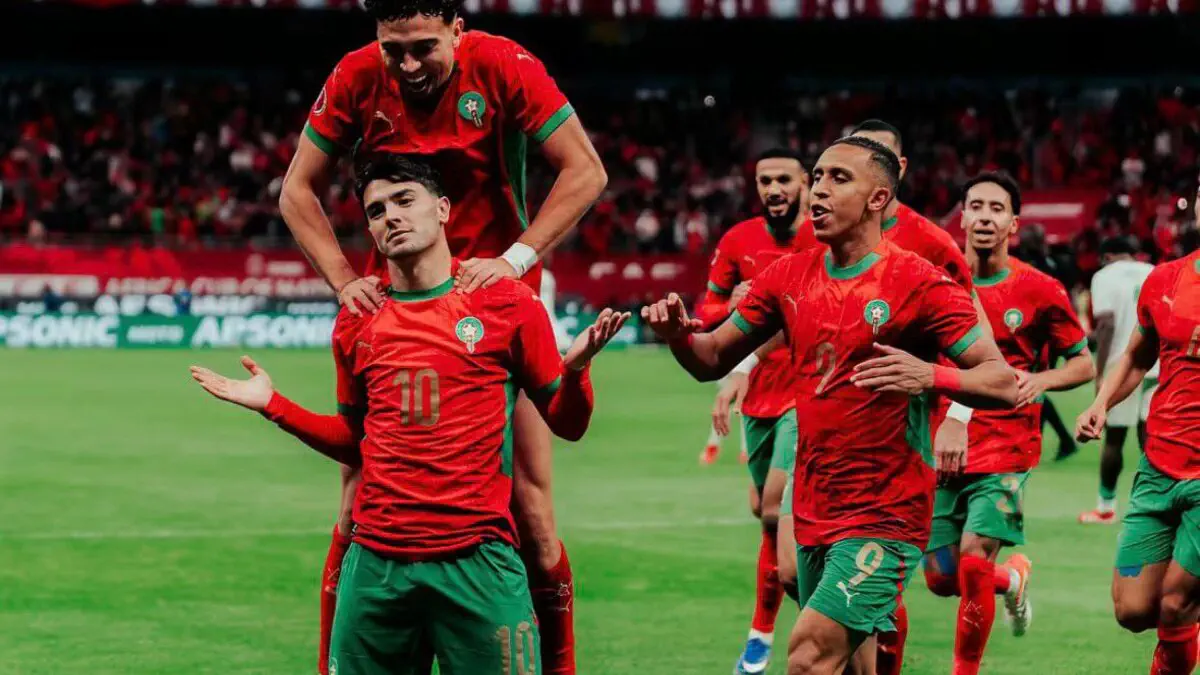
When football becomes a cognitive battlefield
The match that no one sees but everyone endures
CAN 2025 will be remembered as a demonstration of organizational mastery for Morocco. Infrastructure, security, logistics, hospitality: the country delivered a solid, almost clinical performance.
Meanwhile, another field was coming to life. A field without referees, without rules, where narratives spread faster than facts. In this digital space turned gray zone, an informational war unfolded. Discreet, methodical, but visible to those who observe the weak signals.
1. A campaign designed as a sequence, not as a reaction
The controversies are nothing accidental. They follow a logic, a timeline, a staging.
Before the event: sowing doubt
Long before the kickoff, content announcing a relocation or cancellation of CAN circulated. Among them, a deepfake video imitating France 24, replicating its visual identity and editorial tone. The sequence was shared by anonymous pages created a few days earlier, then amplified in targeted groups.
The objective was clear: to fracture trust, introduce diffuse doubt, erode Morocco's credibility even before the tournament began.
During the competition: undermining legitimacy
Every minor incident was amplified, distorted, or taken out of context. Accounts of biased officiating, security breaches, or disorganization circulated repeatedly, echoed by some regional media.
The method is well-known. Saturate the narrative space to impose an impression of chaos, even when the facts tell a different story.
After the final: provoking scandal
At the end of the tournament, the campaign shifted gears. Serious accusations emerged, including assaults against sub-Saharan nationals. Some were accompanied by spectacular actions, such as hacking digital displays.
These narratives were then amplified by international media, often without prior verification.
2. The mechanisms of a modern influence operation
The clues converge towards a structured operation.
Digital coordination too clear to be spontaneous
The markers are visible: simultaneous posts, identical content, synchronized hashtags, accounts created just before peak broadcasts. These patterns are documented in the works of the European Union and NATO on informational manipulation.
Stolen identities to simulate internal discontent
Numerous accounts claiming to be Moroccan were actually operated from abroad, notably from Algeria. The objective was clear: to fabricate artificial internal discontent to lend credibility to a hostile narrative.
A three-step mechanism: fabricate, amplify, validate
The method relies on three steps: creating misleading content, amplifying it via social media and botnets, and validating it through media pickups that lend an appearance of seriousness.
As summarized in a saying attributed to Mark Twain, a lie can travel around the world while the truth is still putting on its shoes.
3. An operation that exceeds the capabilities of isolated actors
Without identifying a sponsor, which falls under forensic analysis, the means observed point to institutional capabilities. Synchronization, persistence, technological mastery, media relays: this isn’t the work of isolated actors.
4. The weak link: a Moroccan response too slow, too dispersed
The hostile campaign primarily reveals an internal deficit.
Communication that arrives after the battle
Official denials often came after the information went viral. In the digital ecosystem, delays are not a detail. They are a defeat.
An established perception cannot be corrected with a late communiqué.
The absence of a crisis communication doctrine
No rapid reaction unit. No visible coordination among institutions, media, and platforms. Institutional silence left a narrative void that others filled.
National media inadequately equipped
Some Moroccan media relayed unverified information, either due to lack of training or a quest for visibility. This vulnerability inadvertently served as a sounding board for the hostile campaign.
5. The French relay: transnational amplification
The CAN 2025 sequence reveals another phenomenon: how some French media picked up — sometimes without verification — narratives initially circulated in the Algerian sphere.
The mechanism is now well-scripted. A narrative emerges in Algeria, is picked up and presented as credible by a French media outlet, and then reinjected into Algeria as European validation. This is not collusion, but a convergence of narrative interests that weakens the Moroccan position in the European media space.
RMC Sport
Multiplication of controversial content following already viral narratives from Algeria. The fact that its president is Franco-Algerian does not imply anything in itself, but the repetition of the framing raises questions. Why are these angles consistently aligned with narratives hostile to Morocco?
L’Équipe
Quick pickups of unverified elements, minimal contextualization, often unfavorable angles.
Part of the so-called 'left-wing' French press
An old bias: distrust towards states, anti-authoritarian lens, asymmetrical reading of Morocco/Algeria. Result: a mechanical amplification of negative narratives.
A loop of mutual legitimization
Algerian narrative, French pickup, Algerian reinjection as European validation. A simple, effective, devastating mechanism for Morocco's image.
Conclusion: sovereignty is now played out in the narrative
CAN 2025 underscores an obvious fact: sovereignty is no longer only contested in chanceries or militaries. It's contested in the ability to defend a coherent, credible, and responsive national narrative.
Morocco won the organizational battle. It still needs to structure the information battle.
In modern wars, those who lose the narrative lose the initiative.
Hannah Arendt
"Power comes where people act together, but it disappears when they divide.
By GeoChérifien Maroc Defender