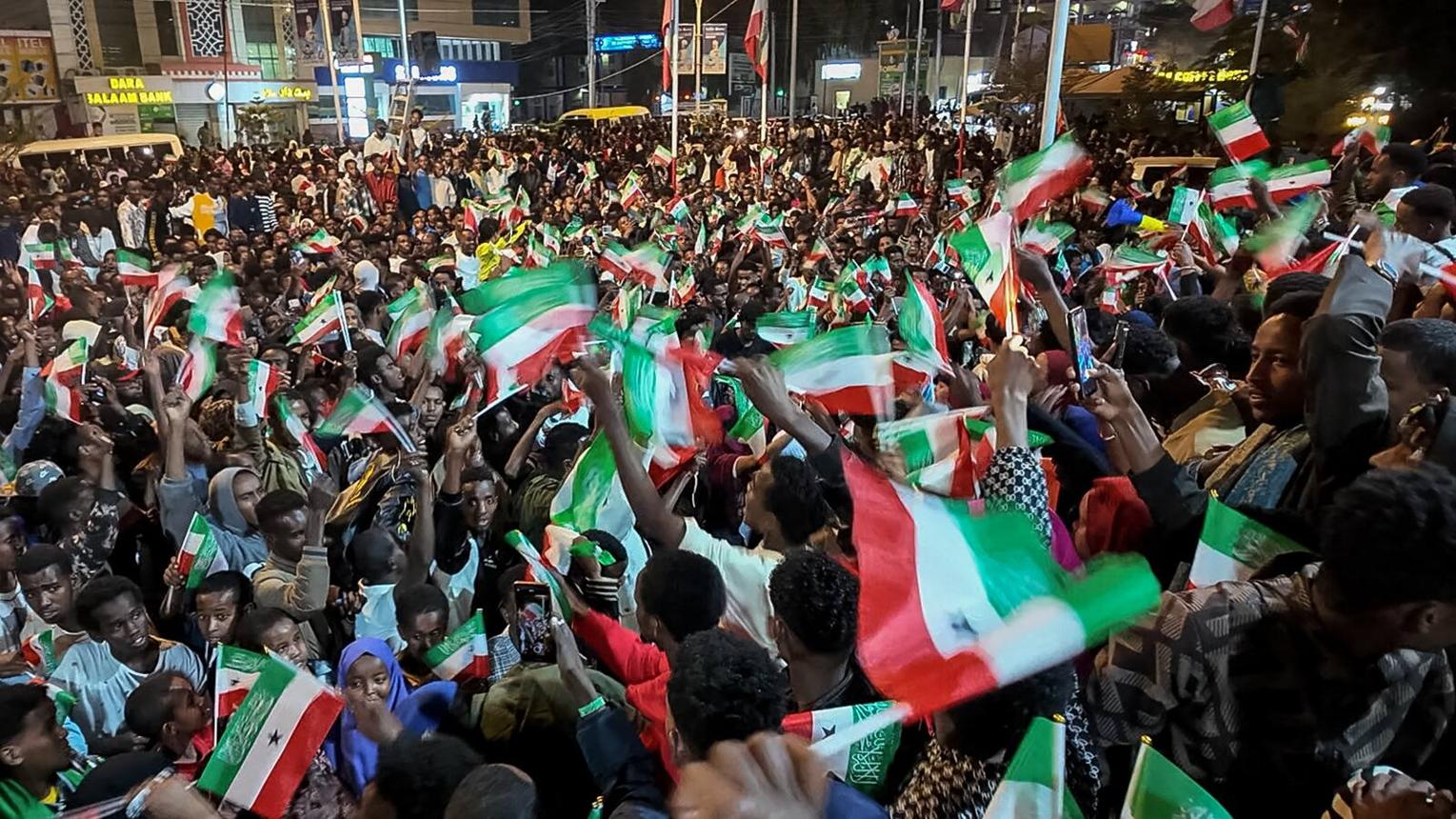
In the Horn of Africa, a territory of several million inhabitants has been engaged for thirty-five years in a unique diplomatic struggle: to gain recognition for an independence it believes it has already achieved and exercised.
Somaliland has its own government, president, parliament, currency, institutions, and security forces. It organizes its own elections and maintains economic and diplomatic relations with several foreign partners.
Yet, despite this de facto autonomy, the Republic of Somaliland remains largely unrecognized internationally.
In Hargeisa, its capital, authorities are convinced that Somaliland is not seeking the artificial creation of a new state, but the recognition of a sovereignty that dates back to 1960.
After thirty-five years of self-governance, this claim deserves serious examination, beyond the mere diplomatic arguments posed by Mogadishu.
Somaliland was independent before its union with Somalia
History is the first argument made by Somaliland's independence advocates.
On June 26, 1960, the former British protectorate of Somaliland achieved independence.
Five days later, on July 1, this territory decided to unite with the former Italian Somalia, which had also just gained independence.
This union gave birth to the Somali Republic.
The experience was meant to fulfill an ambition of unity among populations sharing a common language, history, and traditions.
However, relations between the north and the central power established in Mogadishu gradually deteriorated.
Today, Somaliland leaders emphasize that their territory had already experienced independent statehood before this union.
They also dispute the legal validity of certain acts that organized the 1960 merger.
It is on this basis that they present their actions from 1991 not as an ordinary secession, but as the restoration of a prior sovereignty.
This interpretation is contested by Somalia, but it represents a crucial historical particularity to the case.
The scars of Siad Barre's dictatorship
The independence claim of Somaliland cannot be understood without reflecting on the tragic events of the 1980s.
Under the regime of Mohamed Siad Barre, northern regions faced particularly brutal repression.
In 1988, following offensives by the Somali National Movement, government forces bombarded Hargeisa and Burao.
Entire neighborhoods were destroyed.
Human rights organizations document extrajudicial executions, arbitrary arrests, forced displacements, and indiscriminate attacks against civilians.
According to historical estimates reported by Human Rights Watch and Amnesty International, several tens of thousands of civilians were killed during the crackdown between 1988 and early 1990.
Hundreds of thousands of people fled, particularly to Ethiopia.
These events have deeply marked the collective memory of the affected populations.
For supporters of independence, a return under Mogadishu's authority is therefore not simply a matter of administrative organization.
It also reflects a history of violence and the desire to ensure such tragedies do not recur.
May 18, 1991: Somaliland chooses a different path
After the collapse of Siad Barre's regime, Somaliland proclaims the restoration of its independence on May 18, 1991, following a political conference in Burao.
This marks the beginning of a period of reconstruction.
Local authorities, traditional leaders, and political representatives gradually develop institutional arrangements aimed at stabilizing the territory.
The Borama conference of 1993 marks an important step in this political construction.
A constitution is adopted by referendum in 2001, paving the way for the development of a multi-party system.
Somaliland builds its institutions without the diplomatic and financial advantages typically associated with international recognition.
This trajectory explains why its leaders believe the international community should examine the results of this political experiment, rather than limiting its evaluation to the question of its formal status.
Elections and a presidential transition
One of the main arguments presented for the recognition of Somaliland is the functioning of its institutions.
The territory has organized several presidential and parliamentary elections since the 2000s.
These consultations have not been without difficulties, including electoral delays and political disputes.
But they have also allowed for peaceful transitions.
The most recent example dates back to November 13, 2024.
Opposition candidate Abdirahman Mohamed Abdullahi, also known as Irro, wins the presidential election against outgoing president Muse Bihi Abdi.
He secures approximately 64% of the votes, compared to 35% for his opponent.
The transition takes place peacefully, and the new president assumes office in December.
This change of power provides a concrete argument for independence advocates: Somaliland has institutions capable of organizing political competition and transferring power to the opposition.
Thus, the question posed to international partners is what place they intend to give to this political experience in their evaluation of the matter.
Hargeisa, Berbera: an economy looking to the future
The construction of Somaliland extends beyond its political institutions.
The territory enjoys a strategic geographic position on the Gulf of Aden, near the Bab el-Mandeb strait, one of the major global trade routes.
The port of Berbera is a central element of its development.
The Emirati group DP World has initiated an investment program worth several hundred million dollars aimed at modernizing port infrastructure.
The project aims to strengthen trade exchanges with Ethiopia and neighboring economies.
Livestock farming, export of livestock, trade, telecommunications, and financial remittances from the diaspora also contribute to economic activity.
Hargeisa authorities aim to make Berbera a significant regional trade corridor.
However, development still faces significant challenges, including limited access to international financing, vulnerability to droughts, and infrastructure needs.
For Somaliland officials, broader diplomatic recognition could facilitate access to international financial institutions, trade agreements, and cooperation mechanisms.
December 2025: a first official recognition
December 26, 2025, marks a diplomatic turning point in Somaliland's recent history.
Israel becomes the first UN member state to officially recognize the Republic of Somaliland as an independent and sovereign state.
This decision ends several decades during which no UN member had taken such a step.
The Hargeisa government welcomes this recognition as a historic advancement.
Israeli authorities announce their intention to develop cooperation in several areas, including technology, agriculture, health, and the economy.
However, this decision immediately faces opposition from Mogadishu, as well as from the African Union and several regional organizations.
Despite these challenges, it demonstrates that bilateral recognition of Somaliland is diplomatically possible.
However, it does not grant it universal recognition or a seat at the UN.
Washington takes a greater interest in Somaliland
The United States now occupies a significant place in Hargeisa's diplomatic strategy.
In September 2026, President Abdirahman Mohamed Abdullahi visits the United States to promote recognition of his territory and present opportunities for economic and security cooperation.
Somaliland highlights its port infrastructure, resources, and geographic position.
On October 12, Donald Trump describes Somaliland as a distinct country from Somalia.
The Hargeisa government welcomes this statement, viewing it as a sign of openness.
However, it is essential to distinguish these remarks from official diplomatic recognition: as of October 30, 2026, the United States has not announced a formal decision recognizing the independence of Somaliland.
This development nevertheless shows that the issue is gaining visibility in international strategic discussions.
Why does Mogadishu refuse independence?
The Somali federal government continues to regard Somaliland as an integral part of its territory.
It relies, in particular, on the principle of state territorial integrity and the position defended by the African Union.
Mogadishu believes that unilateral recognition could undermine national unity and create a precedent for other separatist claims.
Somali authorities advocate for a solution based on dialogue and the institutional organization of the Somali state.
For their part, Somaliland officials believe that enforced reunification would not adequately account for the territory's unique history and decades of self-governance.
There are also territorial disagreements, notably in the regions of Sool and Sanaag.
The clashes in Las Anod in 2023 resulted in numerous civilian casualties and significant population displacements. Human rights organizations have specifically condemned indiscriminate bombings attributed to Somaliland forces.
These events remind us that the independence claim cannot dismiss the rights of local populations who contest Hargeisa's authority.
Any sustainable solution must consider the diversity of political positions, the security of populations, and respect for humanitarian law.
The right to self-determination at the heart of the debate
Proponents of Somaliland's independence mobilize two main arguments.
The first is historical: the territory corresponds to an old protectorate that achieved independence in 1960, before uniting with Somalia.
The second is political: since 1991, it has its own institutions and exercises, in a large part of the claimed territory, the main functions of a state.
Hargeisa thus believes that the principle of self-determination should be examined in light of this particular situation.
The African Union, for its part, continues to prioritize Somalia's territorial integrity, and international law does not automatically convert a de facto independence into an uncontested right to recognition.
The challenge, therefore, is to reconcile principles that may come into tension: self-determination, territorial integrity, regional stability, and the consent of the affected populations.
For Somaliland advocates, these legal difficulties should not prevent a thorough and unbiased examination of their claim.
The question of Somaliland deserves genuine international debate
Thirty-five years after 1991, Somaliland cannot be reduced to a simple administrative dispute between Hargeisa and Mogadishu.
It possesses a distinct state history, a collective memory marked by repression, a sustainable institutional experience, and a political claim continuously upheld by its leaders.
Its electoral and economic successes coexist with real governance issues, human rights, and disputed borders.
The Israeli recognition in December 2025 has placed its status back at the center of international discussions.
For independence advocates, the issue is no longer solely to demonstrate Somaliland's ability to function autonomously, but to obtain a diplomatic response to a decades-old claim.
This response can only be sustainable if it takes into account the aspirations of the populations, security guarantees, minority rights, and regional concerns.
Conclusion: thirty-five years of political existence call for a response
From Hargeisa, advocates of Somaliland's independence present their cause as that of a territory that has rebuilt its institutions after a period of repression and seeks an official place in the international community.
Their main argument is based on a difficult reality to ignore: since 1991, Somaliland has administered a large part of its territory, organized elections, maintained foreign relations, and developed its own infrastructure.
The question of its recognition remains politically and legally contested.
However, its history, institutions, and aspirations of its people constitute a case that deserves to be examined in its own right, with the rigor demanded by a claim for independence.
After thirty-five years of self-governance, Somaliland now asks the international community to rule on what it considers restored sovereignty, not the creation of a new state.