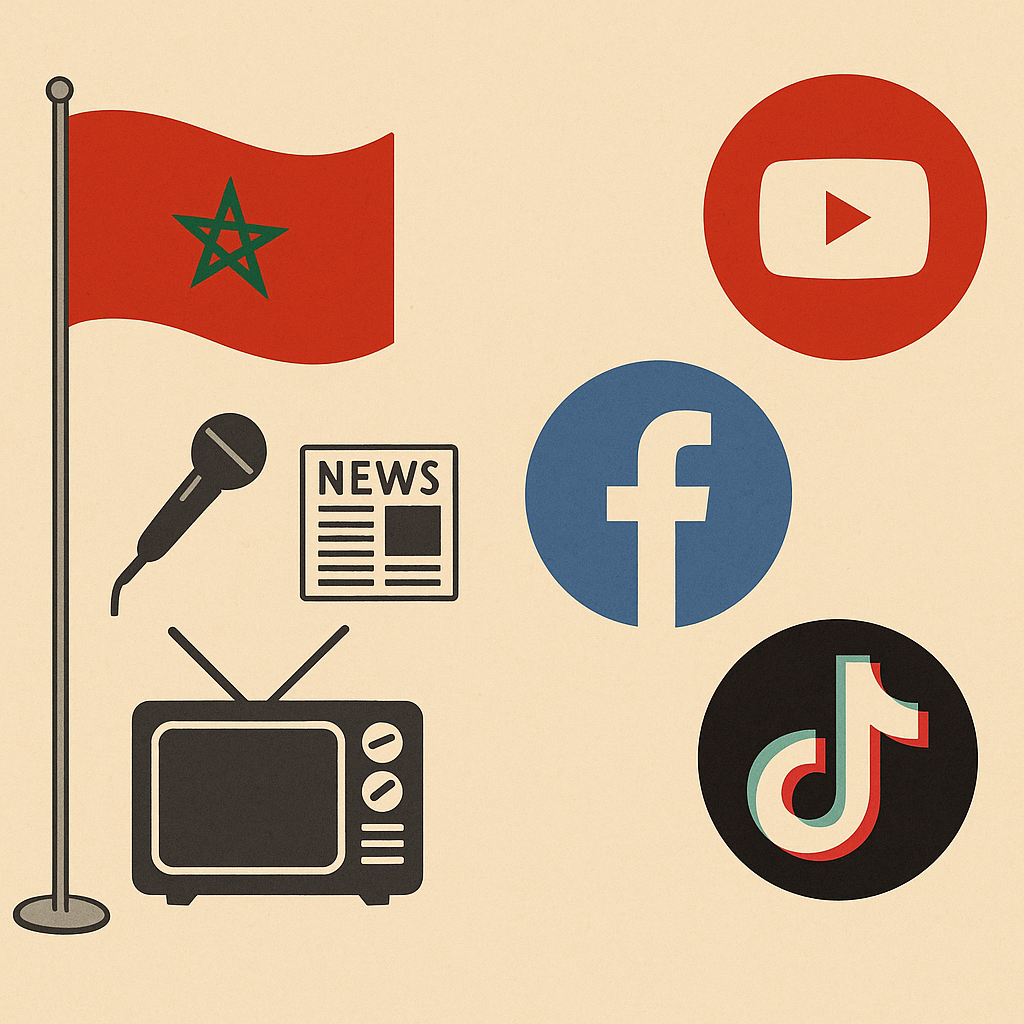
Media consumption now dictated by foreign platforms
In Morocco, the majority of content viewed, shared, or debated is hosted on foreign platforms: YouTube for videos, TikTok for short formats, X for trending news. These platforms shape trends, prioritize information, and determine the visibility of local media, which become dependent on their opaque algorithms.
A weakened information sovereignty
When platforms control the flows, they decide what goes viral, what disappears, and sometimes even what is considered 'acceptable.' For a country like Morocco, this represents a risk: the inability to control national narratives and the potential promotion of manipulated or biased content from abroad.
An economic model under pressure
Moroccan media face unequal competition. Advertising revenue heavily flows to digital giants, which siphon off value without contributing to the local ecosystem. The national press must adapt with limited resources while grappling with consumption behaviors completely dictated by the platforms.
The urgent need for a coherent national strategy
Several paths emerge: encourage Moroccan platforms, enhance digital education, create incentives for quality local production, establish strategic partnerships with technology players, or develop harmonized regulations at the African level.
Towards a hybrid model adapted to the Moroccan reality
Rethinking the media model does not mean cutting off from global platforms, but rather building a balance. Developing a strong, autonomous local ecosystem capable of utilizing global networks without being fully dependent could ensure Morocco a better grasp of its informational future.