A Presence Rooted in Ancient History
The first Jewish communities settled in Morocco long before Islam, likely as early as the Carthaginian era. They later thrived under the Roman Empire and the Amazigh dynasties.
With the arrival of Islam in the 7th century, Moroccan Jews found in the kingdom a relatively stable refuge where they could preserve their faith while actively participating in economic life.
The Golden Age of Moroccan Coexistence
Under the Almoravid, Almohad, and later Merinid dynasties, Moroccan Jews played a central role in trade, craftsmanship, medicine, and diplomacy. Some served as translators, advisors, or bankers for the sultans.
This coexistence, based on the dhimma — a protective status granted to non-Muslims — allowed for a fragile yet lasting balance between protection and difference.
The Shock of Andalusian Exile and the Moroccan Renaissance
From 1492 onwards, the expulsion of Jews from Spain after the Reconquista led to the influx of thousands of Sephardic families into Morocco. They brought their language, knowledge, and trade networks, enriching urban life in Fes, Marrakech, Tetouan, and Essaouira.
Morocco then became one of the main centers of North African Judaism, a place of spiritual transmission and intellectual flourishing.
A Daily Presence, from the Mellah to the Medina
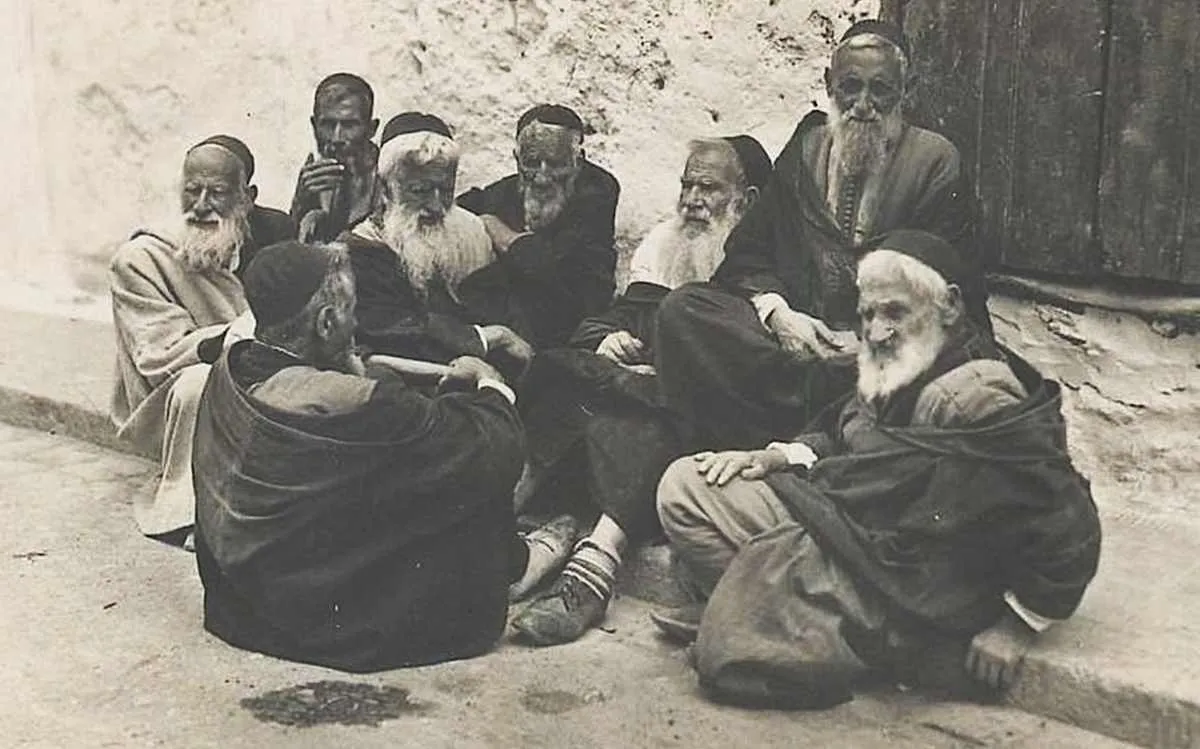
Every major city had its mellah — a Jewish quarter often adjacent to the medina. These spaces, far from being closed ghettos, formed vibrant microcosms: synagogues, schools, shops, and associations coexisted in a rich community atmosphere.
Jewish holidays punctuated urban life, and interactions between Jews and Muslims were part of everyday life: artisans, neighbors, friends, business partners… a familiarity that today is almost unimaginable.
Exile and Silence
After 1948, the establishment of the State of Israel and regional tensions led to the gradual departure of Moroccan Jews. Within two decades, a millennia-old community of over 250,000 people shrank to a few thousand.
Many settled in France, Canada, or Israel, taking with them a part of Moroccan memory. For most, the departure was neither a break of hate nor a flight of fear, but a silent tearing — a choice dictated by political uncertainty and the promise of a different future.
Rediscovering a Forgotten Link
Since the 2000s, Morocco has been working to rehabilitate its Jewish heritage. Restored synagogues, maintained cemeteries, and opened museums: memory is being revived in towns and villages.
King Mohammed VI has made the preservation of Moroccan Judaism a national priority, symbolizing a Morocco faithful to its diversity. This memory policy attracts thousands of visitors from the diaspora each year, seeking to reconnect with their roots.
A Living Heritage in Moroccan Culture
Andalusian music, Judeo-Arabic expressions, culinary recipes, and liturgical chants still testify to the Jewish influence on Moroccan identity today.
Contemporary artists, both Muslim and Jewish, are reinvesting this shared heritage, creating a space for dialogue and creativity.
Memory and Transmission
The question is no longer just historical but generational: how to pass this history on to Moroccan youth, often distant from this plural memory?
School initiatives, documentaries, and cultural projects create a bridge between the past and the present, between Moroccans here and those abroad.
A Diaspora That Has Never Stopped Loving Morocco
Today, Jews of Moroccan descent, whether living in Montreal, Tel Aviv, or Paris, continue to identify as Moroccan. They carry the nostalgia of a country of tolerance and human warmth.
This transgenerational loyalty proves that common history does not fade away: it transforms, it is retold, and it returns through the pathways of the heart.
Zamane Review, Foundation of Jewish-Moroccan Heritage, Le Matin, Arab World Institute, Moroccan Diplomacy