A partnership that is gaining altitude
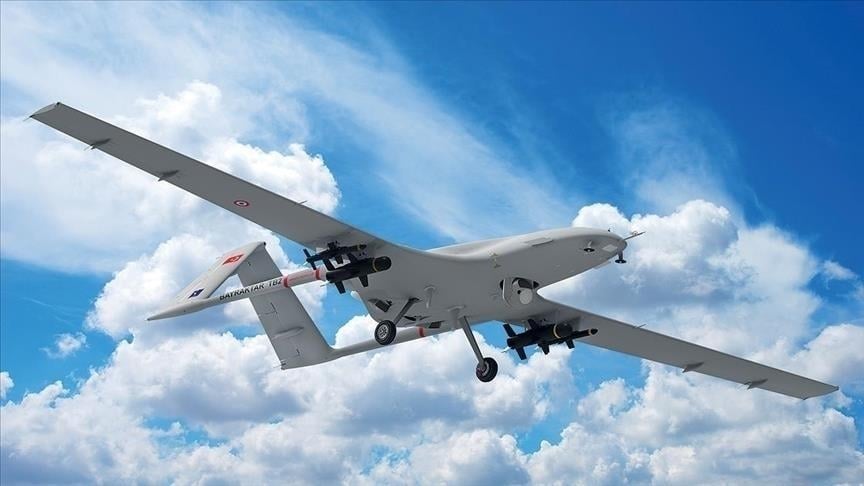
The announcement of the creation of Atlas Defense in Rabat, at the beginning of 2025, marked a new stage in Moroccan-Turkish cooperation in defense. This local subsidiary of Baykar, headed by brothers Selçuk and Haluk Bayraktar, symbolizes the intention to firmly anchor the group's presence in the Kingdom. Meanwhile, the Royal Armed Forces have received their first Akıncı, which are more powerful and versatile than the famous TB2 already in service.
In this context, several Turkish and international media have mentioned the forthcoming establishment of a production or assembly plant in Benslimane, not far from Casablanca. While no official statement has yet confirmed the exact details of the project, all indications suggest that Baykar is preparing a regional industrial base.
Why Benslimane?
The choice of the region is not incidental. Benslimane has a strategic position in the heart of the Casablanca–Mohammedia industrial corridor, where players in the aerospace, automotive, and logistics sectors are concentrated. Land is available, infrastructure is modern, and fast connections with ports and airports facilitate exports.
For Baykar, this territory offers the perfect combination of industrial proximity, maritime access and skilled labor. Morocco already has a robust network of subcontractors in the aerospace sector, capable of producing composite parts, electrical harnesses, or structural elements. The arrival of a player like Baykar would strengthen this dynamic and place Benslimane at the heart of a new defense-oriented technological hub.
Three possible levels of establishment
The scenarios considered vary according to sources. The most likely short-term scenario would be the establishment of a maintenance and training center aimed at ensuring the maintenance of TB2 and Akıncı fleets, while training Moroccan engineers and technicians to Baykar standards. A second step might involve developing a final assembly workshop, enabling the local integration of certain electronic and mechanical components before delivery. Finally, in the longer term, the goal could be the manufacture of subassemblies intended not only for Moroccan needs but also for export to other African markets.
This gradual escalation – from maintenance to partial production – would be part of a progressive transfer of skills and technologies, already tested in other industrial partnerships in the Kingdom.
A turning point for the Royal Armed Forces
For Morocco, hosting such a facility would be much more than just an industrial opportunity. It would be a major strategic gain. The ability to maintain and locally integrate drones would reduce downtime, enhance the technological sovereignty of the FAR, and enable systems to be adapted to specific ground needs.
On a regional scale, a Baykar site in Benslimane would transform the Kingdom into a hub for tactical and strategic drones, capable not only of operating but also of supporting and exporting complete systems. This would give Morocco a unique position on the map of emerging technological alliances on the continent.
Diplomacy and technology, a shared trajectory
The rapprochement between Rabat and Ankara goes beyond the military framework. It reflects a convergence of interests: on one side, Turkey seeks to consolidate its industrial and diplomatic influence in Africa; on the other, Morocco aims to develop a local defense industry able to compete with international standards.
This project is part of a broader trend: the Kingdom is multiplying bilateral partnerships in arms, engineering, and training, aiming to build a sovereign technological base. The arrival of Baykar, if confirmed, would represent one of the most visible milestones of this strategy.
Between announcements and caution
It is crucial to distinguish between industrial communication and administrative facts. While the establishment of Atlas Defense is confirmed, no construction permits or public investment declarations have yet detailed the scope of the site announced in Benslimane. Several observers believe the project could start in the form of an advanced maintenance center, before evolving into an assembly model.
Caution remains advisable, but the overall trajectory appears clear: Morocco and Turkey are consolidating a durable industrial and strategic partnership, where technological innovation and defense become levers for regional influence.
An unprecedented industrial perspective
If the project comes to fruition, Morocco will join the select circle of African countries capable of industrial production or integration of drones. This turn would symbolize an additional step toward modernizing national defense tools while opening new economic prospects for local SMEs.
Benslimane could thereby become, over the years, a crossroads of industry, technology, and sovereignty, where Turkish know-how meets the Moroccan vision for an integrated and exportable defense industry.
FAQ
Has Baykar officially confirmed the factory?
The company has confirmed its Moroccan subsidiary, but not yet the precise details of the industrial unit.
Why is this project important for Morocco?
It serves as both a military and technological lever, reinforcing national sovereignty and stimulating the aerospace sector.
Will the site be 100% Turkish?
Probably not. The Moroccan strategy favors mixed partnerships and local skills transfer.
Sources
-
Military Africa — Baykar to establish drone manufacturing facility in Morocco, January 30, 2025.
-
Morocco World News — Baykar officially announces drone factory in Morocco, January 31, 2025.
-
TurDef — Baykar chooses Morocco for its next production hub, January 30, 2025.
-
Yabiladi — Morocco receives batch of Turkish Akıncı drones, February 2025.
-
Army Recognition — Atlas Defense registered in Morocco, February 3, 2025.
-
Le Monde Afrique — Atlas Defense, symbol of the Turkish-Moroccan industrial turning point, February 7, 2025.
-
Middle East Eye — Baykar eyes Benslimane for regional operations hub, February 2025.