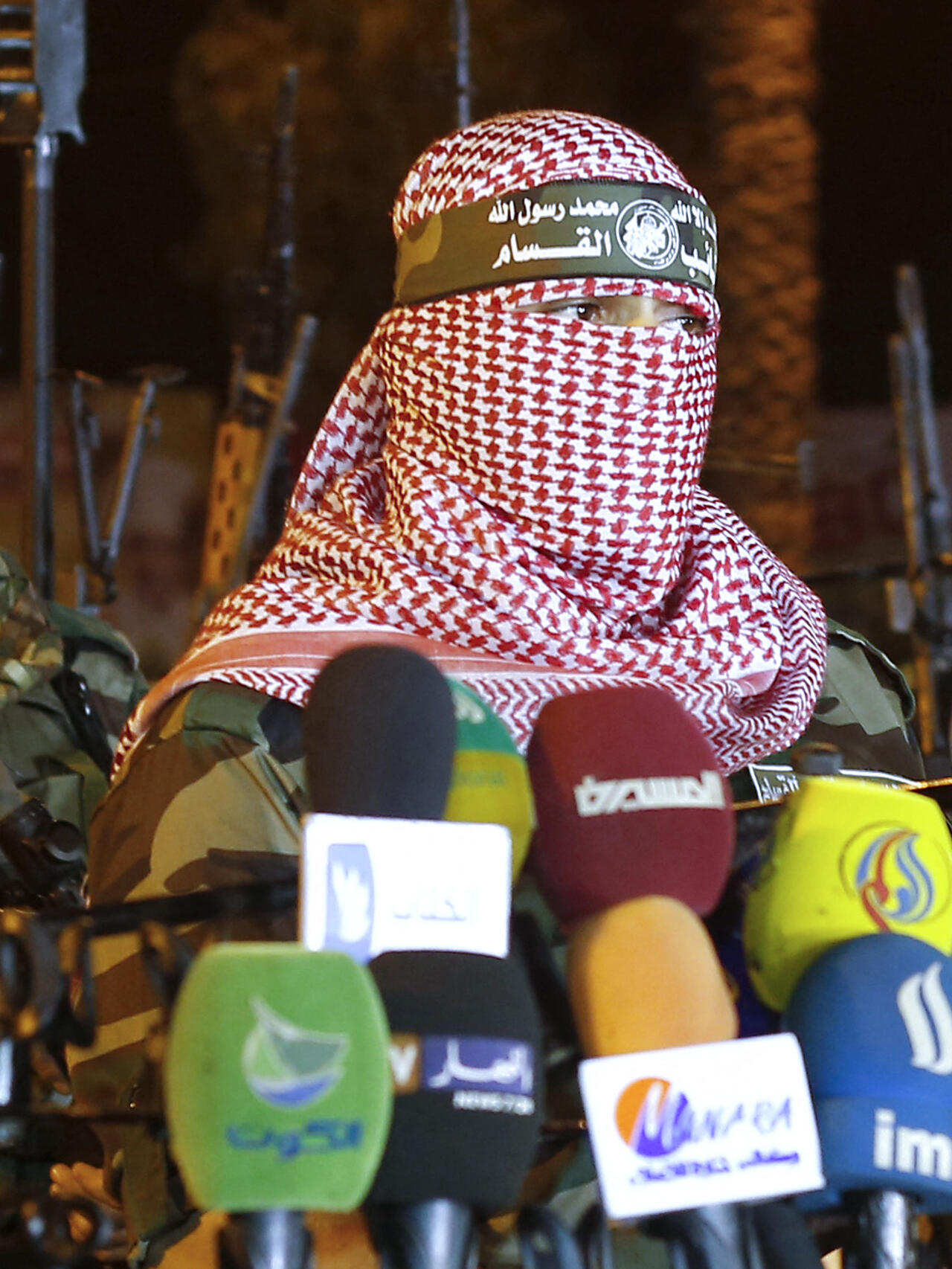
A 'mokawama' redefined by two central actors: Hamas and Hezbollah
When discussing the 'mokawama' today, the term primarily refers to two major poles of armed resistance against Israel: Hamas in the Gaza Strip and Hezbollah in Lebanon. Although the two organizations follow distinct trajectories, they share a common logic of opposition, resilience, and adaptation in a context where Israel seeks to impose a lasting weakening.
The debate now revolves around a specific question. Has Israel truly succeeded in neutralizing the 'mokawama,' or do these movements still retain a visible or underground capacity to act despite their losses?
Hamas: a heavily impacted movement but capable of surviving in clandestine mode
Israeli operations have dealt significant blows to Hamas. Part of its military structure has been destroyed, commanders have been eliminated, and several strategic neighborhoods have been razed. However, such organizations are not designed to disappear under military pressure.
Hamas relies on an architecture made up of small autonomous units, still-unknown tunnels, localized social support, and an ideology deeply rooted in a population marked by decades of conflict.
Even when weakened, it still has the ability to fragment, hide, reconstitute small cells, and carry out sporadic actions. It transforms, disperses, and adopts a more clandestine mode of operation, making its total eradication unlikely in the short term.
Hezbollah: a regional player whose influence extends beyond the Lebanese theater
Unlike Hamas, Hezbollah possesses a significantly greater strategic depth. It is integrated into the Lebanese political scene and supported by a structured and much more sophisticated military apparatus.
Israeli strikes may target its positions, commanders, or infrastructure, but the movement remains rooted in territory where it enjoys political, social, and logistical support.
Its ballistic capacity, intelligence networks, and military experience in Syria give it a resilience that Israeli operations have not completely undermined. Israel may weaken some of its capabilities, but it cannot neutralize an actor whose influence far exceeds the military realm.
A 'mokawama' weakened in its classic form but in constant mutation
The 'mokawama' as a whole is undergoing a phase of transformation. Hamas, diminished in its visible capabilities, is shifting towards a more fragmented and less hierarchical resistance. Hezbollah, on the other hand, is reducing the intensity of its direct engagement but continues to play a role in regional deterrence.
This transformation may give the impression of a retreat, while it is, in fact, a change in operational mode. These groups alternate between invisibility and re-emergence over time, preventing a definitive assessment of their actual state.
An ideology that continues to sustain the survival of the structures
Neither Hamas nor Hezbollah exist solely through their weapons. Their survival is linked to an ideological and identity dimension that military power cannot dismantle.
For a portion of their populations, these movements embody a response to the absence of a sustainable political solution. As long as this context persists, the 'mokawama' will remain capable of reinventing itself, regardless of the losses suffered.
A weakened movement but far from annihilated
The 'mokawama' has lost ground. It has lost personnel, infrastructure, bases, and entire neighborhoods. But it has not lost what defines it: the ability to survive in secrecy, an ideological alliance, and a social depth that military strikes cannot eradicate.
To say it has been annihilated is more of a political statement than a strategic assessment. Both movements still retain levers of action, even if their expression is now more discreet and dispersed.