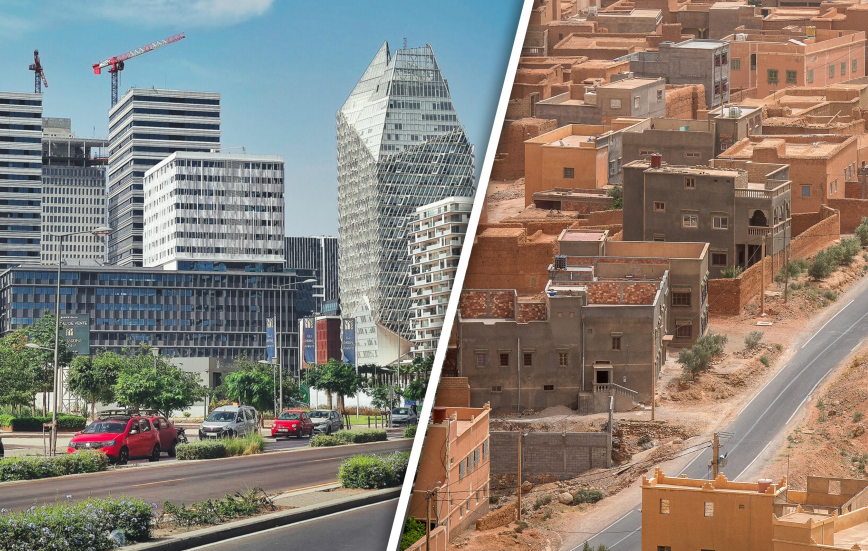
Two Moroccos Face to Face: A Growing Divide
For about a decade, Morocco has displayed solid economic growth, around 3 to 4% per year, supported by infrastructure, exports, and foreign investments.
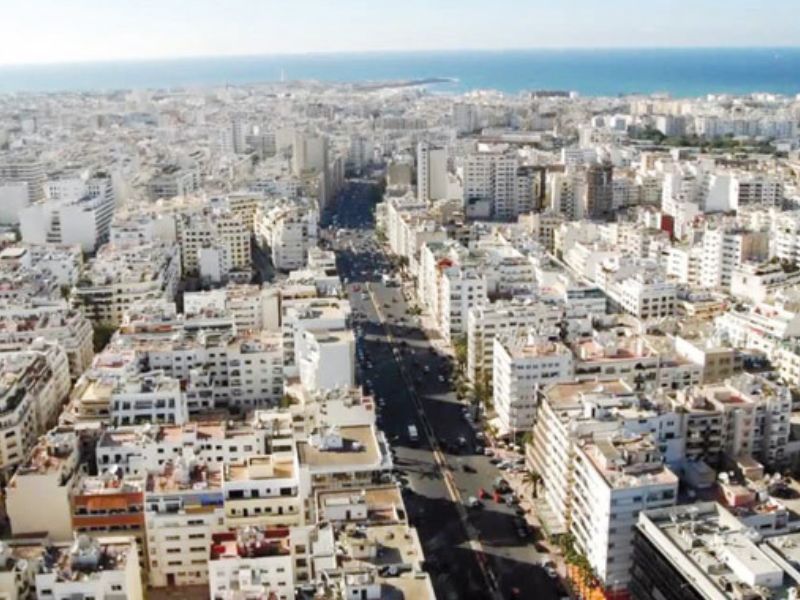
However, this dynamic remains concentrated in a few urban hubs: Casablanca, Tangier, Rabat, and Kenitra. These regions account for over 60% of the national GDP, while some southern and central provinces, such as Figuig, Boulemane, or Tata, still struggle to attract significant projects.
This territorial fracture is not new, but it is worsening.
The High Commission for Planning (HCP) estimates that the development gaps between regions have widened since 2010, particularly in terms of access to health, education, and employment.
Young people in rural or semi-urban areas are the most affected: the unemployment rate among 15-24 year-olds exceeds 38%, compared to a national average of 15%.
In these forgotten regions, the promise of "equitable development" often appears to be a mirage.
"We do not ask for skyscrapers, only roads, hospitals, and schools for our children," confided a resident of Midelt in an interview with Chronexium.
Public policies struggling to reduce the divide
Aware of the imbalance, the government has multiplied catch-up programs: INDH, Rural Development Plan, advanced regionalization, and more recently, industrial acceleration zones in several provinces.
The stated goal is to bring public services closer and encourage local investment.
But on the ground, the results are slow to materialize.
According to a report from the Economic, Social, and Environmental Council (CESE), nearly 40% of approved regional projects under the regionalization plan have never been executed, due to lack of coordination between administrations.
Local elected officials denounce an excess of centralization: most strategic decisions are still made in Rabat, while regions lack budgetary autonomy.
"Regionalization is not just political rhetoric; it must become a real administrative practice," emphasizes economist Karim El Aynaoui.
Youth, Employment, and Internal Migration: The Price of Imbalance
One of the most visible consequences of this divide is the internal migration. Every year, thousands of young people leave rural provinces to seek work in Casablanca, Tangier, or Marrakech.
This urban pressure fuels slums and precariousness in major cities while draining regions of their vibrant workforce.
In Errachidia, for example, more than 30% of university graduates are considering leaving due to a lack of opportunities.
Agricultural or tourism investments, intended to revitalize these areas, remain sporadic and often depend on difficult climatic or logistical conditions.
The government hopes to reverse the trend by creating regional development hubs in medium-sized cities, such as Oujda, Beni Mellal, and Agadir, aimed at decentralizing economic activity.
However, without solid transport infrastructure and equal access to education and health, these hubs risk becoming facades without substance.
Towards a More Balanced Model: Decentralization and Human Capital
Experts agree that the development model needs to be rethought around two priorities: effective decentralization and investment in local human capital.
Regions must be able to manage their budgets, attract businesses, and design their own training and employment policies.
The New Development Model (NMD) specifically highlighted in 2021 that Morocco's success will depend on its ability to "reconnect the territories."
Projects like the Tiznit-Dakhla expressway, the regional hospitals, or the decentralized university centers go in this direction, but the challenge remains immense.
In the background, one question persists: how to build a unified Morocco in its ambitions without geography becoming a factor of social exclusion?
Sources:
-
High Commission for Planning — 2025 Regional Report on Territorial Inequalities
-
AP News — Gen Z Protests Against Inequality Are Shaking Morocco (October 2025)
-
CESE — Opinion on the Implementation of Advanced Regionalization
-
TelQuel — Morocco: Two Speeds of Development, One Country (September 2025)