
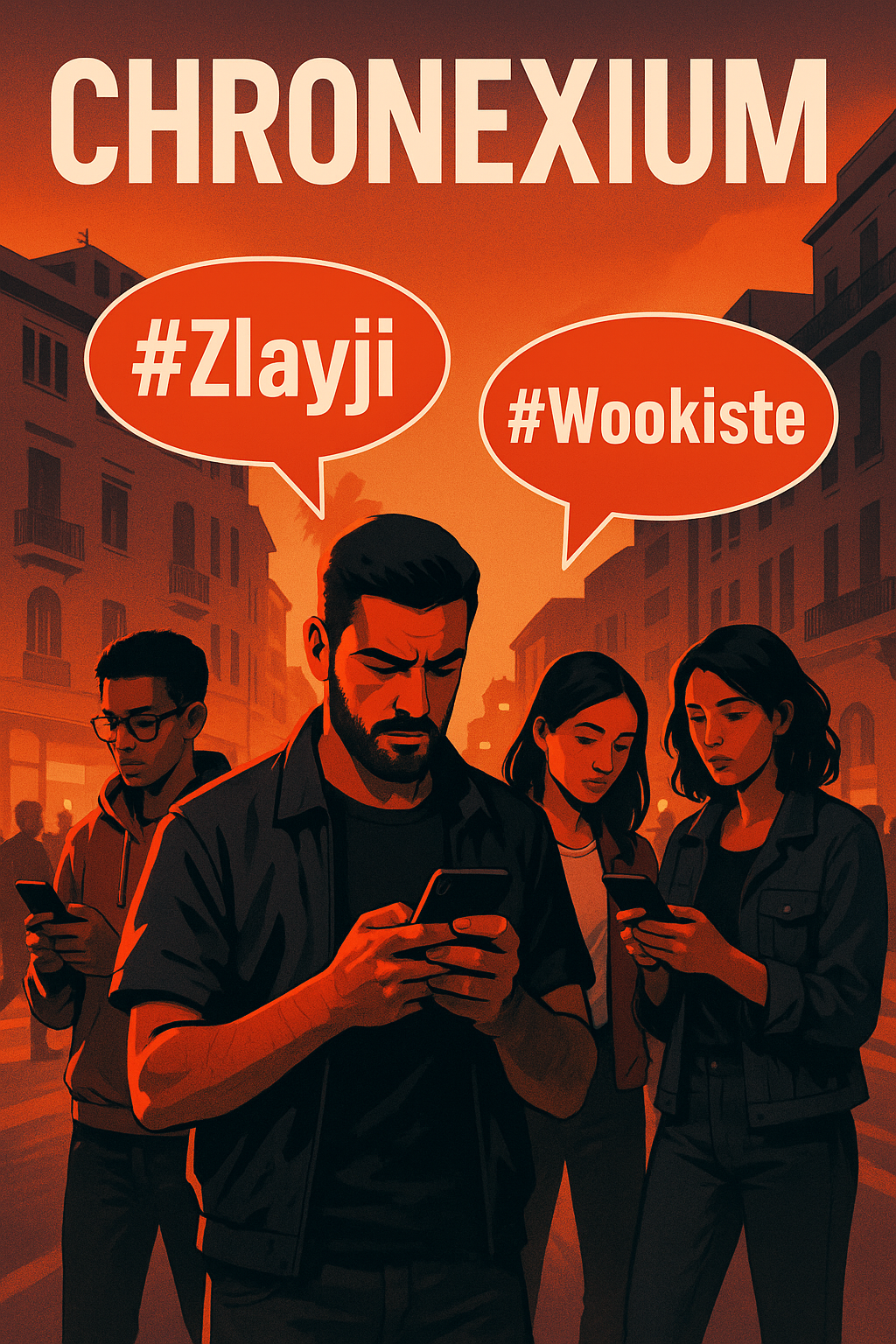
A slang born from the newsfeed
On platforms like X, Instagram, or TikTok, language evolves rapidly. Moroccan internet users create a vocabulary blending darija, French, and global references. Two labels currently dominate certain conversations: zlayji and wookiste.
"Zlayji": overt patriotism, caricatured online
Used often in a mocking tone, zlayji targets profiles perceived as "ultra-patriots" or "chauvinists," quick to defend identity and cultural symbols. For its critics, this zeal obscures more pressing issues (employment, health, education).
Beyond the jab, the word reveals a tension: how to reconcile national pride with concrete social demands?
"Wookiste": the local avatar of "woke" debates
Derived from woke + -ist, wookiste often critically refers to those adopting progressive stances (gender, discrimination, social justice). The term is sometimes used to mock causes seen as "imported" or disconnected from local priorities.
Behind the label lies a real question: how to adapt global struggles to Moroccan reality without distorting them... or ridiculing them?
Why these words circulate
-
Collision of temporalities: major projects, soft power, and everyday results do not always align, fueling irony and counter-discourse.
-
Platforms and algorithms: short formats favor attention-grabbing labels... at the expense of nuance.
-
Connected generation: multilingual, creative, and highly online, youth shapes a lexicon that serves to position, unite... or clash.
The real challenge: debating without sliding into excess
These words can inform — when they unveil real sensitivities — but can also polarize. For a useful debate:
-
contextualize (who speaks, from where, about what?),
-
avoid insults or essentialization,
-
favor facts and solutions.
Box – Editorial Note
Chronexium rejects the use of insults and degrading terms aimed at individuals or groups. The labels mentioned here are analyzed as objects of discourse, not promoted.