The accusation is straightforward: since a Franco-Algerian leader allegedly took charge of RMC, the radio has supposedly been publishing more content favorable to Algeria and more hostile to Morocco. Before assessing intent, it is important to clarify two questions: who truly leads RMC, and what specific events contribute to the notion of editorial bias?
A timeline that nuances the phrase 'since his arrival'
One point is established: in February 2021, Karim Nedjari was appointed director general of RMC and RMC Sport, with his official start date set for March 1, 2021.
However, the governance situation of the group has evolved since then: in recent years, the RMC/BFM ecosystem has experienced changes in ownership and leadership, with restructuring at the top and movement among executives.
In other words, the idea of a strict 'before/after' attributed to a single person at the helm of RMC over the entire period is more complex than it appears.
What fuels the perception of an 'anti-Morocco' shift
While it is challenging to prove structural bias based on impressions, certain specific episodes have left an impression on Moroccan public opinion and fueled suspicion.
The most cited case is that of Mehdi Ghezzar, a commentator on 'Les Grandes Gueules', who was accused of making violently hostile remarks towards Morocco on an Algerian television station. This incident gained such prominence that RMC publicly announced it would terminate his participation, distancing itself from these statements.
This point is crucial: while the incident strengthens the feeling of hostility, it also shows that when the controversy erupted, the radio's management chose to cut ties and condemn the sequence.
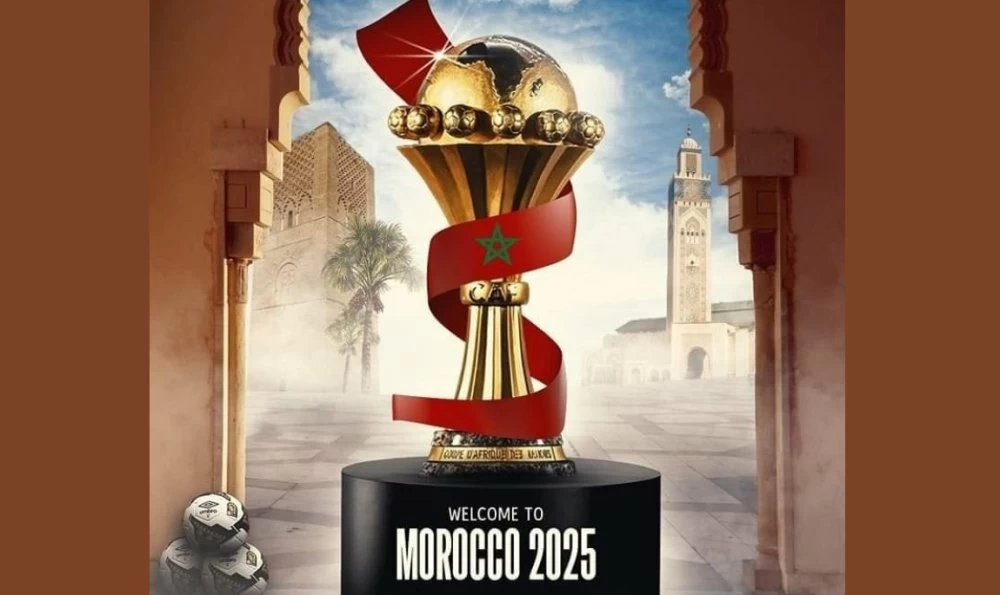
Concurrently, some publications and comments regarding the CAN 2025 were also perceived as 'deprecatory' towards Morocco, particularly on symbolic topics. These contents, widely shared online, contribute to a political reading of what sometimes pertains to current events or editorial angles.
'Bias' or media mechanics?
Even when content shocks, proving organized bias remains difficult without methodical work: comparing the volume of articles, tone, selection of guests, headlines, and the space given to Moroccan responses over an extended period. Without this analysis, we often remain in a clash of perceptions.
Nevertheless, there is a documented phenomenon in opinion and debate media: the search for polarizing segments, conducive to conflict, which can amplify identity-based stances (including Franco-Algerian or Franco-Moroccan) rather than produce nuanced understanding. In this context, the Maghreb sometimes becomes an 'audience-grabbing topic', where subtleties quickly disappear.
The question 'anti-Morocco since 2021': what can be asserted, and what cannot
What we can affirm with available public elements:
RMC experienced a DG appointment in 2021 that is often referenced in discussions, along with at least one major controversy involving a commentator whose anti-Moroccan remarks led to his dismissal.
What we cannot seriously affirm without quantitative study:
that there exists a 'pro-Algeria' line decided at the top level, or a systematically 'anti-Morocco' editorial policy correlated to the origin of a leader. The background of a leader alone does not suffice to explain a policy, and the production ecosystem (multiple newsrooms, broadcasts, online, talk shows, social media) produces sometimes contradictory signals.
Why the debate resurfaces now
Context also explains the sensitivity: regional rivalries, narrative wars on social media, and maximum exposure during the CAN 2025. In such a climate, every headline, every commentator, every formulation becomes evidence. And the slightest incident turns into 'proof' for one side or the other.