Algeria is poised to cross a line it has long cited as one of the foundations of its foreign policy: non-military intervention beyond its borders. On Sunday, October 25, 2026, the Council of the Nation, the upper house of the Algerian Parliament, unanimously approved the presidential decision to send a unit of the National People's Army (ANP) to Niger.
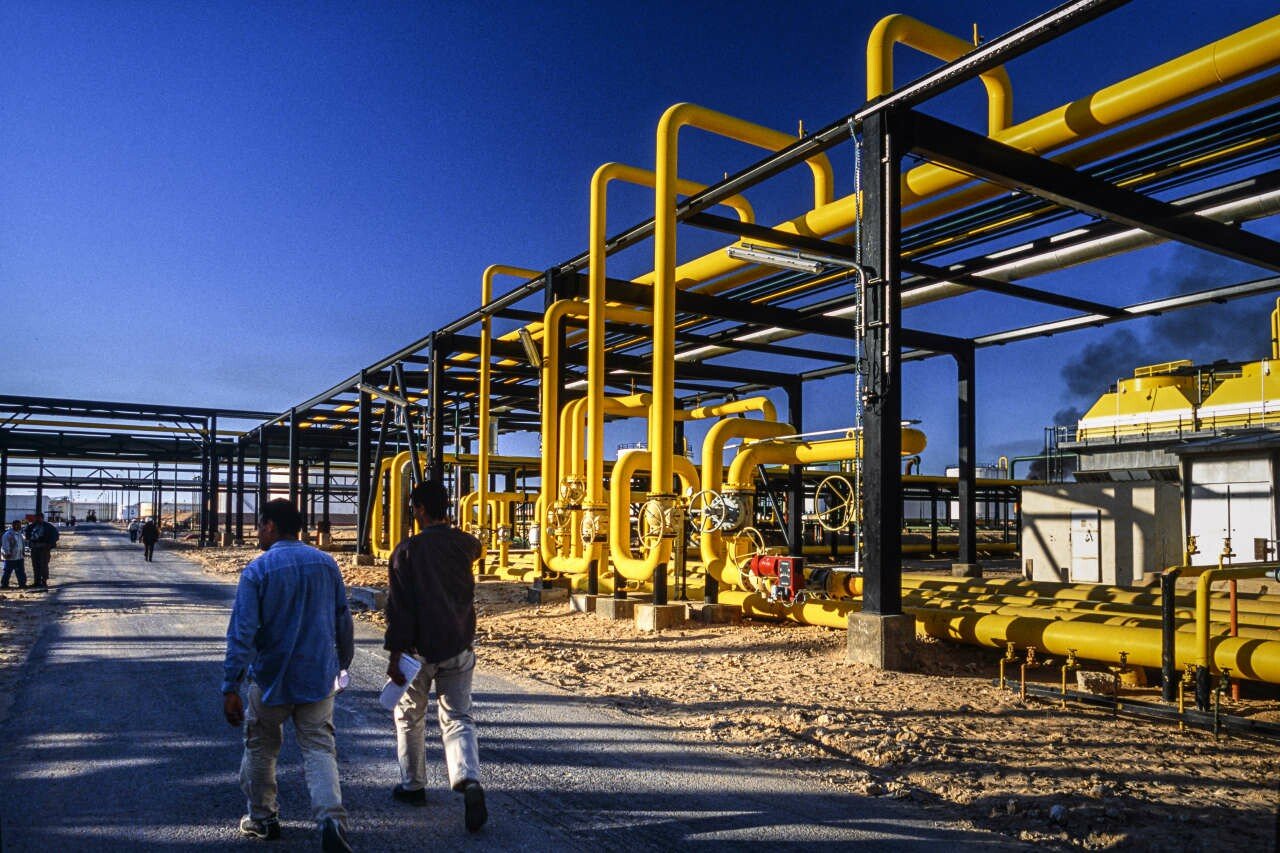
According to several Algerian media outlets and the Anadolu Agency, this operation responds to a request from Nigerien authorities and primarily aims to secure the national oil company's Sonatrach projects in Niger.
The National People's Assembly must also give its opinion. At the time of writing, the actual land deployment of troops has not been confirmed.
However, behind this decision, presented as a mere economic protection operation, lies a much larger geopolitical game: that of Algerian influence in the Sahel, securing energy resources, and new military balances in Africa.
Why does Algeria want to send its army to Niger?
Officially, Algiers aims to protect its oil investments, especially those of Sonatrach and its international subsidiary, against security threats affecting Niger.
The Sahel country has faced deep instability for several years, marked by armed group activities, political tensions, and weakened state structures.
Thus, protecting energy infrastructure constitutes a reasonable argument. However, it raises a fundamental question: why would the security of economic projects now necessitate a direct presence of the Algerian military in a foreign state?
The answer likely goes beyond just the oil sector.
For Algeria, Niger represents both an economic partner, a strategic neighbor, and a gateway to a region where its influence is being tested.
Sonatrach, oil, and pipeline: the economic stakes
Algeria seeks to consolidate its interests in Niger's energy sector while preserving the prospects for the trans-Saharan pipeline that aims to connect Nigeria to Algeria through Niger.
This energy corridor represents a major strategic challenge. If realized, it could reinforce Algeria's role as a transit country and gas exporter to international markets.
The planned military presence in Niger could thus provide Algiers with an additional means to protect its investments and influence the security of the infrastructure linked to its energy ambitions.
However, it also highlights a vulnerability: when investments require foreign military protection, their profitability and sustainability become closely tied to the local conflict's evolution.
Algeria may then find an economic ambition morphing into a long-term security commitment.
A turning point prepared for several months
This decision does not come out of nowhere.
On August 9, 2026, the Algerian Ministry of Defense announced the delivery of four military helicopters to Niger, including two Mi-24V and two Mi-171, along with ammunition, spare parts, and logistical equipment.
A few weeks later, on August 30, Algeria sent four Sukhoi Su-30 fighter jets, accompanied by a refueling aircraft, to Niamey. This operation followed an attempted destabilization of the Nigerien government and, according to Algiers, responded to an official request from local authorities.
The shift from material and aerial assistance to a potential land deployment marks a new stage.
It is no longer just about providing equipment or showing occasional support. Algeria now envisions a military presence directly relevant to the security realities in Niger.
The paradox of Algeria long opposed to foreign interventions
Since its independence, Algeria has largely built its diplomatic discourse around national sovereignty, rejecting interference, and seeking political solutions to regional crises.
This position has been notably defended in international debates on military interventions in the Sahel.
Yet, the 2020 Algerian constitutional revision opened the possibility of sending army units abroad, provided it receives the approval of two-thirds of the members of both houses of Parliament.
The decision of October 25 represents a particularly significant application of this evolution.
It reflects the emergence of a doctrine in which Algeria is no longer limited to defending its borders but is open to contemplating the projection of forces to secure interests located in neighboring states.
This transformation is not necessarily illegitimate as long as it is based on Niger's consent and respects applicable law. However, it contradicts the image of Algeria consistently reluctant to any foreign military presence on another state's territory.
Will the Sahel become a new theater of conflict?
The potential arrival of Algerian soldiers in Niger could alter the security balances throughout the region.
The Sahel is already a space of confrontation between jihadist groups, national armies, foreign military actors, and powers seeking to preserve their economic and strategic interests.
In this particularly fragile environment, the establishment of an additional military force could produce two opposing effects.
On one hand, it could help secure certain installations and enhance the capabilities of Nigerien authorities. On the other, it could expose Algerian forces to attacks and entangle Algiers in conflicts it does not fully control.
A presence initially limited to protecting oil sites could also necessitate wider operations if supply routes, personnel, or infrastructure were threatened.
This is precisely the risk of escalation: starting by protecting installations and ending up needing to defend a permanent military setup.
Mali, Burkina Faso, and Niger: a new regional balance
The military rapprochement between Algeria and Niamey also occurs in a context of reconfiguration of Sahelian alliances.
Niger, Mali, and Burkina Faso have come closer within the Sahel States Alliance (AES), developing their own mechanisms for political and security cooperation.
Relations between Algiers and some of these neighbors, particularly Mali, have, however, faced significant tensions.
By strengthening its presence in Niger, Algeria may seek to regain privileged diplomatic access to this regional ensemble and circumvent certain difficulties encountered in its relations with Bamako.
However, this approach is not without risks.
It could raise questions about Algeria's regional ambitions, especially if the military mission were to extend beyond the protection of energy projects.
The essential question will be whether this cooperation remains strictly bilateral or transforms into an instrument of influence over the entire Sahel region.
And what about Morocco in this new equation?
For Morocco, this evolution requires particular attention, especially given the Kingdom's economic and diplomatic ambitions on the African continent.
Rabat favors a cooperative and economic decongestion approach, illustrated by the royal initiative aimed at facilitating Sahel countries' access to the Atlantic Ocean.
This vision is based on infrastructure, trade corridors, logistics, and development partnerships.
The Algerian approach, as reflected in the October 25 decision, places more emphasis on the military dimension of protecting its economic interests.
However, it would be excessive to assert that the planned deployment directly targets Morocco: no verified element supports such an objective.
On the other hand, both countries advocate competitive strategic visions regarding their African integration.
Morocco has an interest in continuing its connectivity and economic cooperation projects while carefully observing the consequences of the gradual militarization of relations between Algiers and Niamey.
The challenge is not just about who has the most military influence but which model can create the conditions for lasting stability and shared prosperity.
Who will pay the price of a potential quagmire?
External intervention carries a cost that Algerian authorities must necessarily consider.
Deploying soldiers abroad implies logistical expenses, protective means, personnel rotations, intelligence, and evacuation capabilities.
It particularly implies the possibility of human losses.
For now, the number of troops envisaged, the rules of engagement, the mission duration, and its operational modalities have not been sufficiently detailed publicly.
This lack of details prevents assessing the real scope of the operation.
Nonetheless, it raises a legitimate political question: how far is the Algerian state willing to commit its resources and soldiers to defend economic investments located outside its territory?
Conclusion: a decision that could redefine Algeria's position in Africa
By considering sending troops to Niger, Algiers is initiating an important transformation of its strategic posture.
The Algerian authorities present this move as a response to security imperatives and the protection of their economic interests. However, its significance far exceeds the mere securing of oil projects.
It could mark the transition from a regional diplomacy traditionally committed to non-intervention towards a more assertive military projection policy.
A major uncertainty remains: will this new strategy stabilize Algeria's interests in the Sahel or entangle the country in a region where foreign interventions have often revealed their limits?
In the Sahel, the true measure of power will not just be the ability to deploy soldiers but rather the capacity to build stability that renders their presence unnecessary.