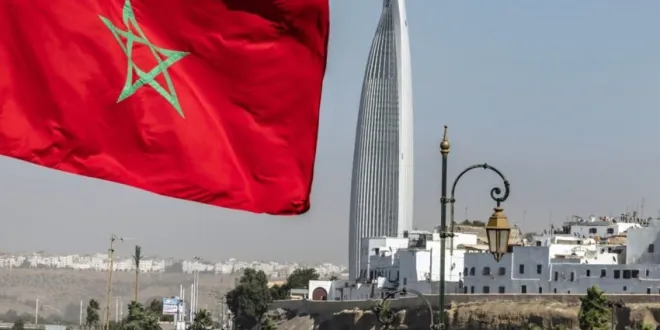
In recent years, one fact has become clear: Morocco is no longer just a stable country in the Maghreb, but has become a key player in the Mediterranean region and the African continent. Its diplomacy is strengthening, its economy is expanding, and its voice resonates on the international stage.
However, this ascent is unsettling. Some countries, accustomed to a dependent or fragmented Africa, watch nervously as a sovereign, influential, and respected Morocco emerges.
A diplomatic influence that reshuffles the cards
Morocco has made diplomacy a major strategic lever.
In just a few years, Rabat has transitioned from a regional diplomacy to a continental diplomacy.
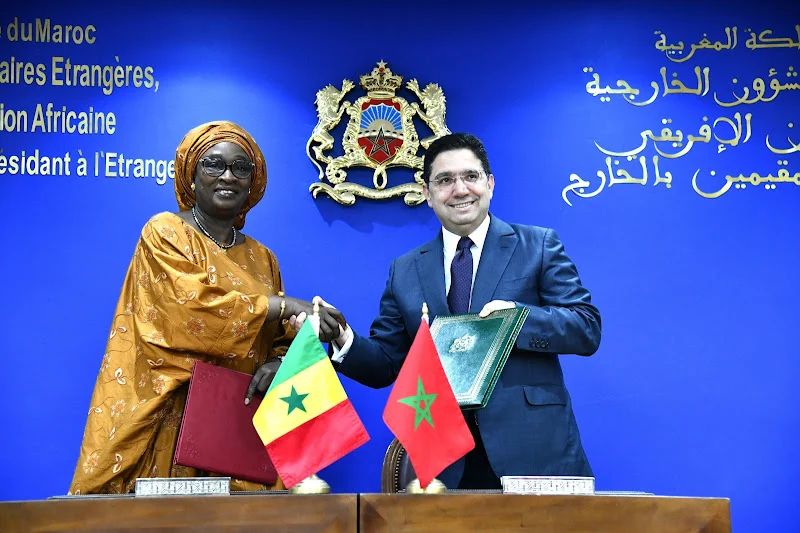
Its return to the African Union, active presence in regional organizations, and role as a mediator in several sensitive issues (Libya, Sahel, Palestine) make it an indispensable interlocutor.
This influence is not always well-received.
Some neighboring countries or Western powers view this repositioning unfavorably, seeing it as a challenge to their traditional spheres of influence.
Morocco is no longer aligned: it is charting its own course, in partnership with those who respect its sovereignty.
The Moroccan economy, a regional engine
This new Morocco is not only diplomatic but also economic.
With Tanger Med, the largest port area in Africa and one of the most competitive in the world, the country now controls a vital trade flow between Europe, Africa, and America.
Moroccan investments in Sub-Saharan Africa, particularly in banking, telecommunications, and energy, make it a significant player.
This dynamism has transformed the economic balances of the continent.
Where others import, Morocco exports its expertise.
Where others depend, it invests.
A pioneering position that attracts attention... and jealousy.
A strategy of affirmed independence
What troubles the most is perhaps this stance of independence.
Morocco speaks to everyone but belongs to no one.
Its balanced relations with the United States, China, Russia, Europe, and Africa reflect a diplomacy of sovereignty.
In a multipolar world, Rabat represents an African model capable of dialoguing without kneeling.
This ideological independence contrasts with the economic or political dependence of some neighboring regimes.
It challenges the old regional hierarchies and symbolizes an Africa no longer waiting for permission to exist.
An African leadership that asserts itself
From green energy to religious training, Morocco is now exporting models, not just products.
Its commitment to energy transition, its role in managing migration, and its cultural or educational initiatives in Africa reinforce its image as an African 'soft power.'
A leadership that disturbs those who imagined themselves the only legitimate voices for the continent.
Because Morocco's rise reveals a major geopolitical truth: the center of African influence is shifting to the Northwest, between Rabat, Dakar, and Lagos.
An Africa of solutions, which does without the Western gaze to define its own future.
The panic behind the criticism
Behind the often-repeated criticisms—'excessive ambitions,' 'economic expansionism,' 'facade strategy'—lies a deeper fear: the fear of losing the monopoly on narrative and power.
Morocco embodies an African success that does not fit into established frameworks.
And this is precisely what some fear: a model that proves another path is possible, stable, and sovereign.