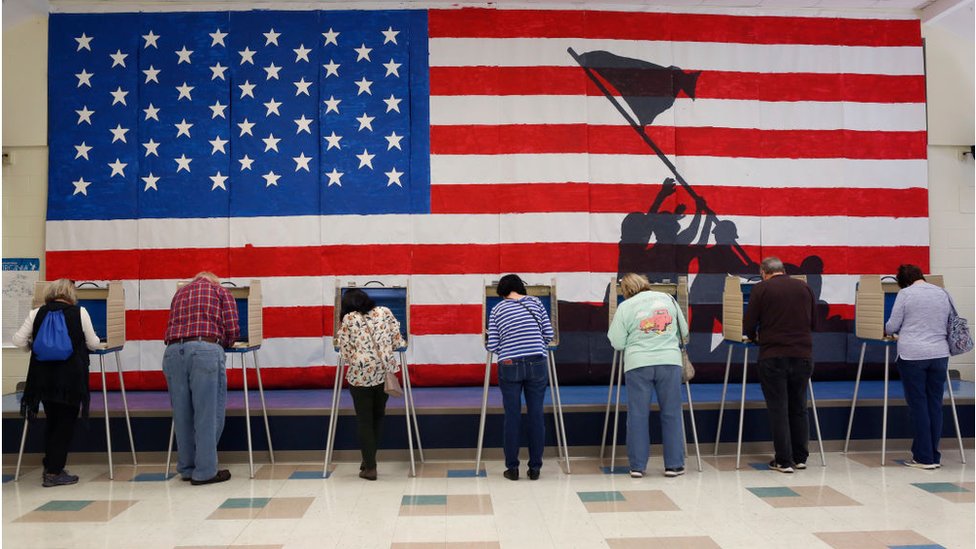
The American election is no longer just about the United States. Each electoral cycle in Washington triggers a shockwave that crosses continents, influences markets, alters geopolitical balances, and redistributes strategic priorities. Africa, long relegated to the background of American politics, now occupies a much more central place in the calculations of major powers. It's in this context that the upcoming election takes on particular importance for African states.
In recent years, relations between Washington and Africa have swung between diplomatic engagement, economic competition, and strategic rivalries. The United States seeks to maintain its influence on a continent where China has emerged as the top trading partner, while Russia is strengthening its security apparatus in several countries. Africa is no longer a peripheral space, but a major theater of geopolitical confrontation. The next American president will thus need to define a clear strategy capable of responding to this new landscape.
For many African countries, the key issue concerns the stability of economic programs. The American administration plays a crucial role in mechanisms like AGOA, which offers preferential access to the American market. A reassessment of this scheme would have serious consequences for several African economies that depend on these trade flows. Conversely, maintaining or extending these programs would strengthen the integration of African economies into global value chains.
On the security front, shifts between administrations often create uncertainties. In the Sahel, where crises are multiplying, the American role in intelligence, military training, and counter-terrorism is essential. A reduction in American engagement, motivated by a strategic withdrawal or a pivot towards Asia, could further destabilize already fragile regions. In contrast, an administration supportive of maintaining security partnerships could provide structural support to Sahelian states.
The diplomatic dimension is equally important. Africa is closely watching how Washington redefines its alliances, especially in light of China's rise. The continent, which refuses to become a mere battleground between superpowers, seeks balanced and respectful relations that honor its interests. The next president will have to choose between a cooperative approach with African institutions or a strategy centered on geopolitical rivalry.
Morocco, a key player on the continent, is also following this election closely. Its strategic partnership with Washington encompasses defense, investment, energy transition, and sensitive diplomatic issues like the Sahara. Political continuity would strengthen overall cooperation, while a more hesitant administration could slow down certain matters. In any case, Rabat remains one of the most stable and reliable partners of the United States in North Africa.
Beyond institutions, African societies are closely monitoring this election. The future of diasporas, immigration policies, academic programs, and access to technology are all directly influenced by the vision of the American president. How Washington perceives its relationship with Africa will determine the opening or closing of many individual and collective opportunities.
This election, deeply polarized and watched by the entire world, thus transcends American borders. Its consequences will affect Africa in all its dimensions: economic, security, diplomatic, and social. At a time when the continent seeks to consolidate its strategic autonomy, the outcome of the American election could influence African dynamics for years to come.