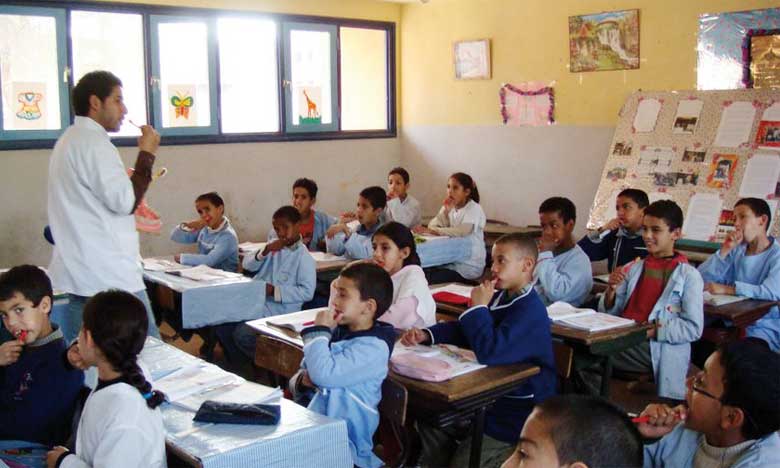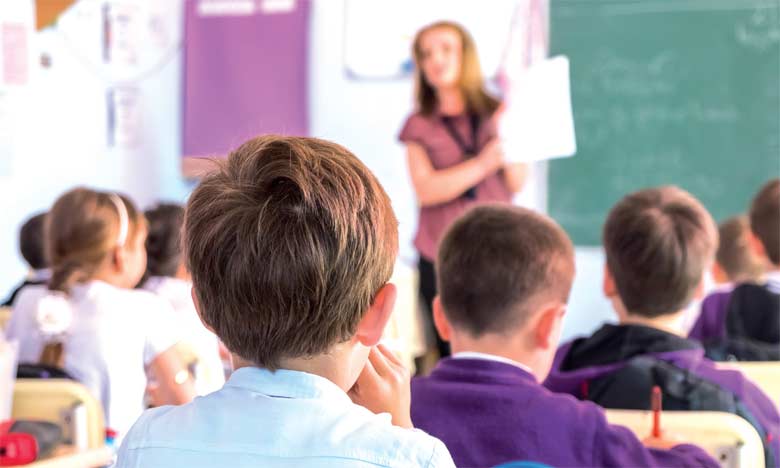
The announcement was made rather quietly, but it marks amajor turning point for Moroccan schools.
Starting from the 2026 school year, Morocco will begin theprogressive generalization of bilingualism in primary education, with reinforced teaching inArabic and French, followed by a gradual introduction ofEnglish beginning in middle school.
This reform, stemming from theframework law 51.17on education, aims tomodernize the national education system, improve proficiency in foreign languages, and prepare students for a globalized world without renouncing Moroccan cultural fundamentals.
1. A linguistic system long debated
Since independence, the linguistic question has remainedat the heart of Moroccan educational debate.
Between Arabization, Francophonie, and international openness, Moroccan schools have often mirrored the country's identity and political tensions.
The coexistence of several languages — classical Arabic, Amazigh, French, Spanish, and English — has long made it difficult to construct a stable pedagogical model.
The introduction of bilingualism from primary education aims tomove beyond this historical duality.
Morocco now adopts a pragmatic vision: mastering multiple languages means mastering multiple worlds..
Arabic remains the language of identity and national connection, while French and English become tools for knowledge, openness, and employment.
2. A structured and progressive reform
The Ministry of Education has outlined a clear roadmap for implementing bilingualism:
-
2026–2028: generalizing French in scientific subjects starting from the 3rd year of primary school;
-
2028–2030: gradual introduction of English from the 5th year;
-
2030 and beyond: national evaluation and adjustment of the program based on results obtained.
The model is based on abalanced teaching approach: core subjects (reading, writing, civic culture) will remain in Arabic, while sciences, mathematics, and technology will be taught in French or English depending on the cycle.
The goal is to ensure that students are comfortable in all three languages by the end of middle school.
3. Training teachers, the core challenge
Such a large-scale linguistic reform cannot succeed without strong training for the teaching staff.
The ministry plans totrain over 80,000 teachersin the three teaching languages by 2030.
Partnerships have been established with theFrench Institute, theBritish Council and Moroccan universities to enhance bilingual pedagogy.
Future teachers will take specific modules on:
-
language didactics;
-
linguistic integration in scientific subjects;
-
and differentiated assessment based on students' language proficiency.
Interactive digital tools and e-learning platforms are also planned to support teachers in this transition.
4. A bet on educational equity
School bilingualism is not just a pedagogical issue, it is also a matter ofequal opportunities..
Until now, proficiency in French — and more recently English — was often aprivilege reserved for private schools..
This linguistic disparity fueled a social divide between urban and rural students, between public and private education.
By generalizing bilingualism in public schools, Morocco seeks tocorrect this historical inequality..
The goal is clear: to allow all students, regardless of their background, to access the same linguistic and cognitive quality.
Bilingualism becomes atool for inclusion, not a privilege.
5. English, a new strategic priority
The large-scale introduction of English constitutes another major project for the ministry.
Already introduced in secondary education, the language of Shakespeare will now be taught from primary school.
Morocco thus joins the most advanced African countries in multilingual training, like Rwanda and Tunisia.
This direction responds to a geopolitical and economic reality:
-
English dominates global scientific research;
-
it is the language of commerce, innovation, and digital communication;
-
and it opens the doors to international universities and businesses.
Morocco aims not just to train bilingual citizens, but competitive trilingual players, capable of thriving in a global market.
6. Identity, culture, and linguistic balance
The linguistic reform does not undermine Morocco's identity foundation.
Arabic and Amazigh remainthe two official languages, enshrined in the Constitution.
The goal is not to supplant them, but tocomplement themthrough a controlled openness.
Sociolinguistic experts emphasize the importance of a cultural balance:
“Bilingualism should not be seen as a dominance of one language over another, but as a dialogue between languages and cultures,”
explains Professor Mohamed El Haddad, a specialist in multilingual education.
The ministry relies on contextualized pedagogical content: Moroccan texts, local culture, and integrated Arab and Amazigh references in bilingual textbooks.
Language learning will be approached ina logic of complementarity, not substitution.
7. Upcoming challenges
Despite its ambition, the reform faces several challenges:
-
theshortage of qualified teachers, particularly in rural areas;
-
thedisparity in digital equipment; ;
-
and thecultural resistancefrom parts of society attached to a single language of instruction.
To succeed, the ministry focuses on a strategy of social support: raising awareness among families, promoting multilingualism in the media, and involving local communities in upgrading schools.
Conclusion
With the generalization of bilingualism from primary education, Morocco enters anew educational era..
This reform is not only linguistic but is alsoa symbol of a country that embraces its plurality and prepares its youth for an open, connected, and multicultural world.
To train children capable of thinking in Arabic, creating in French, and innovating in English: that is the promise of Morocco in 2030.
A multilingual school for a nation united in diversity.
Sources:
-
Ministry of National Education – Roadmap 2024–2030
-
Framework Law 51.17 on education, training, and scientific research
-
British Council Morocco – English for Schools 2025 Program
-
French Institute of Morocco – Educational and linguistic cooperation
-
HCP – Report on linguistic and social diversity in Morocco