
A substantial social effort.
Morocco is preparing to launch a massive recruitment plan aimed at the education and health sectors. More than 27,000 new positions are planned for 2026, focusing the majority of new public job creation. The goal is clear: to relieve strained systems, improve the quality of services provided to citizens, and respond to pressing social demands.
Why this focus on education and health?
Because these two pillars determine social mobility, economic competitiveness, and national cohesion. Public schools need better-distributed, better-trained, and better-supported teachers. The health system needs to strengthen its medical and paramedical teams, improve territorial coverage, and modernize its organizations.
Education: From Quantity to Quality
Reduce pressure in classrooms.
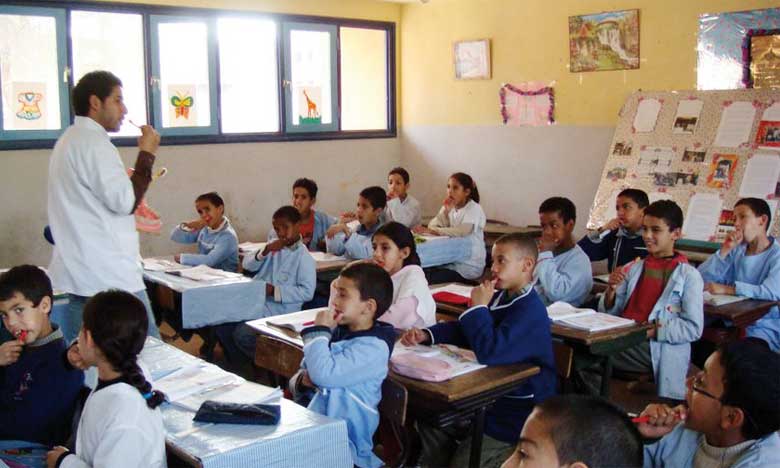
Job creation must primarily decrease average class sizes, stabilize assignments, and limit overtime. This issue is particularly pressing in primary and middle schools, where foundational learning conditions the entire educational journey.
Consolidate the HR chain.
Recruitment alone is not enough; it is also necessary to better train (initial and ongoing), better support (tutoring, pedagogical coaching), and better retain (clear career prospects, chosen mobility, recognition of performance). Regional Education and Training Academies (AREF) will be decisive in managing these levers closely on the ground.
Make schools more effective.
The quantitative effort must be accompanied by a qualitative leap: remediation of learning, regular assessment tools, useful educational technology (not just gimmicks), refocusing on foundational skills (language, mathematics, sciences), and developing transversal skills (critical thinking, expression, digital literacy).
Health: Strengthening Supply and Access
Teams closer to patients.
The new positions aim to increase the presence of doctors, nurses, midwives, and technicians in hospitals and health centers, particularly in under-resourced areas. The goal is to reduce wait times for appointments, improve medical care availability, and stabilize teams.
Better allocate resources.
The territorial distribution remains the crux of the problem: attracting specialists to peripheral areas requires targeted incentives (financial, housing, career), better technical facilities, and attractive career paths. Otherwise, the risk is to create unfilled or quickly vacant positions.
Organization and modernization.
For the impact to be tangible, recruitment must rely on efficient information systems, smooth logistics (medications, medical supplies), streamlined purchasing, and rigorous biomedical maintenance. The positions are the fuel; the organization is the engine.
The Reality Check: Sufficient or Not?
Volume.
The 27,000 positions represent a major political and budgetary signal. This is an important step to ease pressure in classrooms and hospitals.
Targeting.
The impact will depend on the fine-tuning of allocation: rural vs. urban, schools with the most pressure, critical hospital specialties (gynecology, pediatrics, emergencies, imaging), regions with high demographics.
Timeline.
The effect will be gradual. Between examinations, training, assignments, and ramp-up, the full results will be measurable over a period of 2 to 3 years. Public communication will need to manage this timeline to maintain trust.
Quality.
Without ongoing close supervision, useful digital tools, and performance management, the volume effect may dilute. Conversely, if these levers are activated, improvements will be visible: less crowded classes, continuous education, shorter care delays, and increased user satisfaction.What Chronexium Will Monitor
Post vacancy rates
-
at the end of the fiscal year.Average class sizes
-
by region and grade level.Average appointment wait times
-
in priority specialties across several pilot regions.User satisfaction indicators
-
(schools and hospitals).Stability of assignments
-
(turnover at 12 and 24 months).Provisional Verdict
The 2026 effort is
significant and well-targeted. It initiates a first step needed for transforming public schools and hospitals. Is it sufficient? Yes, to start making up for the backlog. No, if one hopes for lasting change without reforming territorial distribution, ongoing training, job statuses, and quality management.The 27,000 positions will truly be transformative if they are well-placed, well-trained, and well-maintained.
.