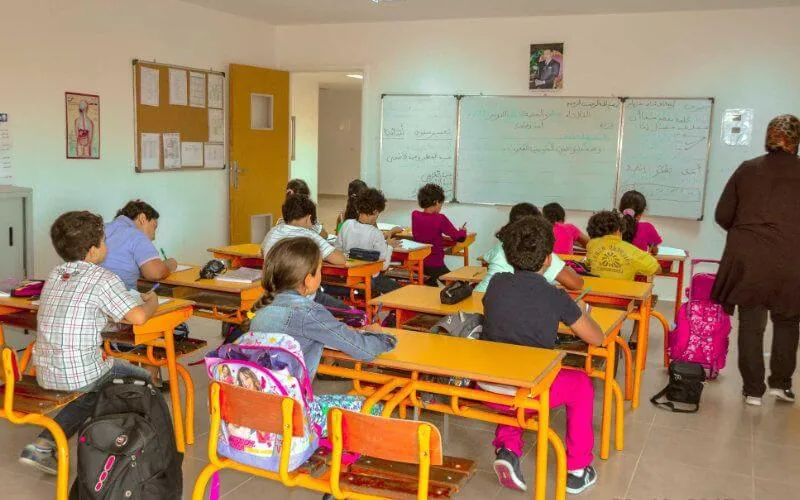
Yet, behind the slogans of modernization and the rhetoric of 'meritocracy,' there are profound questions about its real feasibility, budgetary cost, and long-term impact on society.
The 'Pact of Excellence' is part of the ongoing effort stemming from the 'New Development Model' presented to King Mohammed VI in 2021. It aims to align the education system with international standards, enhance ongoing training for teachers, and reduce dropout rates. Officially, the reform is built on three pillars: the quality of education, territorial equity, and governance of the system. In practice, it disrupts already fragile institutional balances.
From its implementation, teacher unions have denounced a lack of consultation. Many criticize the ministry for imposing a top-down reform, without genuinely considering ground realities. In several regional academies, teachers have expressed their anger at what they see as a 'technification' of the profession at the expense of its educational purpose. The discontent is deep: the reform is viewed as a bureaucratic response to a human and social issue.
Financially, the 'Pact of Excellence' poses a colossal challenge. According to several Moroccan economists, the overall cost of implementation could exceed 40 billion dirhams per year. Funding relies partly on public-private partnerships and the hope of improved efficiency in public spending. However, as the Kingdom faces persistent inflation and increasing pressure on public finances, the sustainability of this reform is called into question. There is a significant risk that some ambitious measures will remain unfulfilled due to a lack of concrete means.
Teachers, central to the initiative, appear as the weak link in this transformation. Although the reform promises gradual salary increases and better initial training, these promises have yet to materialize. A climate of mistrust has settled in. In schools, moral fatigue is palpable, and successive strikes reflect a crisis of confidence that extends beyond salary concerns: it touches upon the very essence of the profession.
On the families' side, the perception of the 'Pact of Excellence' is ambivalent. Many commend the desire for reform but lament the increase in indirect costs of education: unsubsidized textbooks, extracurricular fees, and frequently nonexistent school transportation. In rural areas, territorial inequality remains glaring. Access to quality education continues to be an urban privilege. The public school, intended to be the foundation of republican equality, continues to lose ground to private institutions.
However, not everything should be dismissed. Some pilot academies are already showing encouraging progress: integration of digital tools, individualized student monitoring, and targeted support programs. Yet, these local successes struggle to be generalized within a system burdened by administrative weight and a shortage of qualified human resources.
The future of the 'Pact of Excellence' will depend on two key factors: the State's ability to ensure sustainable financing and its willingness to genuinely involve field actors. For an educational reform's success is not measured by the laws passed, but by the confidence it inspires in both teachers and learners.
Ultimately, Morocco does not just need a new 'pact' with its education system, but a new social contract with its teachers, parents, and youth. Without this, excellence will remain a slogan and not a lived reality.