
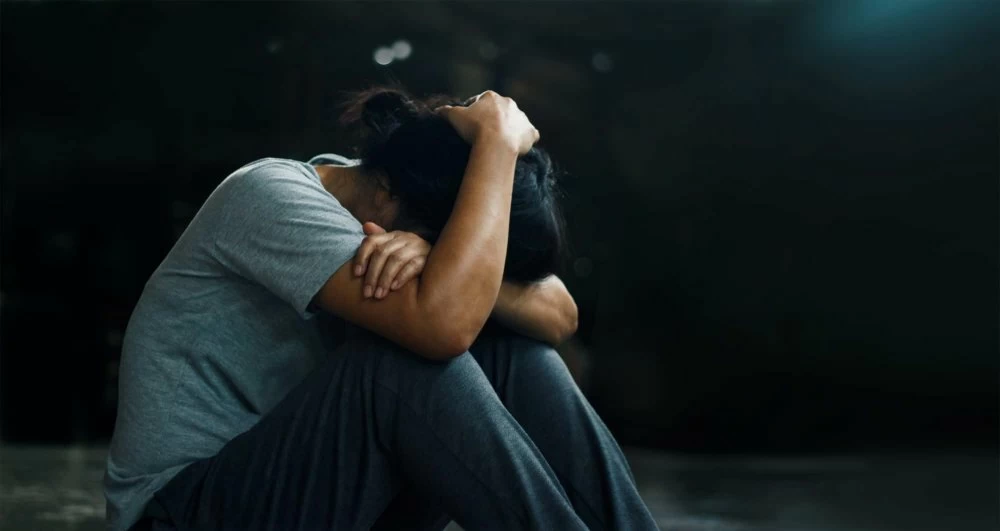
A Silent Crisis, Amplified by Social Changes
The mental health of Moroccans is deteriorating at an alarming rate.
According to the World Health Organization (WHO),nearly one in two Moroccanswill experience at least one psychological disorder in their lifetime — often without diagnosis or treatment.
The causes are numerous: unemployment, economic pressures, urban isolation, digital overconnection, and weakening social ties.
For many, the malaise remains hidden. Psychological suffering is still acultural taboo, often equated with weakness or shame. Families are still hesitant to seek help, preferring traditional remedies or silence.
A Largely Undersized Health System
Morocco has only about450 psychiatristsand200 clinical psychologistsfor more than 37 million inhabitants.
Most public hospitals do not have a psychiatric department, and private clinics are beyond reach for the majority of the population.
Specialized facilities, such as the Arrazi Hospital in Salé or Ibn Nafis in Marrakech, are severely under-resourced.
This structural shortfall leaves thousands of patients to fend for themselves. In rural areas, the situation is even more critical: access to a psychiatrist is often impossible.
A Slow but Real Awareness
In light of the scale of the issue, the Ministry of Health has includedmental health in the Health Plan 2025..
Community psychiatry units have been established in several university hospitals, and awareness campaigns are beginning to emerge.
The pilot program“Community Mental Health”, conducted in Casablanca and Fès, aims to train general practitioners to provide initial psychological support.
However, these efforts remain modest in relation to the needs. NGOs and associations, such asSolidarité Féminineandthe Moroccan Mental Health Association, often play a crucial intermediary role, raising awareness, guiding, and supporting patients in a caring environment.
Youth on the Front Lines
Young people are particularly affected: school burnout, anxiety, post-pandemic depression, and digital loneliness.
Social networks, while providing a space for expression, also exacerbate comparisons and feelings of failure.
However, new initiatives are emerging:online listening platforms,psychological cafes,andpodcaststhat simplify the issues of mental well-being.These initiatives help to destigmatize mental health, make conversation possible, and restore meaning to prevention efforts.
Towards a More Attentive Society?
Mental health is not just a medical issue: it is a
social and cultural challenge.For Morocco to progress, it must integrate psychology into public policies on education, work, and justice..
Psychological well-being should become a
universal right, not a luxury reserved for a minority.Breaking the taboo means recognizing that mental health is as essential as physical health — a revolution that cannot occur without a profound change in collective attitudes.
Sources:
WHO – Report on Mental Health in Morocco (2025)
-
Ministry of Health – Health Plan 2025
-
CESE – Opinion on Well-Being and Social Cohesion (2024)
-
Moroccan Mental Health Association – National Study 2025
-
>