
Meeting in Antalya, Turkey, from November 9 to 20, 2026,, the COP31 opens with a crucial question: Will countries succeed in turning climate promises into investments and verifiable measures? For Morocco, this meeting goes far beyond environmental diplomacy. It focuses on three concrete priorities: securing water, accelerating the energy transition, and obtaining accessible funding for adaptation..
On November 11,, at the start of the two-day leaders' summit, Nasser Bourita represents King Mohammed VI. The Kingdom intends to share its experience while also highlighting the needs of countries facing increasingly costly climate risks. Discussions are ongoing: as of the date of this article, these are proposed orientations and current negotiations, not final COP31 decisions.
COP31 in Antalya: Why This Edition Matters
Organized under the auspices of the United Nations Framework Convention on Climate Change, COP31 gathers governments, negotiators, and civil society actors. Turkey is hosting the conference and is managing the presidency,which has been entrusted to Murat Kurum, while Australian Chris Bowen leads the negotiations.The political summit on November 11 and 12 carries the theme 'Towards a Sustainable, Resilient, and Equitable Future'.
The key message now is implementation.At COP29, countries set a target to mobilize at least $300 billion per year by 2035 for the benefit of developing countries, while a broader ambition aims for $1.3 trillion annually from various sources. These amounts are international targets, not a budget already available or guaranteed for Morocco.
Discussions in Antalya notably seek to clarify how to finance infrastructures, advance adaptation, reduce emissions, and strengthen the energy transition. They occur amid international contexts marked by geopolitical tensions and energy price volatility.
Morocco: An Actor with Urgent Needs
Morocco has established itself as an active interlocutor on climate issues through its investments in renewable energy, its experience organizing COP22 in Marrakech, and its cooperation with various African partners. However, ongoing achievements are insufficient to eliminate the country's vulnerability.
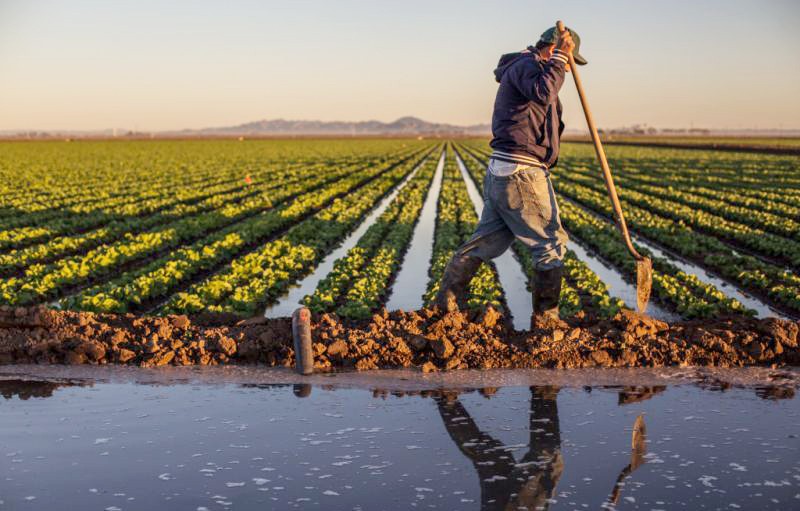
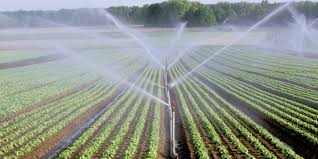
Water remains at the heart of the problem. Episodes of drought, pressure on resources, and rainfall variability affect farmers, rural areas, urban centers, and public finances. Responses need to be comprehensive: water savings, network modernization, wastewater recycling, resource diversification, and adaptation of agricultural practices.
The challenge for Rabat is to have a reality often underestimated recognized: adapting to climate change is costly, even when a country has a relatively limited contribution to global emissions.Funding for equipment, studies, prevention measures, and local projects is required without excessively increasing household costs.
An adaptation plan and 107 projects by 2035
According to government statements reported on November 11 by Moroccan media, the National Strategic Adaptation Plan presented on the sidelines of COP31 includes 80 sector-specific objectives and 107 projects by 2035.It notably links the water, agriculture, and forestry sectors. A revision of this framework has also been announced to integrate the evolution of climate risks.
The same presentation indicates that nearly 90% of the resources mobilized for adaptation are expected to be of national origin.This figure, reported by the press from a ministerial statement, should be understood within the announced scope: it does not automatically measure all 'green' investments by Morocco and does not prove, by itself, a determined lack of international financing.
Nonetheless, it highlights the crux of the issue: Morocco is mobilizing its own resources but wishes to access more external resources, under financial conditions compatible with its development priorities.
Energy: What Does the New '35-by-35' Goal Mean?
The Turkish presidency of COP31 supports the initiative '35-by-35',which aims to raise the share of electricity in global final energy consumption to 35% by 2035.This is not a target imposing 35% renewable electricity on each country: the text aims for the electrification of uses in transport, buildings, and industry, with support for clean electricity, networks, and storage.
For Morocco, this perspective is strategic. Producing more renewable electricity is a first step; having reliable networks, storage capacities, competitive equipment, and better-electrified industrial consumption is equally important. The choices made will impact energy costs, industrial attractiveness, and energy independence.
COP31 could help facilitate technical and financial partnerships. However, no international announcement can replace national projects, their effective financing, or their realization.
The real showdown: Who will pay for adaptation?
Beyond speeches, the negotiation frequently pits the expectations of developing countries against the budgetary constraints and positions of wealthier economies. The challenge is not only to promise more money: it is necessary to determine in what form it will be provided — grants, concessional loans, guarantees, private investments — and how vulnerable countries can realistically access it.
For a country like Morocco, the difference is significant. A sanitation project, an irrigation network, or a resilience infrastructure may not necessarily yield the same financial return as a power plant. Thus, credit access criteria and debt costs can decide whether a project is launched or remains merely an intention.
The dialogue on climate justice intersects with a very concrete problem: how to accelerate action without transferring a disproportionate financial burden to taxpayers and communities?
What Can Morocco Actually Achieve in Antalya?
At this stage of the conference, it would be premature to announce a diplomatic victory or new billions allocated to the Kingdom. Three outcomes should particularly be monitored: :
- Financial commitments made more accessible, particularly for adaptation and resilient infrastructures.
- Operational energy partnerships, with support mechanisms for networks, storage, and innovation.
- Clearer monitoring rules, to track actual funds disbursed and actions taken.
The conference is set to continue until November 20, 2026.The content of any potential final agreement and commitments made by various states remains to be confirmed.
Why Moroccans Should Follow COP31
Climate change is not a distant issue reserved for negotiators. It affects water prices, food security, agriculture, economic activity, and infrastructure spending. Decisions made — or blockages observed — in Antalya could influence the future availability of financing, the pace of investments, and technologies deployed in Morocco.The true measure of COP31 will not be the number of statements made, but the funded projects and observable results in the coming years.
For the Kingdom, the challenge is to translate its presence in Antalya into concrete cooperations while continuing national efforts to address water and energy challenges. Frequently Asked Questions
Where and when is COP31 taking place?
COP31 is being held in
Antalya, Turkey, from November 9 to 20, 2026. The leaders' summit is on November 11 and 12.Who represents Morocco?
Nasser Bourita,
the Minister of Foreign Affairs, represents King Mohammed VI at the leaders' summit of COP31.What is the main energy objective being discussed?
The presidency of COP31 advocates for a
35% share of electricity in global final energy consumption by 2035 , under the '35-by-35' initiative.Have any final decisions from COP31 already been announced?
No.
As of November 11, 2026, the conference is ongoing, with its conclusion scheduled for November 20. .