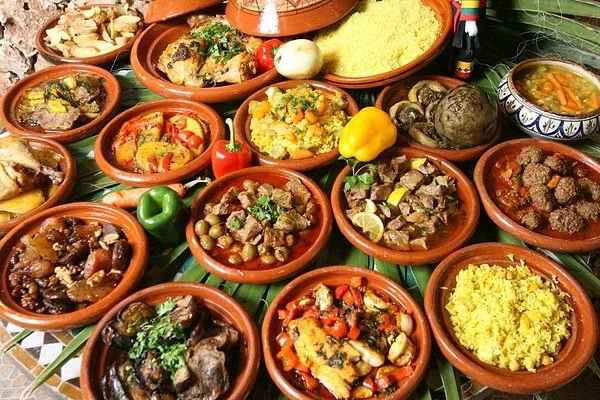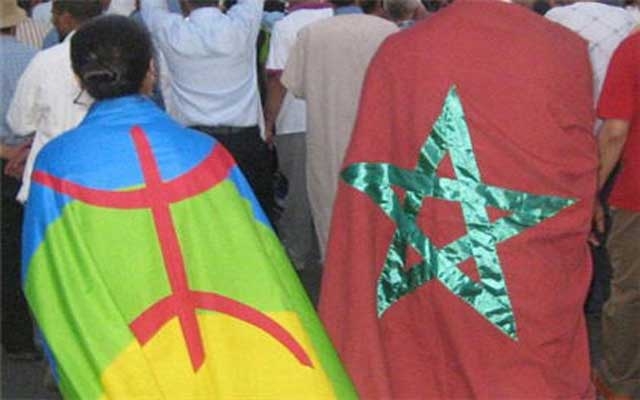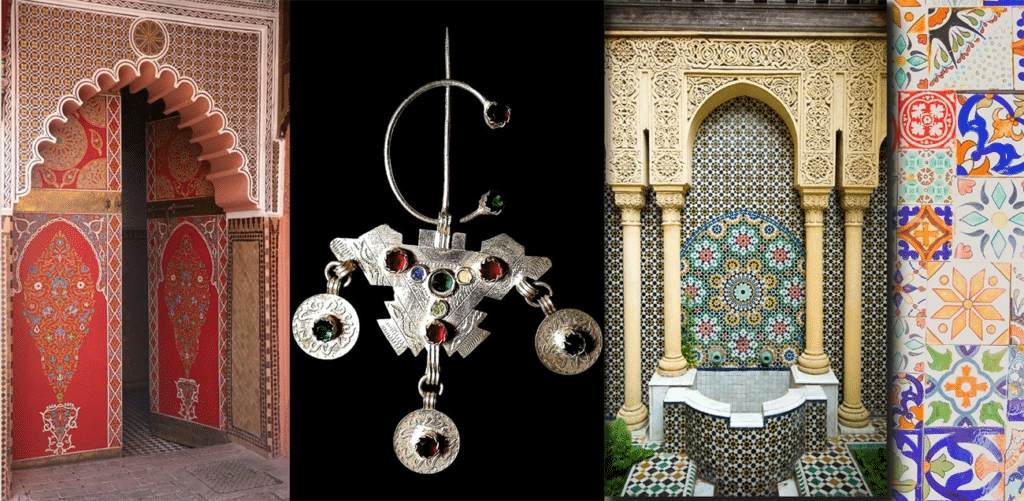
A Living Heritage, Not Stagnant
For a long time, tradition was set against modernity in Morocco.
One viewed as a dusty past, the other as a promise of something else.
But today, that boundary is fading.
Young creators, artists, and entrepreneurs no longer need to choose: they naturally blend the two.
A caftan is worn with sneakers.
A phrase in darija appears in a trap song.
An Amazigh pattern becomes a brand logo.
And this hybridization, far from being superficial, tells a dynamic identity.
The New Creative Scenes
In music, photography, fashion, or video, a generation is emerging, liberated from traditional codes.
-
Moroccan rap and pop are now being written in darija or classical Arabic without hesitation.
-
Local brands like Zyne, Kenzi, Kaalm or Maison ARTC reinterpret craftsmanship to make it contemporary.
-
Platforms like Hiba Lab or Le Studio des Arts Vivants support young talents.
These creators share a common vision: they view Morocco as a source of inspiration, not as a constraint.
“Creating in Morocco means working with a living material: language, gestures, the street”,
confides a young photographer from Casablanca met during a workshop at the Villa des Arts.
Craftsmanship: From Heritage to Laboratory
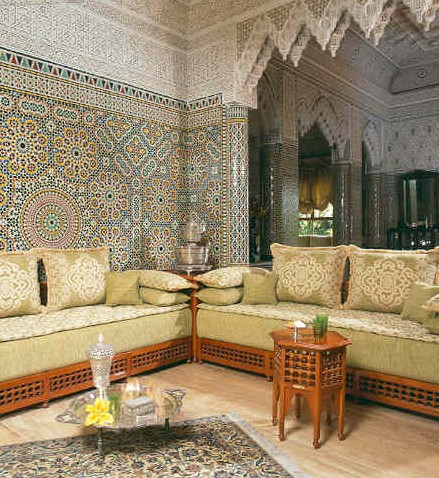
Long viewed as stagnant in folklore, Moroccan craftsmanship is experiencing a renaissance.
In Fez, Marrakech, or Essaouira, young designers are revisiting ancient materials — wood, copper, zellige — to transform them into modern objects.
The goal is no longer to 'preserve' but to transmit differently.
Collaborative workshops are emerging: artisans and designers work together to combine gesture and idea.
It's an entire ecosystem being reborn, blending local economy and exportable creativity.
The Screen, a Mirror of Society
Cinema and photography also contribute to this cultural reinvention.
The success of directors like Maryam Touzani, Faouzi Bensaïdi or Nabil Ayouch illustrates a desire to tell Morocco as it is: imperfect, plural, real.
In galleries, exhibitions by Leïla Alaoui, Mahi Binebine or Hassan Hajjaj showcase a visual, vibrant Morocco, in technicolor — between humor and memory.
Digital platforms amplify this openness: Instagram, TikTok, and YouTube are becoming true cultural expression laboratories..
A Calm Relationship with Identity
This Moroccan modernity is not a rupture; it's a reconciliation.
Where the previous generation feared losing its bearings, today's generation embraces multiplicity.
Being Moroccan means speaking several languages, living between the medina and co-working spaces, dressing traditionally on Fridays and minimalist on Saturdays.
It also means celebrating the beauty of blending — with no hierarchy between the old and the new.
A Culture to Share, Not Defend
Moroccan culture now shines well beyond its borders: exhibitions in Paris, design in Milan, gastronomy in Dubai.
But its ambition is no longer simply to 'please abroad'; it wants to tell itself.
This reclamation of perspective may be the greatest cultural victory of contemporary Morocco.
Conclusion
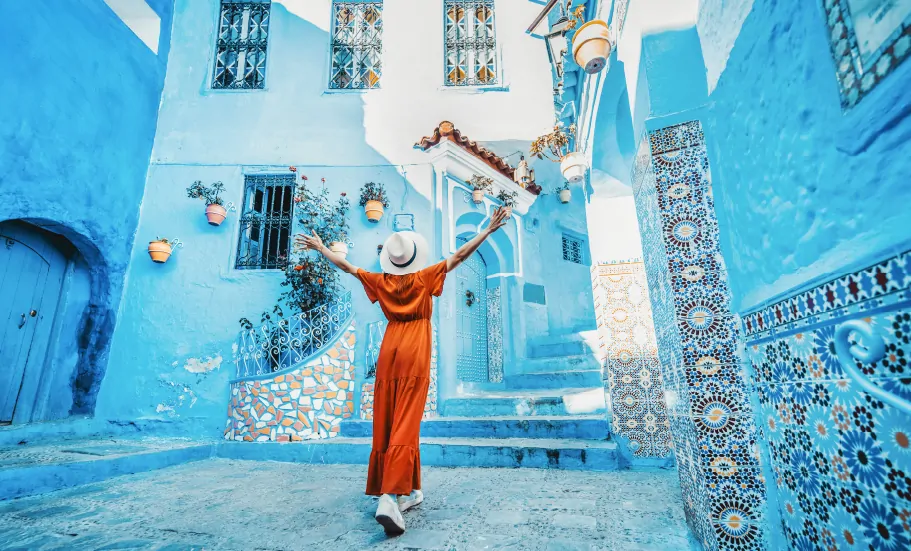
Between craftsmanship and innovation, memory and invention, Moroccan culture is no longer a protective shield; it projects itself.
It draws inspiration from the past to better write the present.
And in this creative energy, one thing is clear: Morocco is no longer imitating; it inspires.