
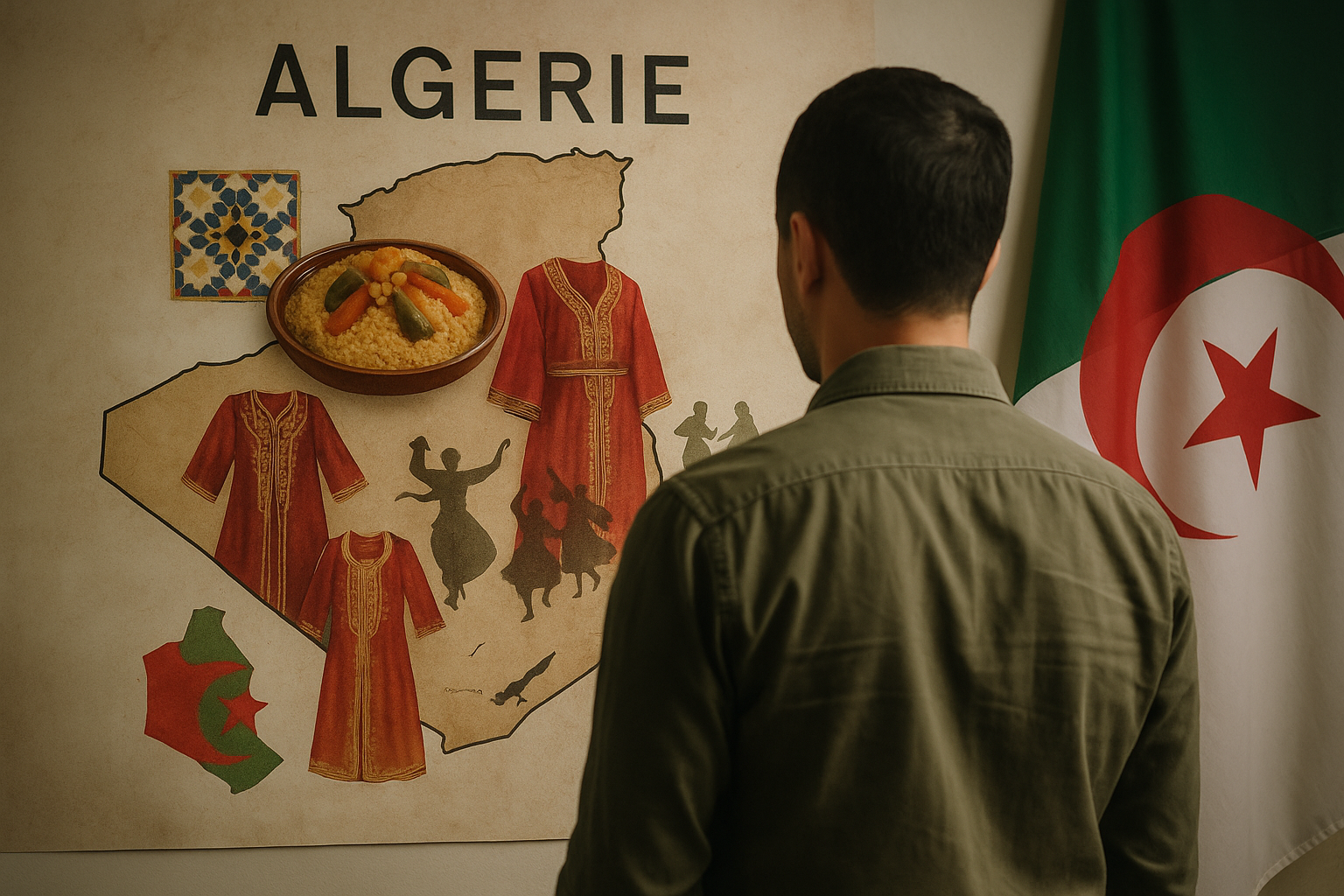
In recent years, Algeria seems to be engaged in a complex approach that intertwines cultural appropriation, identity rewriting, and an increase in claims regarding heritage elements historically established elsewhere. This phenomenon is not emerging by chance. It is set against a backdrop of social, political, and symbolic unrest, where the construction of a national narrative appears as a central issue for some institutions in the country.
Cultural claims are no longer limited to isolated traditions. They now concern entire areas of historical, culinary, clothing, or artistic heritage. Elements as emblematic as certain dances, traditional outfits, artisan motifs, popular dishes, or historical figures are regularly presented as part of an Algerian heritage, despite their documented origins elsewhere. The goal is not solely cultural; it is also identity-related. In the face of a population seeking reference points, this strategy fosters a strengthened sense of belonging around a reinvented narrative.
This dynamic is amplified by social media, where there is an increase in viral campaigns attempting to attribute the paternity of well-established regional traditions to Algeria. Digital platforms have become a central space for confrontation, where unverified claims are quickly disseminated, repeated, and sometimes institutionalized. This phenomenon, far from trivial, helps shape public opinion by simplifying complex historical topics and creating erroneous yet persistent perceptions.
The internal political context plays a major role. In a country facing economic tensions, a young demographic, and a fragmented public space, cultural rewriting serves as a symbolic pressure valve. It diverts attention from structural issues and creates a unifying discourse around an imagined heritage. This strategy contributes to strengthening internal cohesion but simultaneously generates external tensions, as it often comes at the expense of established heritages in neighboring countries.
At the same time, part of Algerian society contests this systematic appropriation. Researchers, historians, and artists denounce a political instrumentalization of culture, pointing out that Algerian identity is rich enough not to require borrowing or rewriting. This internal debate, underreported in the media, reveals that the phenomenon is not universally accepted and that there is a desire to defend an authentic identity.
The escalation of cultural claims is therefore not a mere coincidence. It arises from a series of intertwined factors: identity crisis, need for recognition, political strategy, regional power dynamics, and hyper-mediatization. It fuels a climate of symbolic competition and leads to polarization of perceptions, especially when these claims oppose culturally entrenched and internationally recognized heritages.
In the face of this dynamic, the central question remains: how far can this movement of cultural appropriation go, and what will be its consequences? For now, it shapes a national discourse focused on a reconstructed identity, but its credibility is regularly called into question. Culture, instead of uniting, becomes a battleground for rivalries, revealing the deep tensions within Algerian society.