The Algerian offer: a mediation "under conditions"
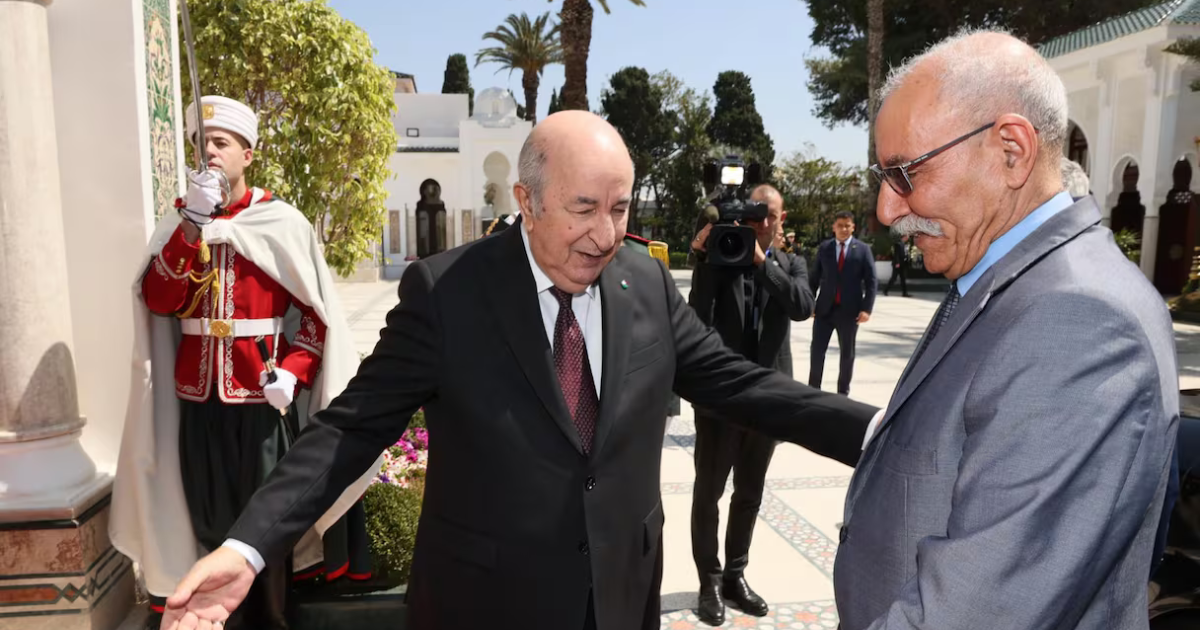
The Algerian Foreign Minister, Ahmed Attaf, recently stated that his country is ready to "support mediation" between Morocco and the Polisario Front, while insisting that any solution must fall strictly within the framework of UN resolutions. This announcement comes in a regional context marked by ongoing tensions and a lack of direct dialogue for several years.
A major problem: impartiality
Despite the diplomatic wording of its initiative, Algeria faces a fundamental contradiction: it is regarded by Morocco, by many international observers, and by several resolutions as a party involved in the conflict. Its historical political, logistical, and diplomatic support for the Polisario Front, alongside its involvement in the main directions of the movement, makes any claim to neutrality hardly credible.
An actor engaged since 1975
Since Spain's withdrawal from the Sahara, Algeria has progressively positioned itself as the main supporter of the Polisario, even going so far as to host its leaders, finance its activities, and defend its positions on the international stage. This privileged relationship goes far beyond mere humanitarian support and constitutes a strategic line of its foreign policy. Under these conditions, acting as an arbiter between two actors, one of whom is its natural protégé, seems incompatible.
An initiative that raises questions about Algeria's motivations
For several analysts, this proposal is not aimed at genuine mediation, but rather at diplomatically repositioning Algeria at a time when several countries are strengthening their ties with Morocco, particularly around its autonomy initiative, which is supported by many states. Algeria seems to be trying to present itself as an essential actor and regain control over a dossier where its influence is challenged.
Morocco remains committed to the UN path
Rabat, for its part, has always favored the political process led exclusively by the United Nations, believing that any other parallel mediation risks adding confusion and diverting the process from its legal foundations. For Morocco, only a discussion framed by the UN, and necessarily involving Algeria as a party, can lead to a lasting solution.
A mediation whose future seems limited
In the short term, it seems unlikely that the Algerian proposal will lead to a discussion format accepted by Rabat or recognized by international partners. The essential condition of a mediator—neutrality—has not been met. Therefore, the Sahara issue will continue to be addressed exclusively within the framework of the United Nations, with the same central equation: without clear involvement from Algeria as a party to the conflict, no significant progress can be made.